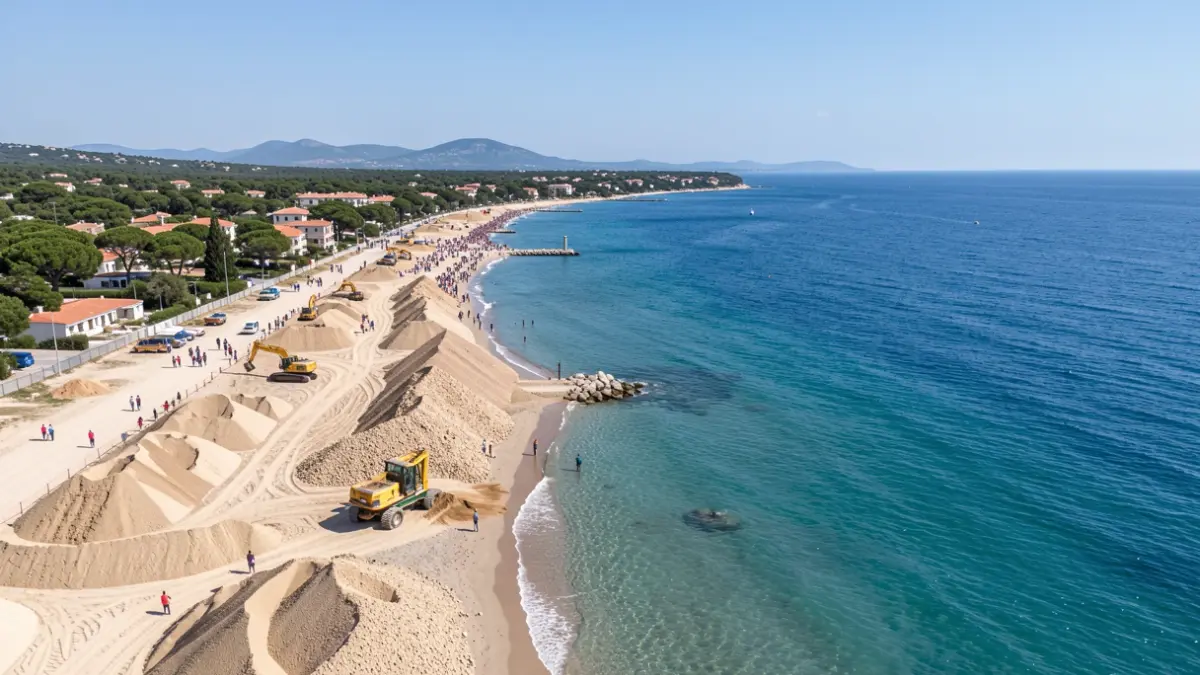
The deputy spokesperson for Compromís in Les Corts, Paula Espinosa, and the councilor in Cullera, Estefania Català, visited the Marenyet and l'Estany beaches this Wednesday to check the situation resulting from the coastal regeneration project. The Valencianist coalition warns of "significant uncertainties regarding its medium and long-term effectiveness" despite acknowledging the need for actions to curb erosion.
The project, which involves a state investment of over 16 million euros, includes the dumping of more than one million cubic meters of sand and the construction of three breakwaters over a 2.8-kilometer stretch. The objective is to restore the width and stability of the beaches, aiming for a physiognomy similar to that of the mid-20th century. However, Compromís believes that its effectiveness will depend on how the coast responds to storms and climate change.
"The citizens of Cullera deserve serious and sustainable solutions, not just self-deception that lasts a few months," stated Espinosa, who warns that the deposited sand could be lost due to intense storms and sediment deficit. The coalition considers a comprehensive coastal plan necessary, combining regeneration with dune restoration and addressing the structural sediment deficit.
Català pointed out the "negative impacts" the project will have on the local fishing activity, which is already "severely affected." According to Compromís, Cullera's fishermen express "great indignation" at not being heard or consulted, with risks to sensitive marine habitats and potential impacts on underwater heritage being ignored. It is also warned that the breakwaters could alter sediment circulation and shift erosion to other parts of the coastline.
Therefore, Compromís demands rigorous scientific monitoring, a long-term maintenance plan, an updated morphodynamic study, a real monitoring program after storms, protection measures for fishing and the seabed, exhaustive archaeological control, and an honest cost-benefit assessment. They ask that this investment be a useful and sustainable action for the future of Cullera.