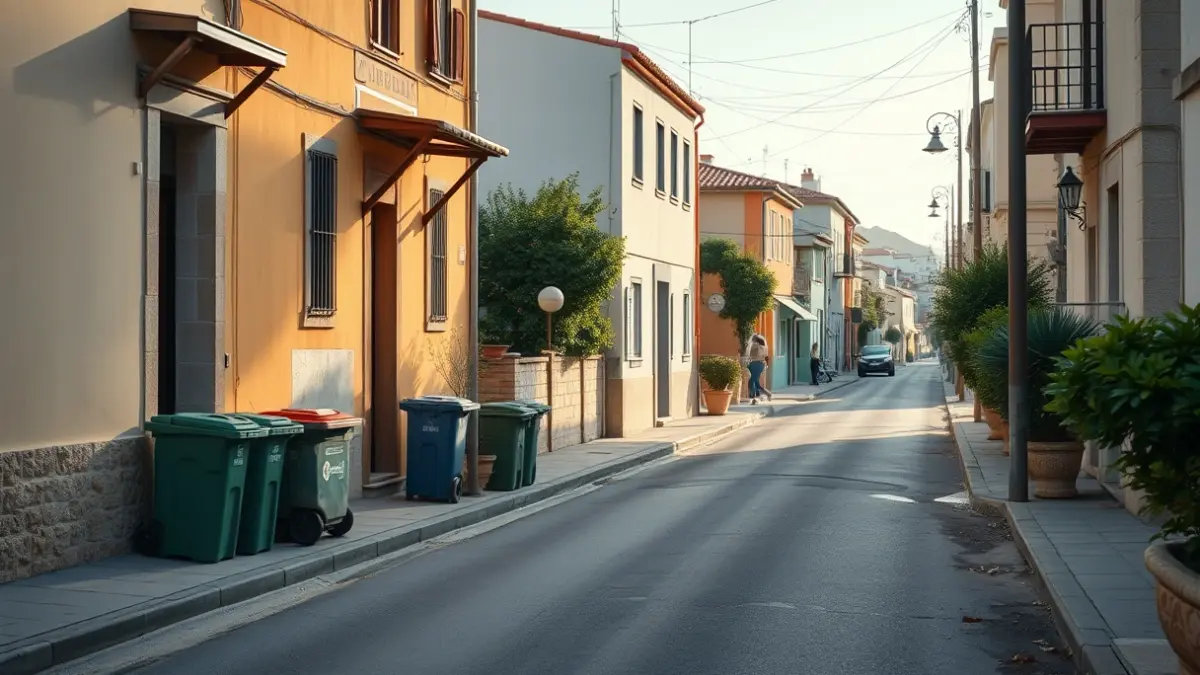
The measure, aimed at improving recycling rates and complying with European regulations, is initially being rolled out in larger municipalities such as Navarrés, Chella, and Anna, where the distribution of bins to residents has already begun.
However, the initiative has met with strong opposition in Navarrés, where over 800 signatures were collected in just two hours, reflecting growing discontent with the new model. Residents express their concerns based on experiences from other localities where the system is already in operation, citing examples like Gavarda or Sumacàrcer.
“"We are not against recycling, but we want easier alternatives that do not imply a loss of freedom for people."
Among the main neighborhood complaints are time restrictions for depositing waste, increased costs for citizens, and a loss of daily convenience. They also warn of the visual and environmental impact the system could generate, especially in summer, with high temperatures and potential problems of odors or dirt in public spaces.
From the Navarrés City Council, the mayor defends the project, arguing that the decision was made within the framework of the commonwealth after technical studies. He points out that the urban configuration of the region, with complex topography and narrow streets, often makes traditional systems like containers or the expansion of the fifth container unfeasible.
“"The door-to-door system was the most suitable to achieve recycling objectives in a topography with very narrow streets like ours."
The mayor recalls that the system has been developed since 2021 with the participation of the involved municipalities and responds to legal obligations that establish recycling targets and potential sanctions for entities that do not meet them. The controversy continues in the region as the system advances in its implementation, amidst institutional support and neighborhood protests demanding more information and debate.