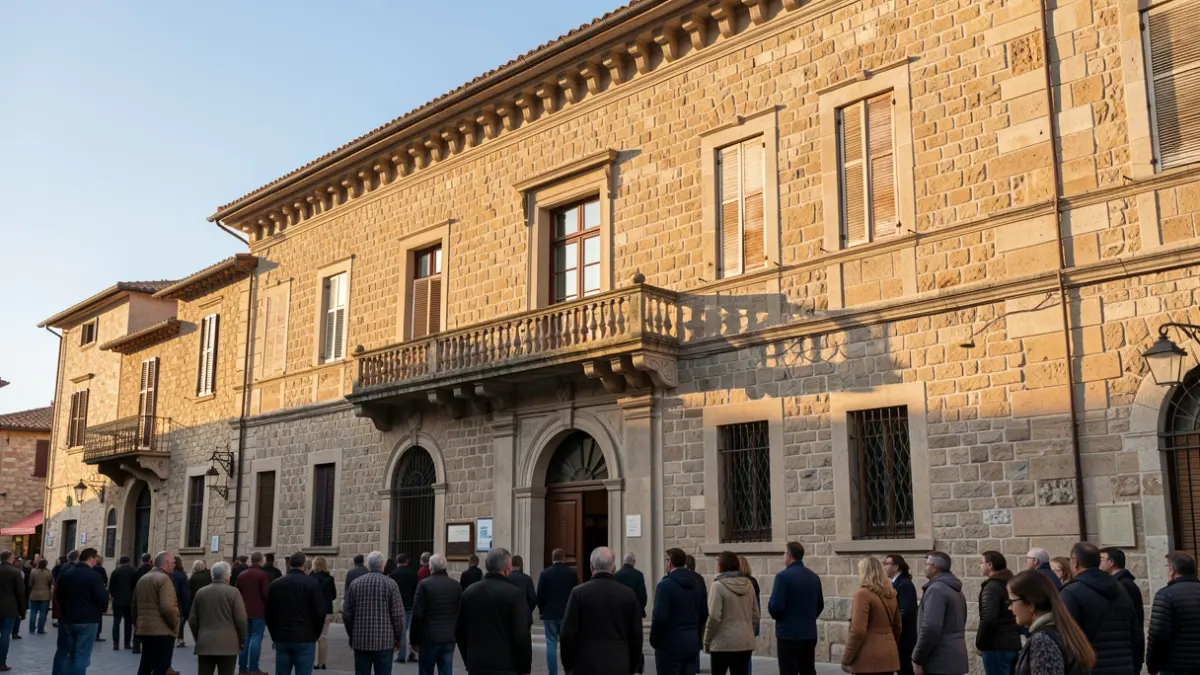
The meeting, held at the town hall, was intended to explore avenues of understanding regarding a project that has generated friction between the two parties. The 'Súper Solidari', initially created as a response to the 2024 DANA to distribute food and basic necessities to affected families, has evolved into a project aimed at vulnerable individuals. Its continuation in a municipal building has led to disagreements, as the council intends to convert the property into an Emergency Care Center.
The meeting took place amidst ongoing conflict over the eviction from the municipal space currently occupied by the project. The Coordinator, accompanied by lecturers from the University of Valencia, aimed to propose a new dialogue channel to reconcile the 'Súper Solidari's' continuity with municipal plans. The proposal included postponing the government team's decision and forming a working group with representatives from the project, municipal Social Services, and university staff to seek a consensus solution.
However, after nearly two hours of conversation, the meeting concluded "abruptly" when the mayor of Alfafar, Juan Ramón Adsuara, left the room without reaching any agreement. According to the Coordinator, the proposal was not accepted by the council, thus considering the dialogue channel exhausted. They assert that the 'Súper Solidari' serves over 200 families weekly and emphasize its community and social support role.
For its part, the Alfafar City Council points to the project's lack of coordination with municipal Social Services as the main point of disagreement. Mayor Adsuara states that the collective "is not willing to cooperate to hand over the families being assisted," which prevents the council from knowing who receives aid or carrying out appropriate follow-up. Adsuara indicates that social intervention is a municipal responsibility and that the activity is carried out without supervision, with records related to health, urban planning, and public facility occupation issues.
The council maintains that these circumstances prevent the regularization of the project under its current conditions and that the Coordinator refuses to work under the same criteria as other collaborating social entities. "They don't want to act like the rest of the NGOs. They want to continue occupying a space that doesn't comply with any health regulations," assures Adsuara, who added that "if they are not willing to comply with the law, we cannot continue negotiating with them." This stance, according to the mayor, was supported by the municipal secretary, the head of Social Services, and the Alfafar commissioner, in addition to being presented to the attending UV professors.