
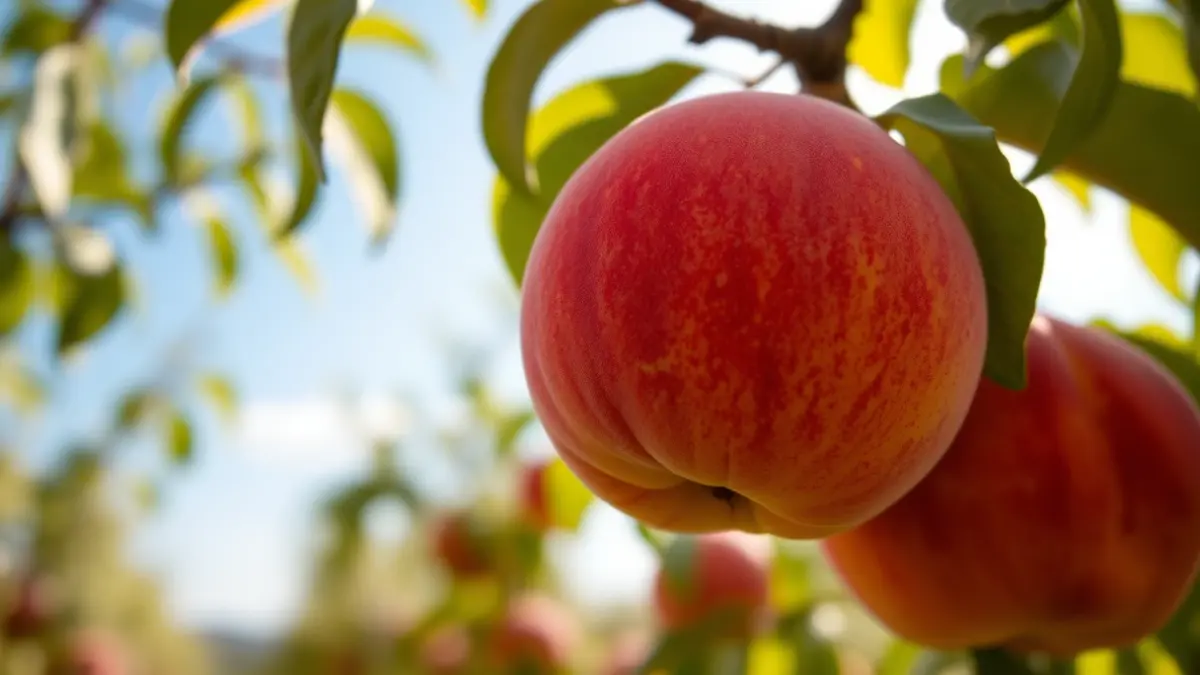
The summer stone fruit campaign in the Valencian Community has commenced with optimistic outlooks, particularly for peaches. Initial harvests in Ribera Alta, a traditional producing area, indicate a significant increase in production. Total stone fruit production, including loquats, plums, cherries, and nectarines, is expected to reach forty million kilos.
The absence of rain and westerly winds in recent days has fostered an excellent start to the campaign, surpassing last season's positive figures. According to a zone manager from a cooperative, production could increase by between 10% and 20% this year.
“"Production will increase this year by between 10% and 20% more than last year."
This production increase is currently accompanied by a positive trend in prices. The first batches of the season, as is customary, are trading higher in the wholesale market, although consumer demand is often linked to temperatures. A delegate from an agricultural association in Ribera Alta notes that while initial prices are good, consumption depends on ambient temperature.
However, not all news is positive for the sector. Apricot cultivation faces a critical situation due to a pest known as the 'cuc cabut' (capitate worm), for which there is no effective solution. This pest is causing the progressive disappearance of trees and an alarming decline in production.
“"In the cooperative, practically only one or two plots remain. The 'cuc cabut' is destroying this fruit, and it is a product that will disappear."
Farmers warn that the withdrawal of effective phytosanitary products without approved alternatives could lead to the complete disappearance of apricot cultivation in the Valencian Community within five or six years.