
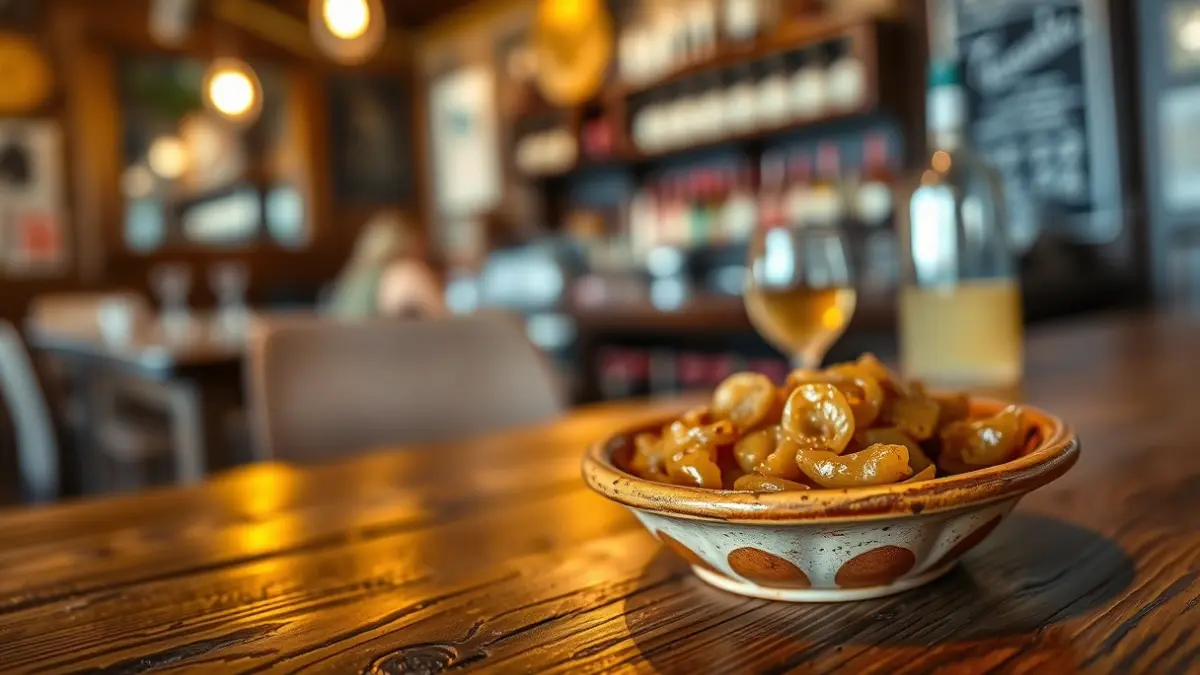
This Wednesday, the television program focuses on the town of Carcaixent to highlight the preparation of Amparín, a tapa that, although part of the local culinary tradition, is being lost and only older residents continue to cook it.
The origin of this tapa dates back to 1940, during the post-war period. According to the story, a cook at Bar Carlos, located near the town's Plaça Major, left a cuttlefish and onion tapa on the heat longer than usual. The unexpected result was a more intense and concentrated flavor that surprised everyone, quickly becoming a very popular tapa. The name Amparín was a tribute to one of his daughters.
Traditionally, Amparín is served as a tapa, often accompanied by Russian salad with onion and tuna, and not as a main dish. To prevent this recipe from falling into oblivion, the Plaça Major de Carcaixent falla has launched the Amparín Contest, an initiative that has already held two successful editions.
In the program, a local resident known as "el papero" and a member of the Plaça Major falla, will be in charge of demonstrating the preparation of the traditional dish. Additionally, a young member of the Cánovas del Castillo falla, Salva Mengual, will offer a reinterpretation of Amparín, inspired by chef Miquel Ruiz's cuttlefish figatells recipe. This high-cuisine version will feature the assistance of Àlex Vidal, chef at Origen restaurant, awarded a Michelin star.
Beyond gastronomy, Àlex Blanquer will also guide viewers to discover the cultural richness, landscapes, and customs of Carcaixent and its people.