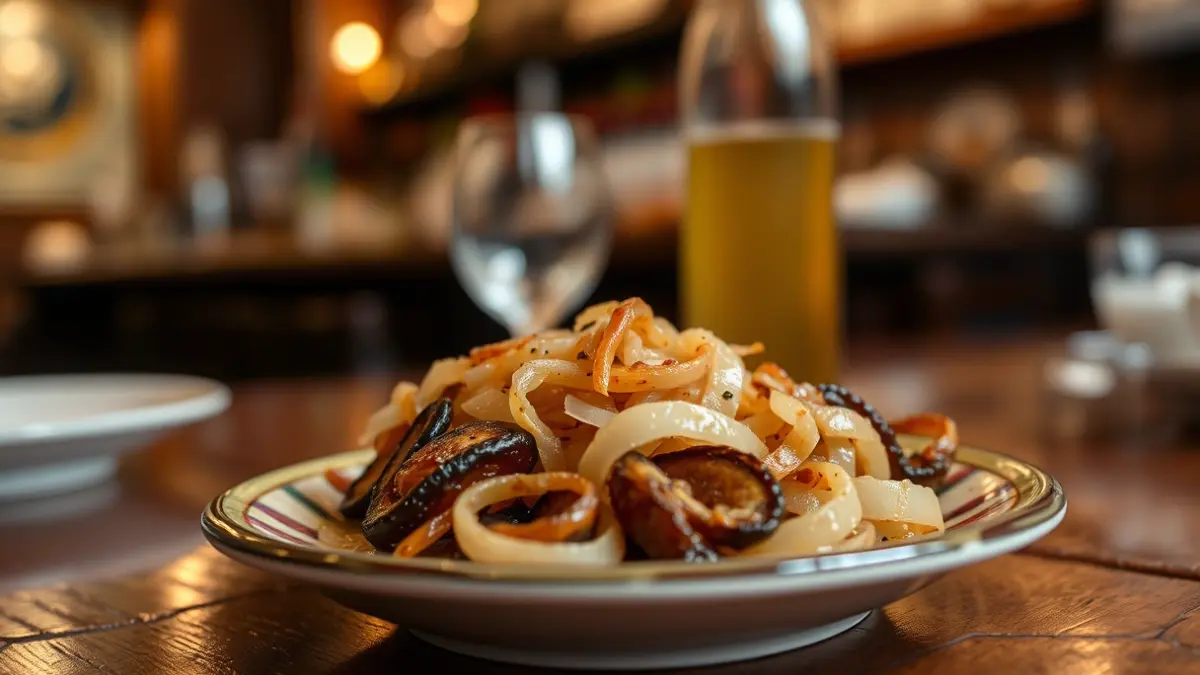
This Wednesday, April 22, the 'Sabors de sempre' program moves to Carcaixent to highlight Amparín, a traditional tapa that, despite its history, was in danger of being forgotten. This recipe, born in the midst of the post-war period, is a symbol of local gastronomy and a reminder of creativity in times of need.
The origin of Amparín dates back to 1940, when the owner of a bar near Carcaixent's Plaza Mayor, while preparing a cuttlefish and onion tapa, left it on the heat longer than usual. The unexpected result was a slow cooking process that enhanced the flavor, turning it into a delight that surprised everyone and quickly became popular. The cook named the tapa "Amparín" in honor of one of his daughters.
Traditionally, this dish is served as a tapa and not as a main course, often accompanied by Russian salad with onion and tuna. Its preparation will be demonstrated by a well-known local resident and member of the Plaça Major falla. Additionally, a reinterpretation of Amparín will be presented by a young member of the Cánovas del Castillo falla, inspired by a renowned cuttlefish figatells recipe.
“"The initiative of the Plaça Major falla in Carcaixent has given rise to the Amparín Contest, an initiative that has already had two successful editions."
The revival of this recipe is possible thanks to initiatives such as the Amparín Contest, promoted by the Plaça Major falla of Carcaixent, which has already held two successful editions. The 'Sabors de sempre' program aims to help ensure this tapa is not forgotten and regains the popularity it once had. In addition to gastronomy, the program will also explore the cultural richness, landscapes, and customs of Carcaixent.