
The Valencian agricultural sector, and particularly irrigation communities, face a complex scenario due to escalating energy prices. This situation, discussed at the recent congress of the National Federation of Irrigators' Communities of Spain in Ciudad Real, jeopardizes the sustainability of many farms, especially those with older infrastructures that rely on diesel.
Pascual Broch, president of the Vila-real Irrigators' Community, highlighted that small irrigation wells with less modernized systems are the most exposed to energy volatility. In these cases, the increase in diesel prices has driven up costs by as much as 50%, directly affecting profitability in dryland areas or inland regions of the province of Castellón where these systems are still common.
“"The increase in diesel prices has driven up costs by as much as 50% in small irrigation wells with older infrastructures, directly affecting the profitability of farms."
Conversely, larger irrigation communities, with over 90% electricity supply and stable contracts, have managed to better contain the impact. The future implementation of dual electrical power for irrigation in Spain by early 2026 will allow for greater adaptation to demand and better cost management. In Vila-real's case, electricity costs are currently around nine cents per kilowatt-hour, reducing the impact of market fluctuations.
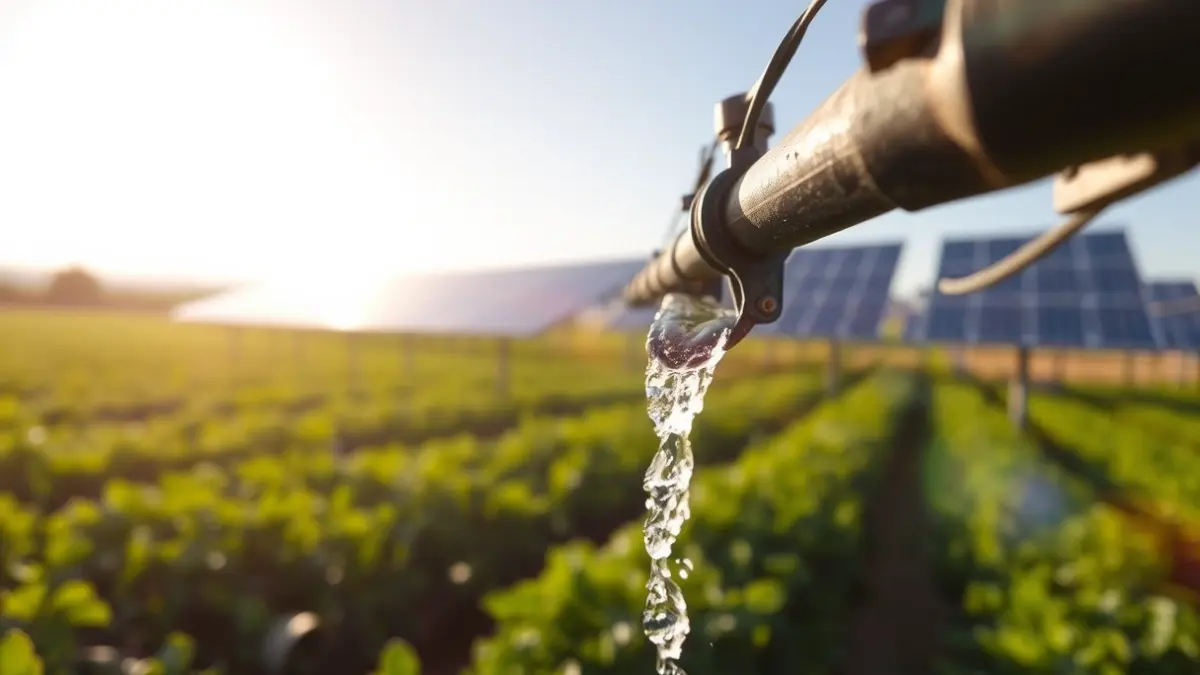
The transition to renewable energies is seen as a key solution for irrigation sustainability. In the province of Castellón, projects are already underway. The Vila-real Irrigators' Community, chaired by Pascual Broch, is finalizing a digitalization process and a comprehensive transformation based on solar energy, with an investment of two million euros funded by the Generalitat to supply the three main irrigation heads with photovoltaic power. This initiative will not only reduce costs but also improve agronomic management and optimize infrastructure control. Additionally, they are participating in an agrivoltaic pilot project for citrus crops.
Other examples include floating solar plants in irrigation ponds in Moncofa and the Ministry of Agriculture's project in Vall d'Uixó, with 4.57 million euros, to maximize wastewater use and reduce costs with two photovoltaic plants. The María Cristina Reservoir Irrigators' Community is also processing a larger project, valued at over 8.5 million euros, for a photovoltaic-powered pumping system. These initiatives demonstrate the sector's pursuit of reducing dependence on the volatile energy market and moving towards a more competitive and sustainable model.
However, resilience to electricity costs does not mitigate another major problem: rising fertilizer prices. The blockade of the Strait of Hormuz, through which a significant portion of urea and ammonia transits, has driven up prices since the start of the war in the Middle East. Farmers are incurring surcharges of around 30% for fertilization, reducing margins and complicating campaign planning. Irrigation communities are demanding urgent measures to mitigate the impact and ensure the sustainability of agricultural activity, warning of potential reduced agricultural production and an impact on food prices if action is not taken promptly.