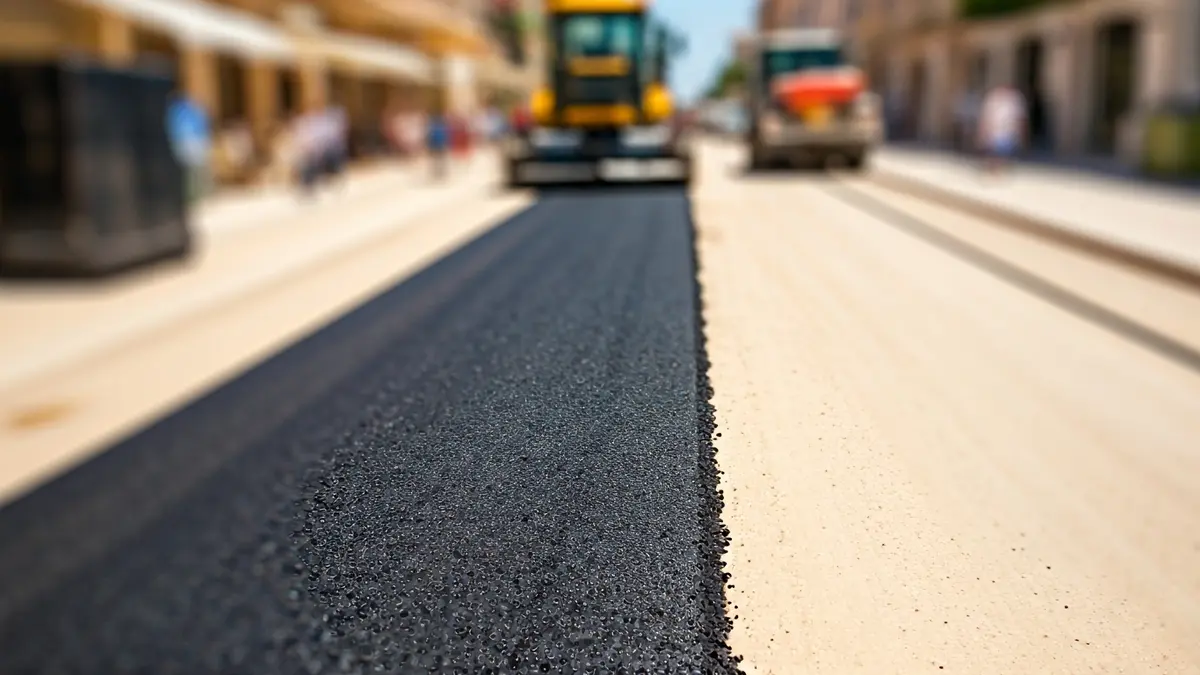
This project, currently in the bidding phase, will focus on renovating several roads that show significant deterioration. Among the streets to be addressed are Palmeral, Conde Bau, Sigalero, Eivissa, La Punta, Mossén Elies, and Pontazgo, as well as Barranquet and La Pobla.
“"This action represents another step in our commitment to maintaining the city and continuously improving public services. Investing in the condition of our streets is investing in safety, accessibility, and mobility."
The Urban Planning Councilor, Carlos Díaz, emphasized that this is a planned and technically justified intervention, which will allow for comprehensive action in those sections where the pavement is most deteriorated. The goal is to optimize municipal resources and reduce future maintenance operations.
The work will include milling the existing pavement and replacing the wearing course, as well as reinforcing with new bituminous mixtures where required. The contract sets an execution period of two months from the start of the works, once the project is awarded through a simplified open procedure.
The intervention will not only improve traffic conditions but also contribute to the conservation of public spaces and the enhancement of the municipality's urban image. The aim is to act preventively on the most degraded sections to prevent further deterioration and thus optimize municipal investment in the medium term.