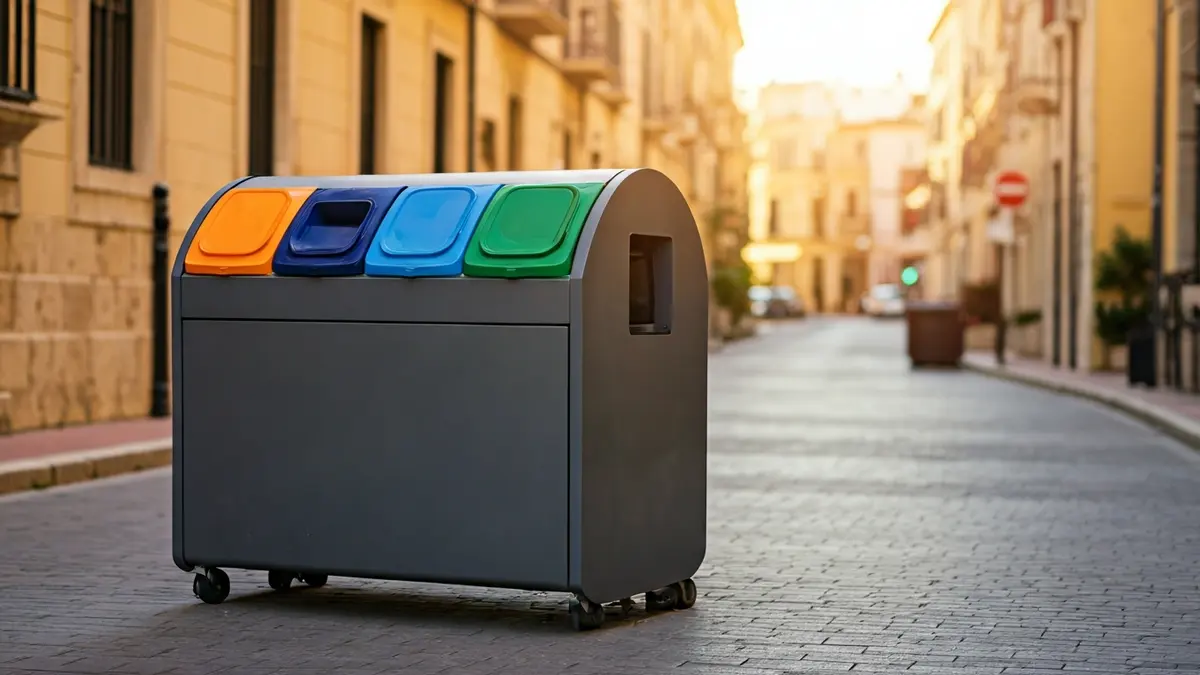
This action is part of the new urban solid waste collection and street cleaning contract, which allocates 5,150,842.82 euros to modernize the waste management service. The Mayor of Benicàssim, Susana Marqués, emphasized that this renewal positions the town “at the forefront of sustainability issues” and contributes to a “more modern, efficient, and environmentally friendly” model.
The Councillor for Environment, Vanessa Batalla, explained that the new containers will allow for more efficient selective collection, incorporating all fractions: organic, residual, light packaging, paper and cardboard, used oil, used batteries, and sanitary textiles. This expansion will facilitate more correct waste separation by citizens.
“"This renewal allows the town to be at the forefront of sustainability issues and move towards a more modern, efficient, and environmentally friendly model."
The new service, provided by the awarded company FOBESA, also includes a corporate image renewal under the slogan “Benicàssim neta amb tu” (Benicàssim clean with you) and citizen awareness campaigns to promote responsible waste management habits. The global contract has a duration of 10 years and a total investment of 47.5 million euros, aiming to profoundly transform the municipality's cleaning and waste collection model.
Furthermore, the contract includes the incorporation of 14 new low-emission vehicles and machinery such as mechanical sweepers, electric vacuum cleaners, and watering trucks, all equipped with digital control systems to optimize routes. Improvements include staff expansion, the implementation of the brown container for organic waste, enhanced collection of bulky items and pruning with WhatsApp support, and increased frequency of mechanized container cleaning.