May 25th marks World Africa Day, a date that commemorates the extraordinary natural, cultural, and human heritage of this continent, considered one of the most biodiverse on the planet. Facing habitat loss, climate emergency, and resource pressure, BIOPARC Valencia, Fuengirola, and the Aquarium of Gijón join this commitment to preserving endangered African wildlife, with a significant role played by the BIOPARC Foundation.
At BIOPARC Valencia, visitors can see the renowned ‘Big Five’: lion, leopard, red buffalo, elephant, and rhinoceros. Elephant calves Makena and Malik, and the young rhinoceros Kairu, can be observed. The hippopotamus can also be viewed from a unique underwater perspective in Spain. The park houses 150 species and 6,000 animals, including rare specimens like the aardvark and critically endangered ones such as the Mhorr gazelle, which has recently welcomed new offspring.
The lush African jungle recreations at BIOPARC Fuengirola and Valencia allow visitors to see gorilla and chimpanzee families, with recent births. The pygmy hippopotamus can also be discovered. The tour includes a journey to Madagascar, to walk among threatened lemurs and understand the need for their protection.
The parks offer the chance to see crocodiles without visual barriers, tropical fish, and other representative species. The Aquarium of Gijón stands out for its African cichlids, mudskippers, the green lizard of Tanzania, and African assassin bugs, introducing visitors to less-known but ecologically essential fauna.
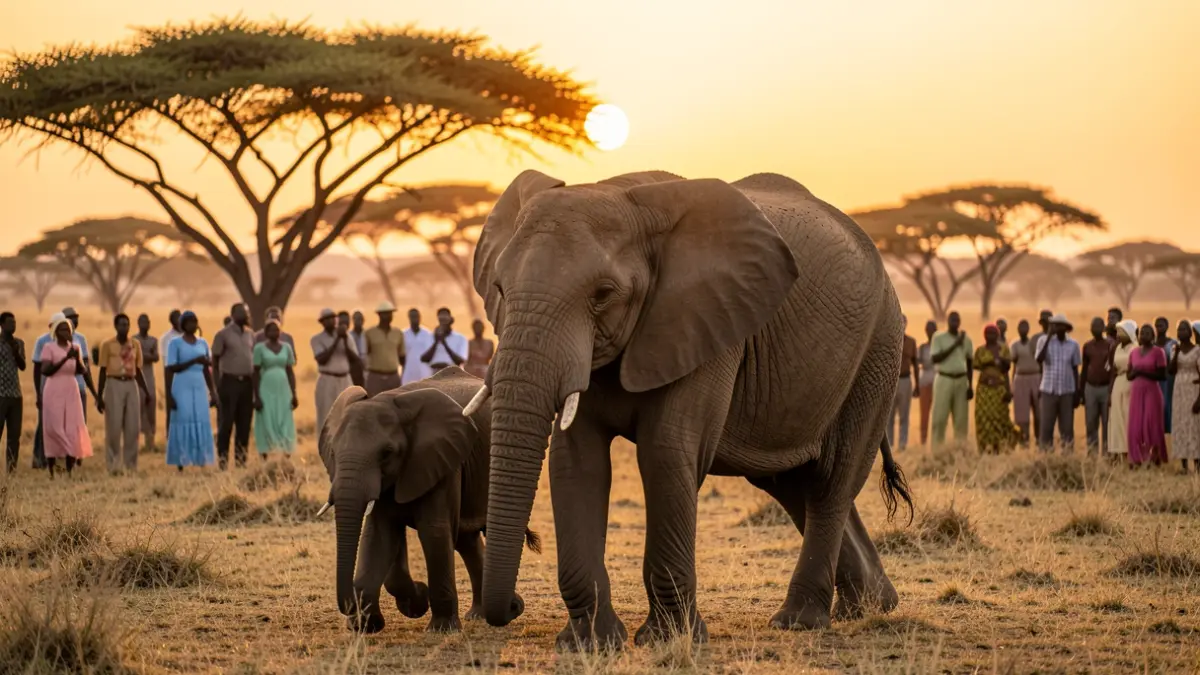
Beyond the experience, conservation is a fundamental pillar. BIOPARC participates in over 100 international programs, and the BIOPARC Foundation promotes sustainable coexistence between wildlife and local communities. A notable project is undertaken with the Big Life Foundation to safeguard the Amboseli National Park (Kenya and Tanzania), benefiting species like giraffes, elephants, rhinos, and large predators. Species at risk, such as mangabeys in Ghana or chimpanzees in the Congo, are also protected. The reintroduction of the Mhorr gazelle in Morocco exemplifies how controlled breeding and international cooperation are key to the survival of species declared extinct in the wild.