The Supreme Court's resolution, dated April 27, sided with the Altea City Council by dismissing the appeal filed by a private individual. This decision ratifies the previous ruling that deemed the plan compliant with the law, with no further recourse possible and imposing costs on the parties.
The appeal challenged a ruling by the First Section of the Contentious-Administrative Chamber of the High Court of Justice of the Valencian Community. The aim was to determine whether it was necessary to calculate costs in an economic viability report for one of the plots, designated as a green area, as argued by the appellant.
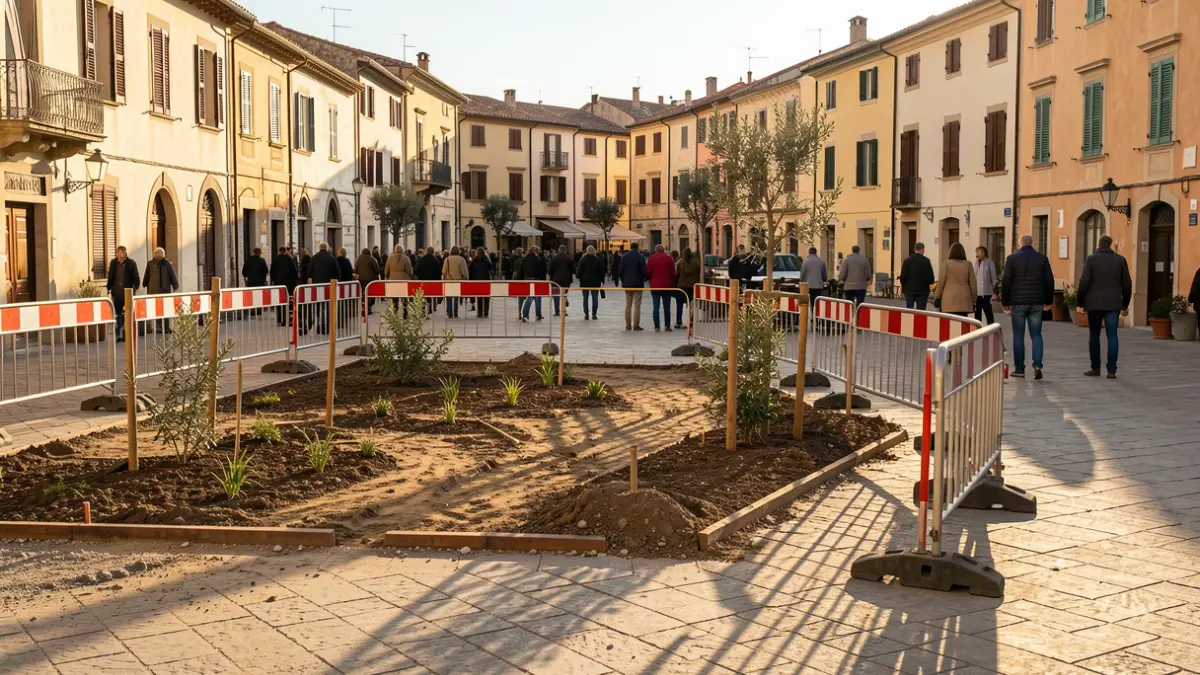
The developer Órbita Solar plans a wellness-focused accommodation in the former Altea Hills Hotel. To achieve this, the company acquired two essential plots for this PRI. The proposed modifications involve transferring building rights from a more distant plot to the one closer to the complex, ceding the former as a green area.
The City Council and an expert report provided by the company argued that an economic viability report was not necessary, as the plot would not undergo any transformation. However, the expert for the plaintiff estimated the cost of adapting this land as a public green area at almost 500,000 euros. The property will contribute 198,241.56 euros to the Public Land Heritage, while the Altea Hills Urban Conservation Entity would assume current expenses of 12,466.40 euros.
The Supreme Court concludes that it is mandatory to always include an economic viability report in such instruments, with data allowing an approximate estimation of the economic impact. For cases where no urban transformation or economic impact is foreseen, the reasons supporting this conclusion must be stated. The Chamber confirms that the plot does not require transformation to be considered a public green area and that the PRI does not contain a budgetary provision for this, which is stated in the economic sustainability report.
The Supreme Court's ruling considers that the requirement to provide an economic viability analysis has been materially met, even if it was included in the sustainability report rather than the viability report. Therefore, it is considered a mere formal irregularity that does not invalidate the plan, and the challenged ruling is not annulled.