
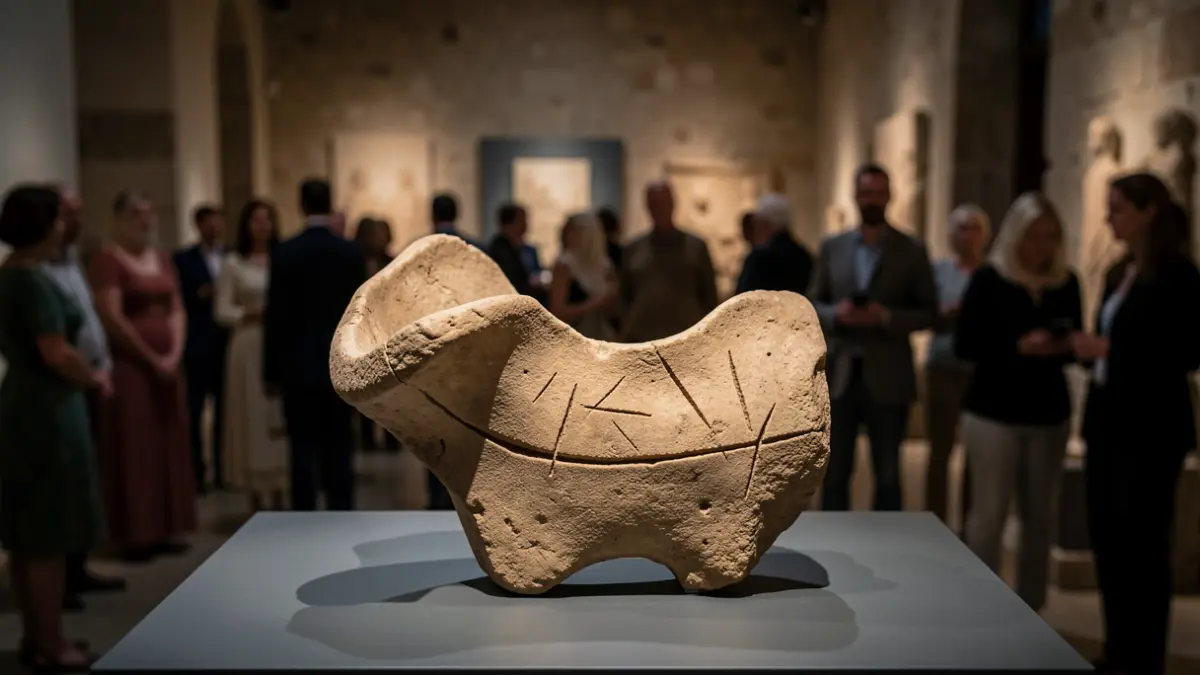
The Alicante Archaeological Museum (MARQ) has recorded over 55,000 visitors to the exhibition Shepherds' Rituals, which showcases findings on the first case of non-violent cannibalism from the Neolithic period in the Iberian southeast, dated 6,400 years ago. These practices are attributed to funerary rituals of mourning.
The exhibition, inaugurated on December 22, 2025, is the result of an extensive archaeological excavation project carried out between 2007 and 2021 at the Cova del Randero, located in Pedreguer (Marina Alta). The project was promoted by the Provincial Council in collaboration with the local municipality.
Among the exhibited pieces are a skull used as a relic, a pottery vessel, and notably, the left mandible of a child aged 7 to 8 years and the remains of a newborn. These latter remains show bite marks and cut marks, indicative of cannibalism without signs of violence, ruling out motives of nutrition or conflict.
Experts interpret these practices as part of Neolithic funerary rituals, making the Cova del Randero a site of great significance. During the Middle Neolithic, the location served as a refuge for shepherd groups, with differentiated areas for livestock and for human rest and meat processing.
Later, in the Late Neolithic-Chalcolithic period, the cave was also used as a burial site. The marks found on the child's jawbone suggest a particular treatment of the bodies, possibly as an expression of affection or preservation of the bond with the deceased.
Another notable discovery is a complete skull of an adult male, found isolated and protected by stones in an inner gallery, dated around 3,400 BC.