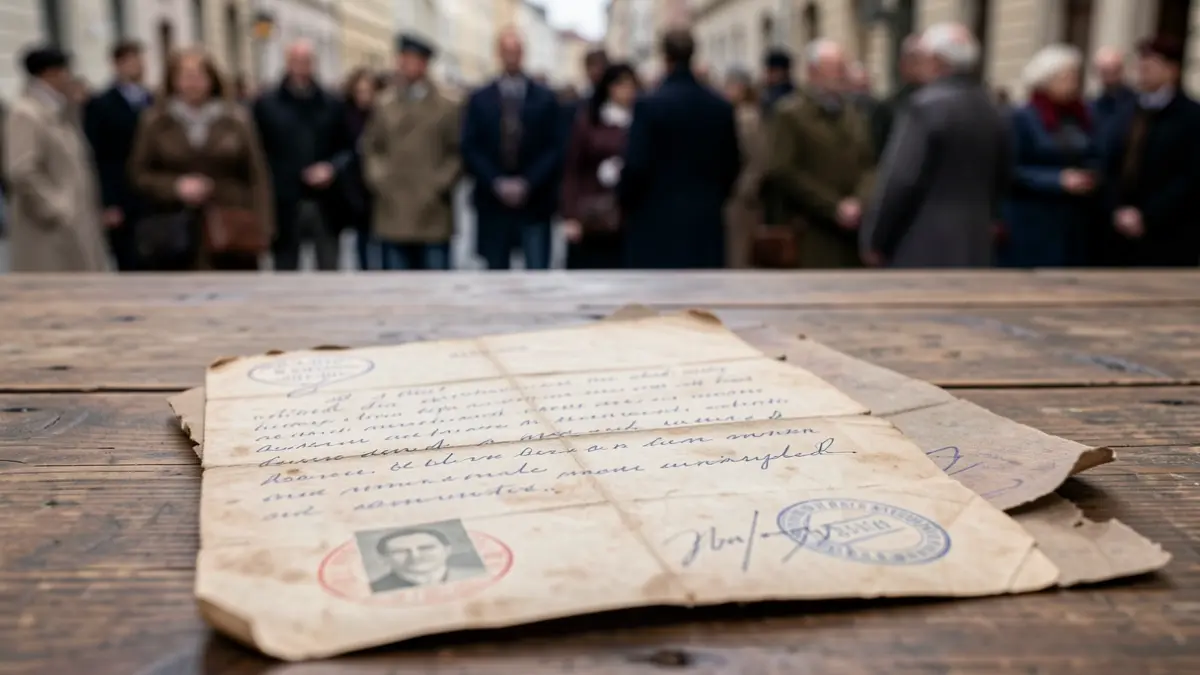
Many families in Calp and El Puerto de Santa María today descend from the same man: Fabián Poquet Guerri. Originally from Parcent, Fabián fought in the Third Carlist War, later served in the Kingdom's Carabineros Corps, and eventually settled in the town of Calp. His name might have remained a family memory if not for a military record that allows us to follow, step by step, the life of one of the many modest men of the 19th century, swept up by armed service and coastal surveillance.
Fabián Poquet Guerri was born in Parcent on September 8, 1853. Son of Juan Bautista Poquet, a farmer, and María Guerri, his military record described him as a day laborer, with brown hair, brown eyes, and a height of 1.62 m. A scar on his forehead was his most visible distinguishing mark. The record added a significant detail about his social status: he could not read or write.
He entered military service on February 28, 1875. Spain was then going through one of the most violent periods of the Third Carlist War. After passing through the conscription office in Alicante, Fabián was incorporated into the 27th Infantry Regiment of Cuenca. Over the following months, he participated in numerous military operations in places such as Cantavieja, Organyà, Sant Llorenç de Morunys, and the surroundings of La Seu d’Urgell. The documentation notes that during the capture of Cantavieja, approximately 2,500 prisoners were taken. Fabián Poquet was part of the columns that acted against the forces of Dorregaray and was stationed in Olite, Estella, Irún, and Guipúzcoa until the definitive pacification of the conflict.
That military experience left its mark on his service record. The State recognized his right to wear the Medal of Alfonso XII and declared him Worthy of the Homeland. In 1879, he left the reserve battalions and joined the 59th Infantry Regiment Asia. Shortly after, he entered the Kingdom's Carabineros Corps, an institution responsible for fiscal and maritime surveillance in a coastal area where smuggling was a frequent activity. In between, there were leaves, transfers, and successive re-enlistments that extended his service in the corps until the early 20th century. In 1890, he was temporarily assigned to the command in Algeciras before returning to Alicante.
The documentation also sheds light on intimate aspects of his family life. On May 20, 1882, he married María Teresa Poquet Pérez in Parcent. The couple was already registered as residents in Calp that year. His wife passed away shortly after, on October 8, 1883. Widowed at thirty, Fabián remarried on March 8, 1886, in Calp to Melchora Cabrera Pérez. This marriage explains the former carabineros' later connection to the town. Melchora lived in a farmhouse in the Carrió area, close to the coastline where Fabián must have served.
One of the most revealing passages in the record appears in 1894. His superiors granted him a new re-enlistment despite his inability to read or write and his proximity to the regulatory age limit. The resolution warned that he would not receive future renewals if he did not acquire basic instruction.
Finally, in July 1904, the Carabineros Command in Alicante formalized his retirement proposal. The record recognized 28 years and eight months of effective service and over 29 years countable for a pension that amounted to 22.50 pesetas per month. We do not know his date of death due to the destruction of the parish archive. Beyond the official stamps lies the trace of a 19th-century man who lived through some of the most turbulent episodes of contemporary Spain.