
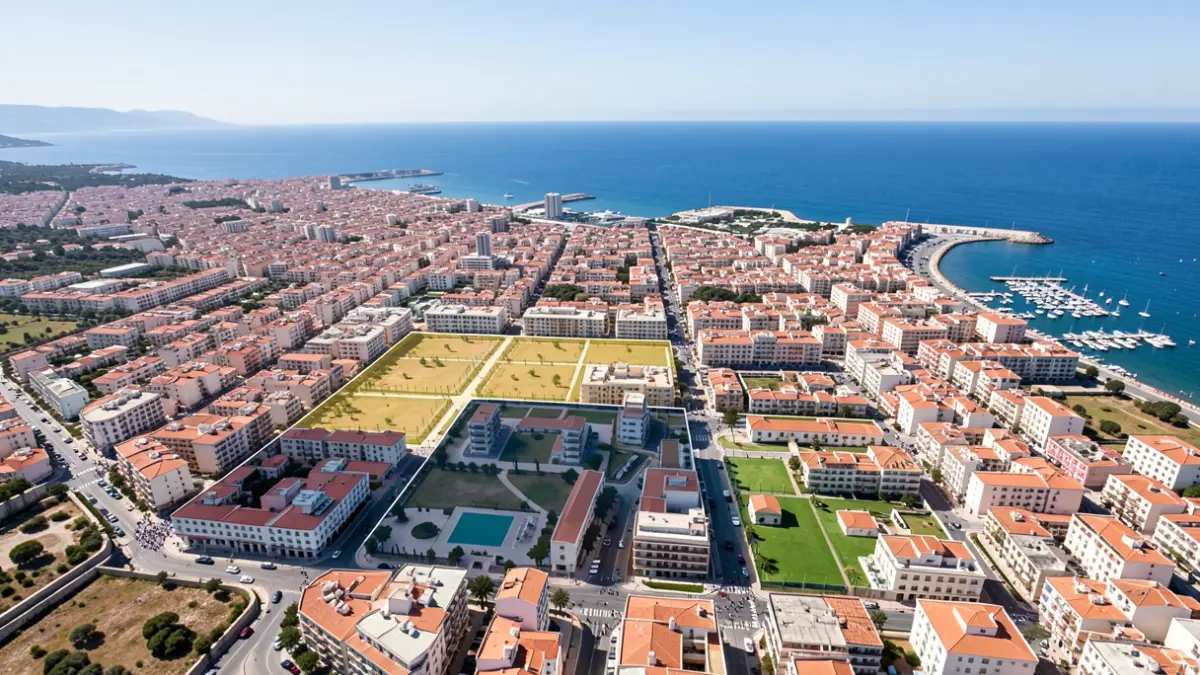
Dénia's urban center will undergo a transformation starting in 2029 with the implementation of a new ordinance that will drastically limit the presence of tourist homes (VUTs). The regulation divides the city center into three zones, aiming to reduce the number of properties for holiday rentals and prioritize housing access for residents.
The area marked in light brown (Area C), which includes neighborhoods like Les Roques, the surroundings of Loreto street, Sant Josep, and part of Baix la Mar, as well as residential areas such as the avenues of València and Alicante, Plaça París, Paseo del Saladar, Patricio Ferrándiz, Pintor Llorens, Jorge Juan, Grup Mariners, Corona Sur, and Jesús Pobre, will see VUT licenses not renewed once they expire from 2029 onwards. As explained by the Councilor for Territory, Maria Josep Ripoll, the goal is for these properties to be converted into long-term rentals to facilitate housing access for the local population, whose prices have skyrocketed.
The ordinance also distinguishes an area A (in blue), where a 15% growth in VUTs will be allowed, up to 70 new units, concentrated in urbanizations with few resident populations and already a presence of this type of accommodation. Area B (in green) will maintain the current percentage of tourist homes, with 127 VUTs distributed in areas such as Colón, Ensanche, Sandunga-Fontanella, Marqués de Campo, Pont, and El Raset, only allowing for the replacement of vacancies.
With this measure, the total number of VUTs in Dénia's urban center will decrease from the current 639 to 344. However, the city will continue to have around 5,000 tourist homes, mainly concentrated in Les Rotes, Les Marines, and Montgó, areas that are outside this new regulation. The councilor emphasized that the intention is to achieve a balance, recognizing the importance of tourism as an economic driver, but avoiding 'criminalization' and preserving life in residential neighborhoods.