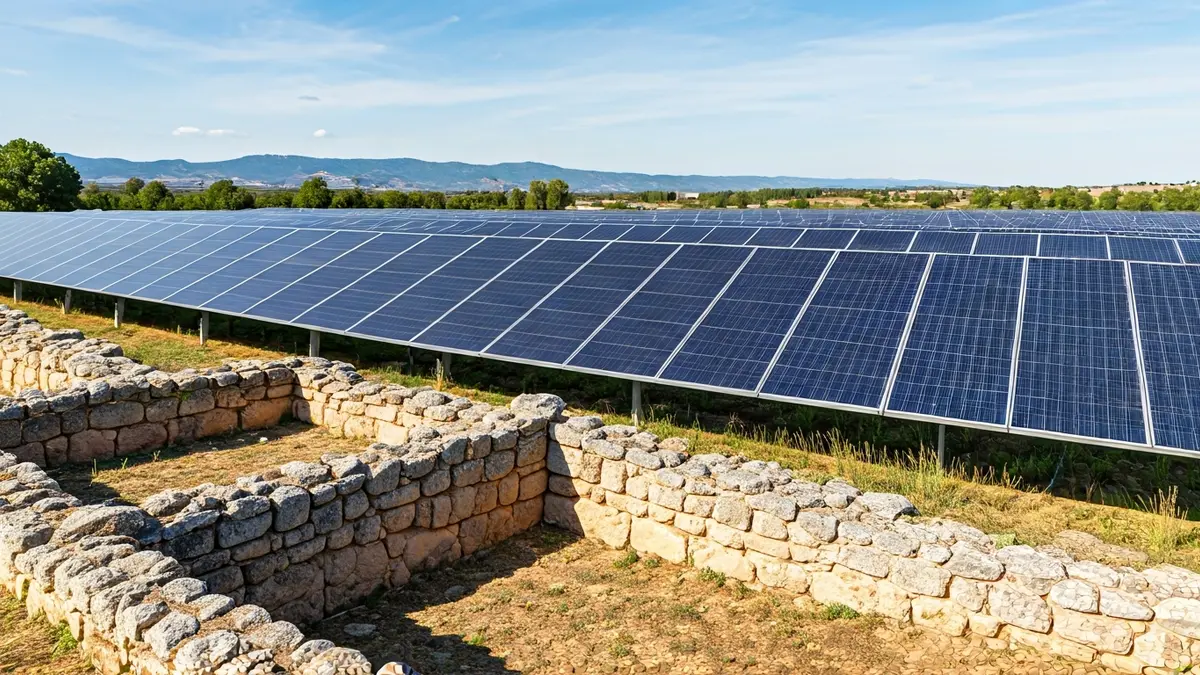
The project, which aims to reduce energy costs for water pumping and the price of irrigation water, has met strong opposition. The Moixent City Council, along with Acció Ecologista-Agró, Montesa Territori Viu, Ecologistes en Acció, and Xúquer Viu, among other associations and residents, have supported the allegations against the installation in the Garamoixent area, near the municipality of la Font de la Figuera.
The entities have expressed their opposition to the 47 million euro investment, arguing that the plant is projected on protected non-urbanizable land. Acció Ecologista-Agró invokes a 2004 Constitutional Court ruling, which establishes that regional regulations do not permit authorizing photovoltaic plants on protected land.
The effect of the different existing infrastructures in the area and the added damage of the new photovoltaic installation have not been adequately studied.
The environmental group also points out deficiencies in the impact study, such as the failure to consider an already projected and approved high-voltage line in the same area, the Almansa-Montesa line. Although the promoting company for this line has entered suspension of payments, the project remains approved and could be reactivated.
Montesa Territori Viu considers the macro-plant unnecessary, suggesting that the objectives could be achieved by resolving the problems of the delayed commissioning of the San Diego Reservoir in Villena. This reservoir, which cost 40 million euros and was built in 2010, remains unused due to serious leaks and defects.
Furthermore, Xúquer Viu questions the justification for Acuamed's action, which is based on the poor state of the groundwater bodies in the Vinalopó basin. However, Xúquer Viu recalls that the Justice system annulled these declarations, making the justification, according to them, false.
Another point of concern is the potential impact on archaeological remains, as the project is located opposite the Iberian settlement of Corral de Saus, with numerous vestiges dating between the 6th and 1st centuries BC. The impact on agriculture is also significant, with an estimated 20% of Moixent's productive agricultural land affected, and 2% of the most productive, leading to a consequent loss of jobs.
Some associations consider it counterproductive to improve agricultural land in one region (the Alto Vinalopó) by harming agriculture in another (the Costera). There is also concern about the landscape impact, as the area maintains a pleasant agricultural and semi-natural landscape, and the environmental impact study already highlights this as a significant concern. Ecologistes en Acció del País Valencià alleged that these lands are included in the regional relevance landscape 29 Vineyards of les Alcusses i Els Alforins.