In a context marked by the need to adapt urban planning to the consequences of the Dana of October 29, 2024, the plenary session of the Picanya City Council addressed a proposal last March to apply a moratorium on land at risk of flooding. However, the PSPV, the Partido Popular (PP), and Vox rejected the motion presented by Compromís, which proposed temporarily suspending the processing of certain urban developments, such as the expansion of the La Taronja industrial estate.
The initiative sought to introduce a pause in urban processing until the Territorial Action Plan on Flood Risk Prevention (Patricova) is reviewed, incorporating new cartographies derived from the Dana and the effects of climate change. The objective, therefore, was for decisions on new developments to be made with updated information on the real risk of flooding. The proposal affected planning instruments that impact land identified as floodable in official cartographies, including that of the Generalitat prepared after the Dana.
Furthermore, the motion extended this criterion to land that appears as non-floodable in those maps but, in practice, was indeed submerged during the flood. In these cases, the proposal did not suggest an automatic paralysis, but rather to condition the continuation of procedures on the incorporation of runoff studies prepared by developers and validated by the regional administration.
“"The motion responds to a criterion of prudence given the lack of updated risk cartography. The proposal seeks to temporarily halt urban procedures that were underway before the Dana, until the data is updated."
This approach is not new in institutional debate. In fact, it reproduces the content of the amendment that the PSPV, the party governing in Picanya with an absolute majority, defended in Les Corts during the processing of Law 2/2025 on urban measures for reconstruction after the Dana. In that debate, the socialists precisely proposed suspending urban procedures in flood-prone areas until the Patricova is reviewed and requiring additional studies in certain cases. The amendment did not prosper as it did not have the support of the parliamentary majority.
The initiative also aligns with the requests that the Local Emergency and Reconstruction Committees (CLER) conveyed to the Government of Spain in early March, as they demanded an immediate moratorium in municipalities affected by the Dana. These groups warned that many of the lands where new developments are projected acted as natural drainage areas during the episode, which, in their opinion, should be taken into account before urbanizing those lands.
It is at this point that the expansion of the La Taronja industrial estate comes into play. The Picanya City Council approved a modification of the General Urban Planning Plan (PGOU) in May of last year to incorporate more than 102,000 square meters of land —largely agricultural— for logistics and manufacturing uses. It should be remembered that part of this area was affected by the floods of October 29, 2024. In addition, some of these lands have been included in the flood zone cartography prepared by the Generalitat after the Dana.
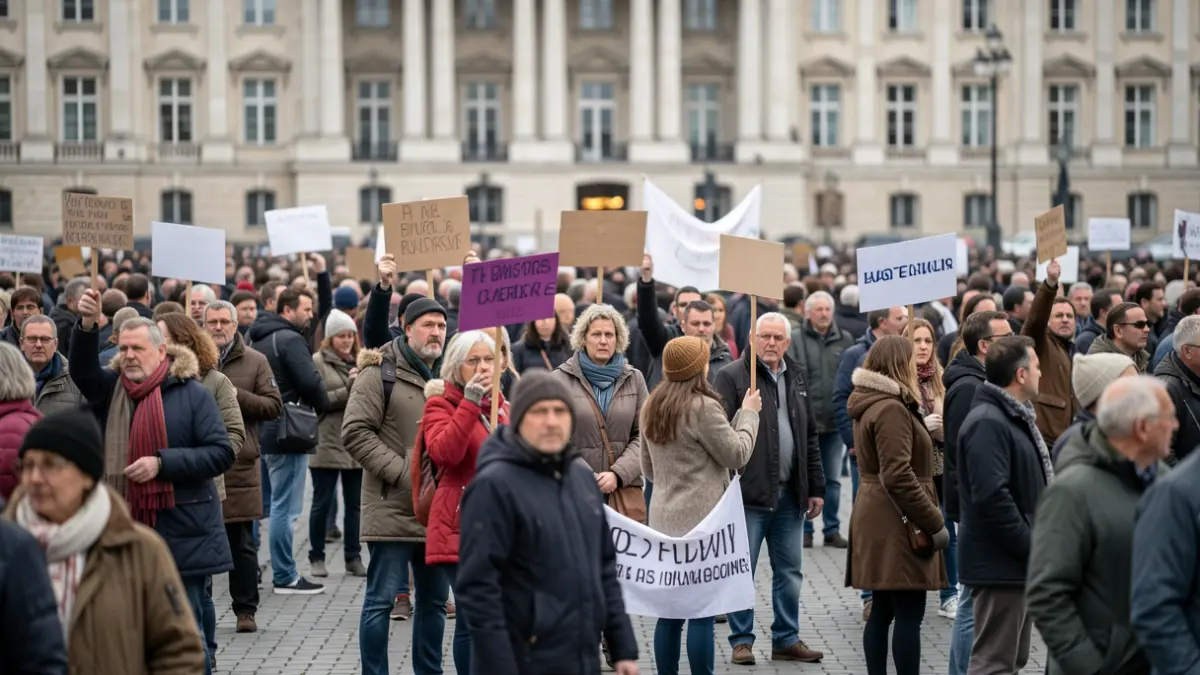
The application of the moratorium proposed in the Compromís motion would have meant reviewing these types of developments with new data before continuing with their processing. The La Taronja project has generated some social opposition, with the Per L'Horta collective presenting more than 200 allegations and even calling a concentration in the municipality last February.
“"Urban planning must be based on official instruments with binding character, such as the Patricova. Territorial planning must find a balance between land occupation and safety."
The governing team defended its vote against the motion by appealing to the current legal framework. A representative of the city council pointed out during the March plenary session that, although they share the concern for territorial protection, urban planning must be based on official instruments with binding character, such as the Patricova. He added that territorial planning must find a balance between land occupation and safety, and defended that this criterion is applied in the municipality. Likewise, he indicated that the modification of the PGOU linked to the expansion of La Taronja complies with urban regulations and is based on the official cartography currently in force.