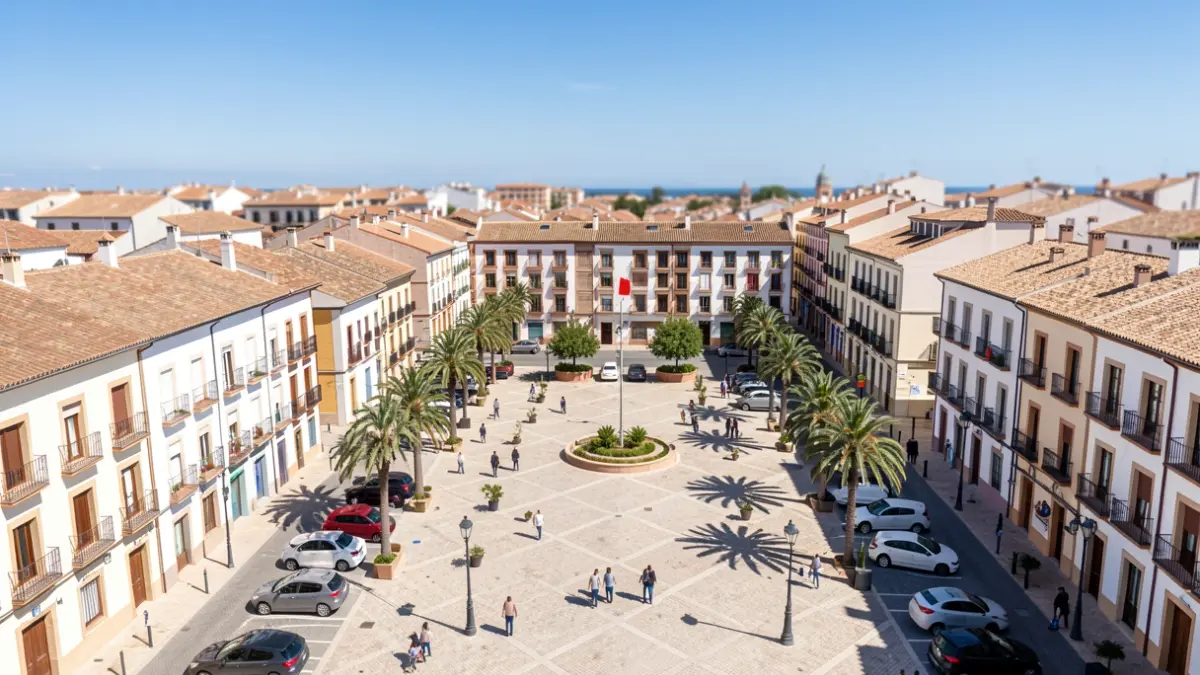
The action, part of the 'Pla Aparca' (Parking Plan), aims to return this central enclave to the citizens, balancing pedestrian and resident use with safer, more accessible parking that is coherent with the municipality's life.
After the catastrophe, the square became a key logistical hub for the emergency, with rescue vehicles and UME (Military Emergencies Unit) personnel present. Once the critical phase passed and due to the lack of operational parking lots, the space served as provisional parking for neighborhood residents.
However, this vehicle saturation caused accessibility issues for the elderly or people with reduced mobility, and limited the social and safe use of the square for children. The Local Police support the need for change, certifying the road normalization, as only 19 of the 189 municipal parking spaces still need repair.
The mayor, Lorena Silvent, defends the intervention to restore urban normality: “It's not about removing parking without reason, but about organizing it better, making it compatible with the life of the square, and ensuring the needs of the residents.” She emphasizes that the initiative combines citizen education and technical solutions.
With the new design, the Plaza Mayor will maintain 65 spaces for preferential resident use, thus avoiding an absolute ban and ensuring access for homes and emergency services. This measure is in addition to the overall success of the 'Pla Aparca', which already has 2,700 spaces in the municipality and adds another 90 on Camí de les Corregudes.
This surface reordering is a transitional phase. The council is expediting procedures so that construction of the municipal underground parking lot in the square can begin by the end of summer. This project, with an investment exceeding five million euros, aims to solve the long-term parking deficit.