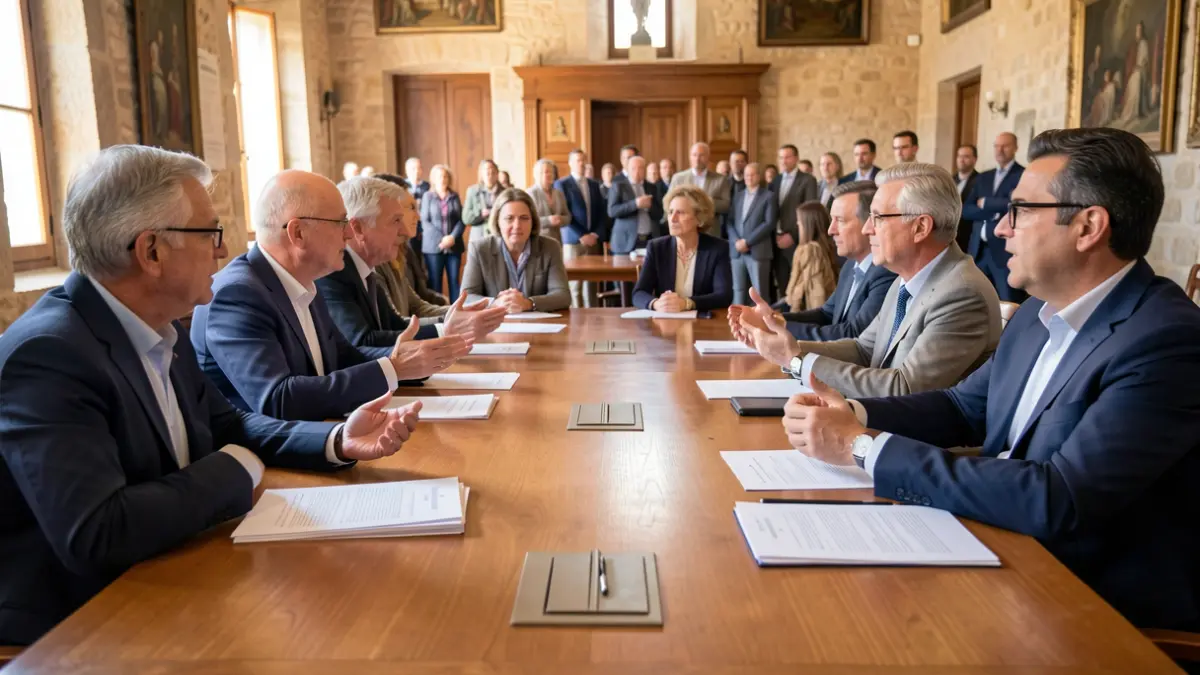

The Local Government Board has given the green light to this historic document, which will serve as a guide for the incorporation and use of this technology with the aim of improving the services that public administration offers to citizens. The municipal commitment is for AI to optimize public resources.
As explained by the Councilor for Innovation, Technology, Digital Agenda, and Investment Attraction, Paula Llobet, “artificial intelligence is not just another tool; it is a change of model that demands leadership, governance, and a vision for the future”.
The first principle of the decalogue emphasizes an “AI centered on people, developed and used in accordance with the European framework, with full respect for fundamental rights, human dignity, and democratic values”. The agreement also highlights the decision to address AI as an organizational change, with institutional leadership, and not as a mere technological acquisition.
The approved text guarantees human supervision of decisions, transparency of the systems used, and continuous evaluation of their results and effects. Furthermore, the City Council commits to offering free training to citizens, with special attention to groups at risk of digital exclusion, to ensure that the transformation leaves no one behind.
The decalogue also reflects the commitment to active participation from municipal staff, assuming their training and permanent dialogue. Likewise, it shows “active support for the city's economic fabric” and advocates for Valencia's role as a data aggregator.
Finally, collaboration with universities, research centers, and European infrastructures is planned, as well as reinforced protection of rights against illicit uses and Valencia's ambition to be a European benchmark in applied AI. This initiative consolidates an ongoing strategy, which includes the creation of the Ethics and Governance Committee for AI (CEGIA) and the Technical Office for AI and Data.