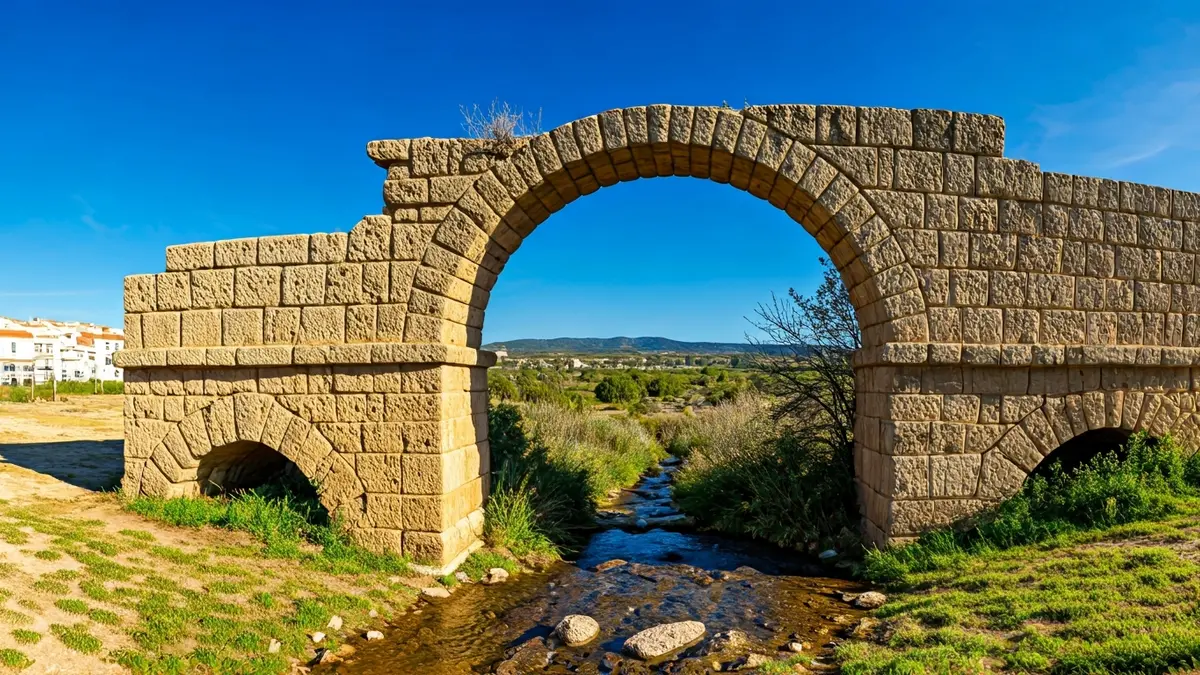
This initiative comes after an unfavorable report from the CHJ, which believes the infrastructure, lacking functional use, could obstruct water flow and reduce the hydraulic section of the ravine. However, the Valencian administrations defend the aqueduct's patrimonial importance.
The mayor of Torrent, Amparo Folgado, accompanied by the Councillor for Urban Planning and Environment, José Gozalvo, visited the affected area last Tuesday, April 7, to reaffirm the municipal commitment to restoring this heritage element. According to Folgado, the goal is to "defend the restitution of the aqueduct and exhaust all available administrative avenues".
“"The recovery is not an aesthetic action, but a patrimonial, historical, and emotional repair. We cannot be the generation that gives up on it."
The council has submitted technical and legal allegations refuting the state body's arguments, asserting that the intervention is "legally appropriate, technically viable, and compatible with current hydraulic regulations". Furthermore, the reconstruction has a grant of 600,000 euros from the Generalitat, earmarked for the restoration of this Local Relevance Asset.
The allegations emphasize that the aqueduct's cultural value constitutes a recognized public utility, being part of Torrent's collective identity, and its loss would have a significant impact on the municipality's historical memory. The municipal government team insists that the project incorporates solutions such as deep micropiling for the foundation and internal structural reinforcements, which would not only prevent a reduction in hydraulic capacity but also improve structural safety compared to the situation before the DANA.