Food in medieval Valencia has been a relatively unexplored historiographical field, but thanks to the work of historians like Juan Vicente García Marsilla, we have a better understanding of the era's dietary habits. The diet was shaped by the medical criteria of Galenism, which based health on the balance of four bodily humors: blood, phlegm, yellow bile, and black bile.
According to this concept, food and the human body were composed of the same four elements (earth, water, air, fire) and four qualities (hot, cold, dry, moist). The combination of foods affected the humors, and physicians advised or discouraged certain dishes to maintain balance. It was common to have a doctor at the table to warn about harmful foods.
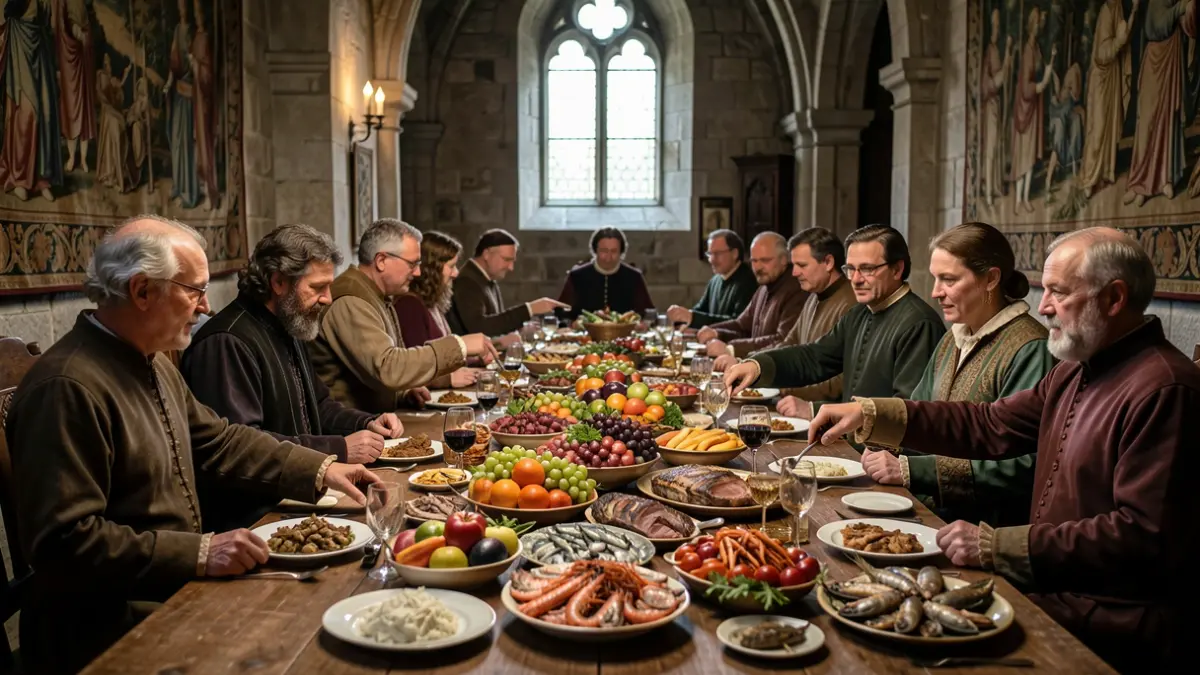
However, medical advice was not always strictly followed, as some discouraged foods held great prestige. Among these were fresh fruit, considered cold and moist, although it was frequently consumed in moderation. The melon, for instance, was seen as dangerous but could be used to reduce body heat.
Fish such as lamprey or conger eel, considered cold and moist and difficult to digest, were highly prized by the elite. Seafood, like mollusks and crustaceans, generated distrust due to living near the seabed but remained part of the aristocratic diet, especially during festivities.
Milk and dairy products were problematic due to their tendency to spoil, although cheese gained acceptance, including famous varieties like brie or roquefort, and more local ones such as those from Sant Mateu.