The film Los ilusos, which had a very restricted premiere thirteen years ago, now returns to theaters with a renewed version. This new edition, titled Los ilusos 13+13, maintains the original editing but incorporates the color from material shot between 2011 and 2012, placing it in dialogue with the black and white images of the foundational work for Jonás Trueba and the creative core of Los Ilusos Films.
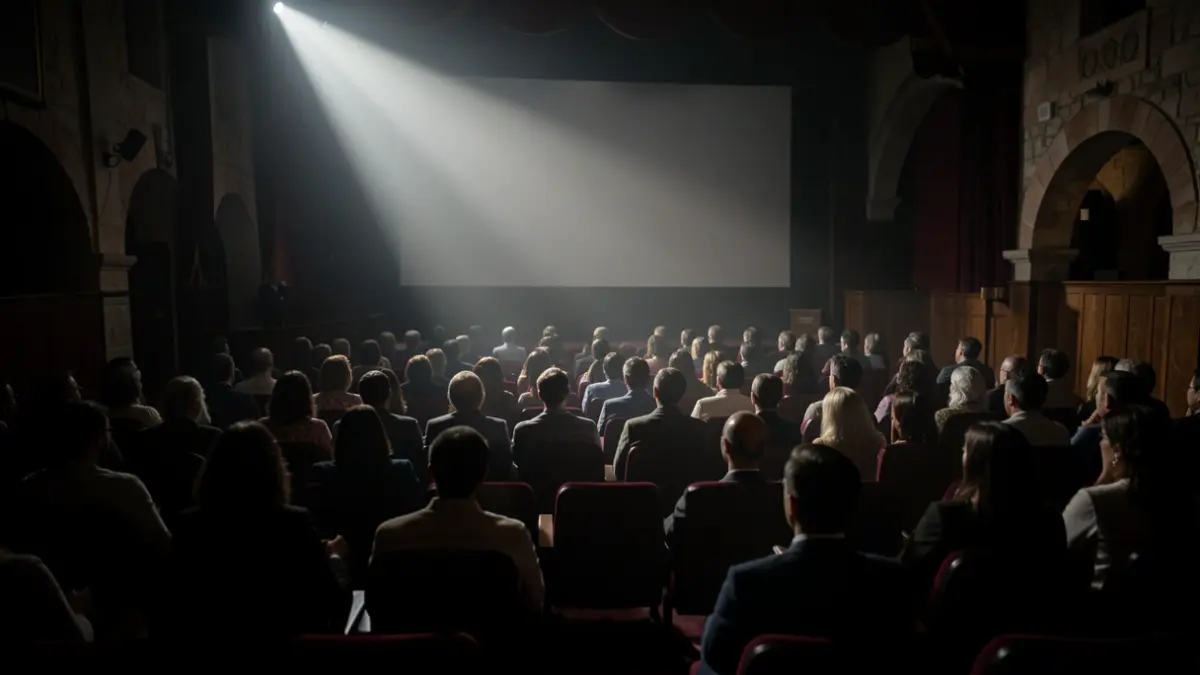
The result is a work traversed by the passage of time, functioning as a portrait of the desire to make cinema and, at the same time, as a time capsule of a city, a generation, and a way of understanding collective creation. Jonás Trueba and Vito Sanz, director and actor of the film respectively, presented this new version at Cines Babel in València.
Trueba described Los ilusos as his "zero film," despite having previously directed Todas las canciones hablan de mí. He explained that while he was satisfied with the outcome of his first film, the production and distribution process left him unsatisfied. Faced with a transitional cinematic context, he decided to make Los ilusos as a response to the question of what film he could make without impediments, seeking a "possibilist" option made with friends and with few resources, self-financed, and with the aim of building a different way of producing and distributing.
Vito Sanz highlighted how creative and production independence, despite the constraints, brought serenity and the strength to "do something with what we have." Both Sanz and Trueba emphasized that the entire team's renunciation of many aspects (salary, resources, conventional characters) was key to imposing the project's personality and strength, demonstrating that they could make cinema by depending on themselves.
The film profoundly marked Sanz, who considers it a vital and professional turning point. He pointed out that, facing the "noise" of the current industry, the possibility of making cinema with autonomy and friends helps to "silence that noise" and focus on one's own capabilities.
Regarding the cast's involvement, Sanz commented that the film was a starting point for many, with informal gatherings to shoot and build together. Trueba added that it wasn't clear from the beginning that it would become a film, but his desire to make it that way, stemming from previous reflections, infected the team. The "spirit of Los ilusos" has become a mantra for the collective, who have continued to make films together.
During filming, there was an awareness that everything could be part of the final footage, aiming for a "porous and physical" film. The long editing process involved not erasing the feeling of the shoot, keeping the collective spirit alive. Trueba highlighted that, despite not having a conventional narrative thread, the film found its own flow.
Viewing the film in a theater, unlike watching it on a laptop, reveals its fun and everyday nature. Trueba notes that the color in the new version better brings out the comedic side, which was already present but could have been masked by the solemnity of black and white. Both he and Sanz consider its spirit to be that of a comedy, which finds humor even in serious topics like the death of cinema or personal crises.
Regarding criticisms of "pretentious" or "pedantic" in auteur cinema, Trueba argues that his films are "light" even though they "seriously" address certain aspects of daily life. He points to a "cultural closure" and prejudices surrounding auteur cinema, stating that their works are not forced and that cinematic language allows for "pretending things," such as offering a good theater experience.
Sanz reiterates that the themes and references in the films are part of their friendship and daily lives, experiencing it as something natural and beautiful. He emphasizes that they don't discuss "grand abstract themes," but rather issues that personally affect them. Trueba acknowledges that Sanz, with his popular connection, helps to "ground" the films and balance tensions, bringing humor and counteracting his tendency to talk non-stop.
The representation of Madrid in Los ilusos, seen thirteen years later, evokes a "ghostly" and melancholic feeling, capturing a neighborhood that no longer exists in the same way. Trueba acknowledges that the passage of time is inevitable and that cities constantly change, feeling a "pang" when familiar spaces disappear. The film reflects the economic crisis of those years, with closed businesses, but also the ability to capture what was "in the air."
The sense of dislocation between the film's present-day relevance and the city's rapid change is palpable. Trueba points out that cities change and one becomes more aware of it with age. Sanz mentions the case of the El Carmen neighborhood in València as an example of urban transformation that occurs in all cities.
The awareness of capturing what was being lost was particularly clear with the cinemas. Trueba recalls the emotion of filming their facades, thinking they might disappear, and now sees that they are all still open. Beyond the cinemas, the feeling of capturing the city before it changes is constant, as when he discovers a beloved bar has closed to make way for a kebab shop.