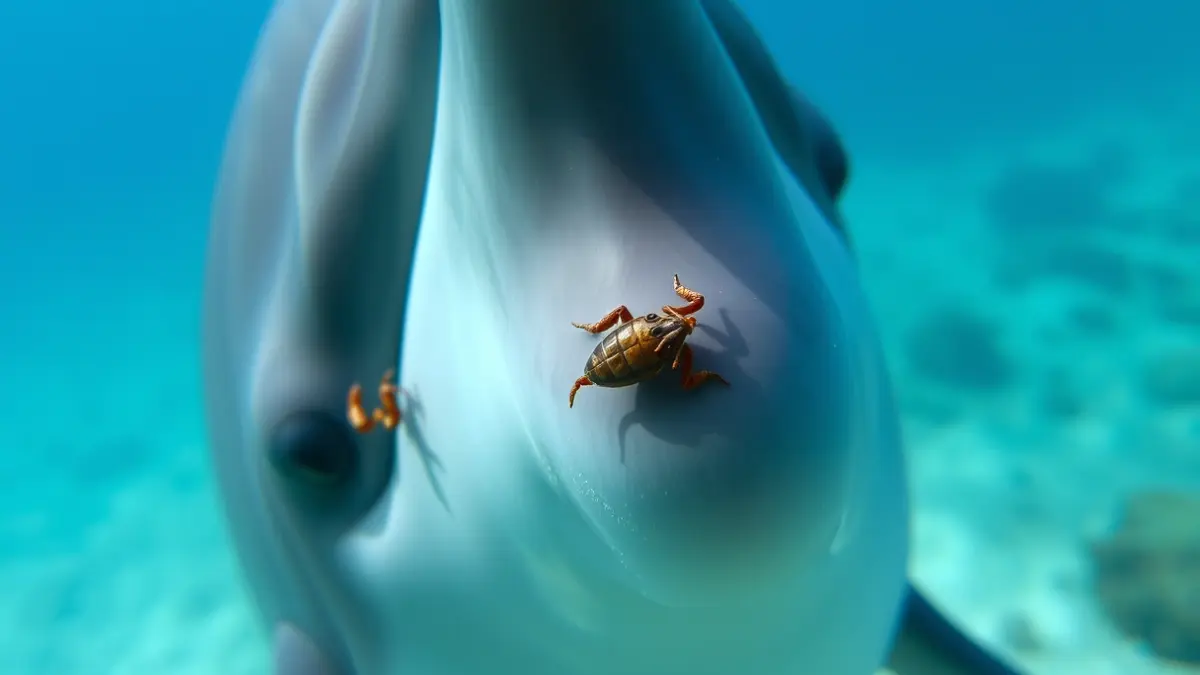
A study led by the University of Valencia, in collaboration with Princeton University, has shown that epibionts, organisms living on dolphin skin, can indicate changes in their populations. This discovery is crucial for detecting the effect of the two major morbillivirus epidemics that have affected the Mediterranean since 1990.
Postdoctoral researcher Sofía Ten from the Marine Zoology Unit of the Cavanilles Institute of Biodiversity and Evolutionary Biology (ICBIBE) at the University of Valencia highlighted that the long-term impact of these outbreaks on striped dolphin (Stenella coeruleoalba) abundance was difficult to assess due to a lack of reliable estimates. To overcome this limitation, the team sought an alternative in epibionts as indirect indicators.
“"When abundance data is scarce or discontinuous, these small organisms can offer valuable clues about the health and evolution of their host populations in the Mediterranean ecosystem."
The study's results suggest that the decline in striped dolphin populations due to morbillivirus outbreaks led to cascade effects on more specialized epibionts, such as Xenobalanus globicipitis and Syncyamus aequus. These organisms, being closely dependent on dolphins, more clearly reflect changes in their host's abundance. This implies that long-term monitoring of specific epibionts could be a useful tool for inferring changes in marine species populations that are difficult to monitor directly.
The study focused on three epibiont crustaceans found on the skin or fins of striped dolphins: the barnacle Xenobalanus globicipitis, the amphipod Syncyamus aequus, and the copepod Pennella balaenoptera. These species have different life cycles and degrees of dependence, allowing their long-term trends to reflect variations in dolphin populations differently. For the research, historical data collected between 1980 and 2023 were combined with ecological models, including an SIR epidemiological model and a mechanistic model to simulate the impact on epibiont populations.
The international collaboration between the University of Valencia and Princeton University was fundamental to this study. The sampling of stranded dolphins in the Mediterranean was carried out through the Stranding Network of the Valencian Community, and data was collected at the facilities of the Cavanilles Marine Zoology Unit.