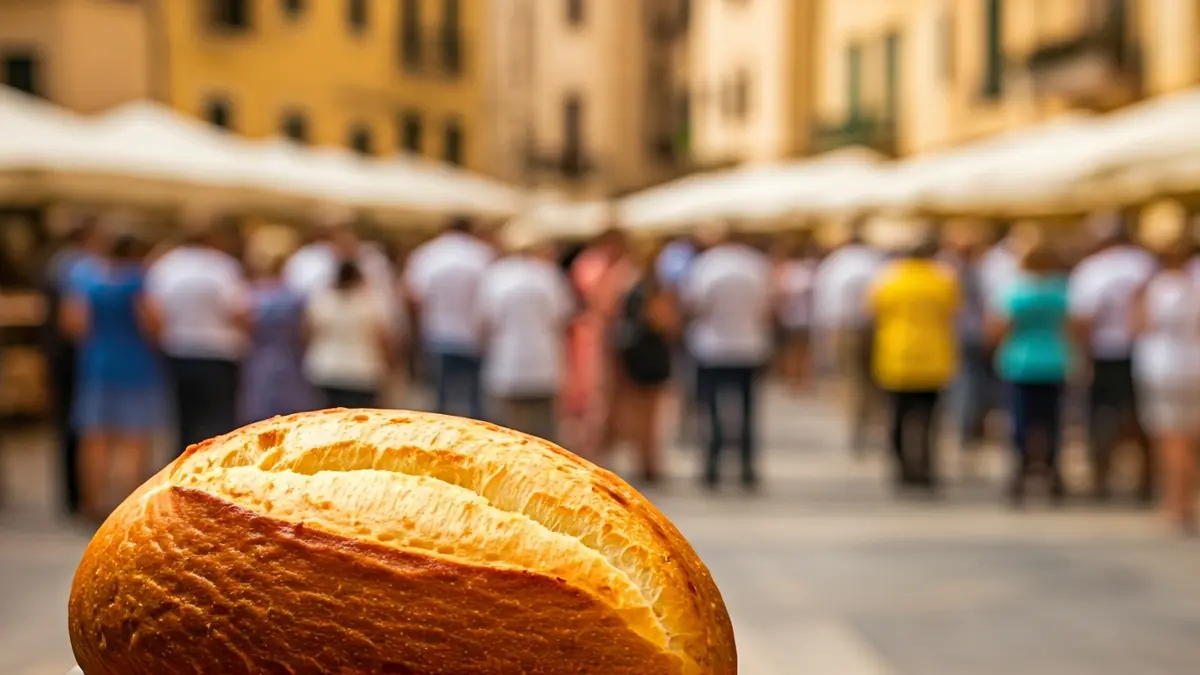
Last Easter Monday, l'Alcora was the scene of a memorable day with the celebration of the Festa del Rotllo. This edition was particularly significant, as it was the first since its designation as a Festival of Autonomous Tourist Interest, and it coincided with the 270th anniversary of its documented origin in 1756. The event brought together thousands of participants and culminated in the distribution of 6,500 rolls, strengthening the cultural identity of the municipality.
The traditional Romeria del Rotllo or Children's Pilgrimage, a unique celebration in Spain due to the prominence of children, once again paraded through the streets to the hermitage of Sant Cristòfol. This pilgrimage commemorates an 18th-century drought episode, when an embassy of children was sent to pray for rain. According to tradition, the answer to these prayers saved the harvests and solidified this celebration.
From early morning, the Church Square saw a large influx of residents and visitors collecting commemorative items before the start of the pilgrimage. After mass and a popular breakfast, participants began their return to the urban center. One of the most notable moments was at the Calvary gate, where authorities received the festive procession.
The so-called “angelets,” children under three years old, once again symbolized the continuity of a tradition passed down through generations. The procession concluded at the parish church with the distribution of the blessed rolls, a central act that recalls the town's gratitude for the miracle of rain.
The day featured extensive participation from local associations, including cultural and musical groups that helped keep the tradition alive. The festive program extended into the early hours with various musical and recreational activities. The celebration will continue on Tuesday with the Dobla, another day of community gathering at the hermitage of Sant Cristòfol, where the remaining rolls will be distributed, thus prolonging one of the most emblematic events in l'Alcora's festive calendar.