
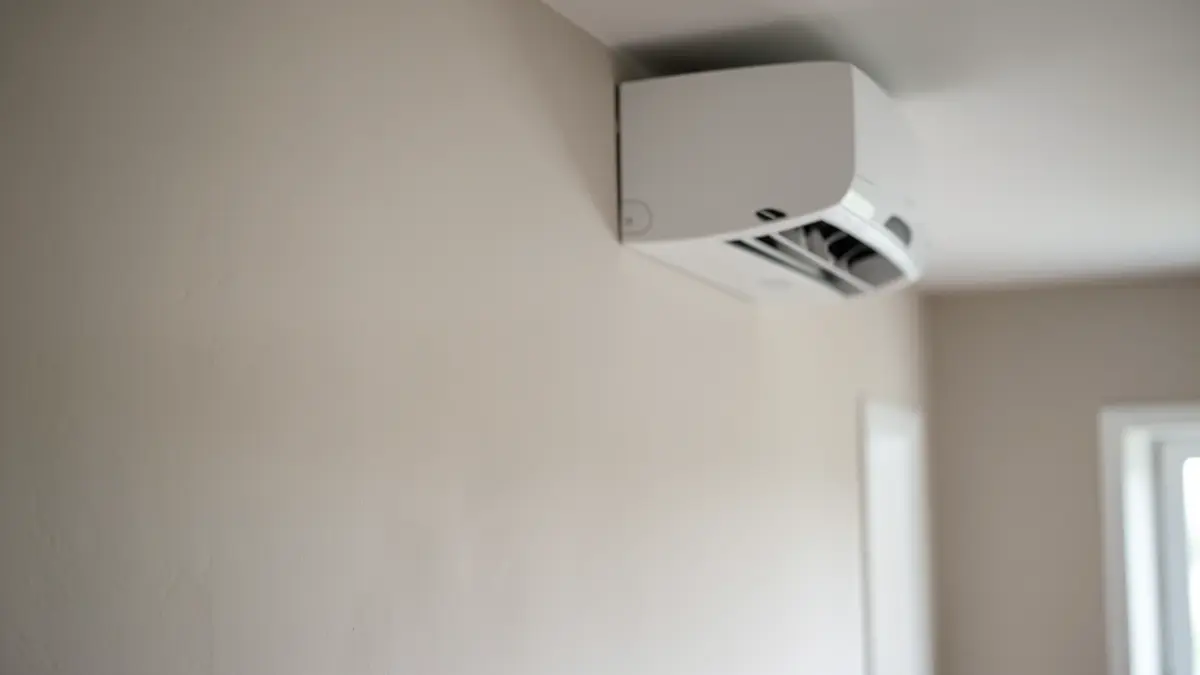
Installing an air conditioning unit might seem straightforward: choose a wall, find a discreet spot, and place the indoor unit where it's least visually intrusive. However, the unit's location can make the difference between a comfortable home and an uncomfortable space with direct drafts, poorly climatized zones, and higher energy expenditure.
Architect Marcelo Seia points out that this is one of the most common mistakes. “The placement really matters,” he explains, noting that many people decide based on aesthetics or ease of installation and only notice the problem when the consequences arise: discomfort, noise, vibrations, uneven cooling, or even physical issues like a sore throat.
In bedrooms, the main mistake is placing the unit where the air directly hits the bed. One of the most problematic spots is the wall at the foot of the bed, as the air blows out with force, bounces off, and can end up falling on the head and body during the night. A more suitable option is often to install the indoor unit above the headboard, ensuring the air is directed upwards towards the ceiling, not the bed. This way, the cool air circulates at the top of the room, mixes with the warmer air, and descends more uniformly. In rooms wider than they are deep, installing the unit on a side wall can also be useful, allowing the air to travel further and with less force.
In living rooms or dining rooms, the problem differs, but the principle remains the same: avoid directing the air directly at people. Placing the unit facing the sofa, dining table, or any area where people sit can make the air conditioner a constant source of discomfort. The goal should not be to use it as a cold fan, but as a system to climatize the entire environment.
Another common error is the so-called “short circuit.” This happens when the air exits the unit and immediately bounces off a nearby wall. In this case, the closest area gets very cold, but the rest of the room remains warm. The consequence is often lowering the temperature further to compensate, which increases consumption and worsens comfort.
It's important to avoid walls that receive direct sunlight or get very hot, as the unit might misinterpret the room's actual temperature. Secondly, consider the drainage of condensation water from the outset, as poor drainage can lead to drips, stains, or impractical hose routing.
Before installing an air conditioner, it's advisable to ask three simple questions: who will the air blow on, will the cool air distribute evenly throughout the room, and will the unit have a nearby water outlet? The location should be chosen not just for aesthetics, but for its functional performance within the house.