The municipal plenary of Sagunto approved in its ordinary session in June the promotion of an interdisciplinary conservation model for the Castle Mountain of Sagunto. The objective is to integrate natural and historical heritage with sustainable development. The Municipal Corporation has agreed to urge the Third Vice-Presidency and Ministry of Environment, Infrastructure, Territory, and Recovery to create a joint working group with the Sagunto City Council, the Provincial Council of Valencia, and other regional departments to develop this innovative preservation.
The initiative also requests the involvement of the Ministry of Education, Culture, and Universities, as well as the opinion of the Ministry of Industry, Tourism, Innovation, and Commerce. The participation of the Provincial Council of Valencia is also proposed.
The proposal, presented by Compromís per Sagunt and defended by its spokesperson, Maria Josep Picó, was approved with the votes in favor of PSPV-PSOE, PP, Compromís per Sagunt, and EU-Unides Podem. Vox abstained and IP voted against. The final motion included an amendment by the PP.
Through the amendment, the Ministry of Culture of the Spanish Government is also urged to join the study, coordination, and preservation efforts of the Castle Mountain, given its status as the owner of the Castle of Sagunto, a Bien de Interés Cultural (Asset of Cultural Interest). The aim is to ensure coordinated action among all competent Administrations in matters of historical heritage, environmental conservation, research, and cultural promotion.
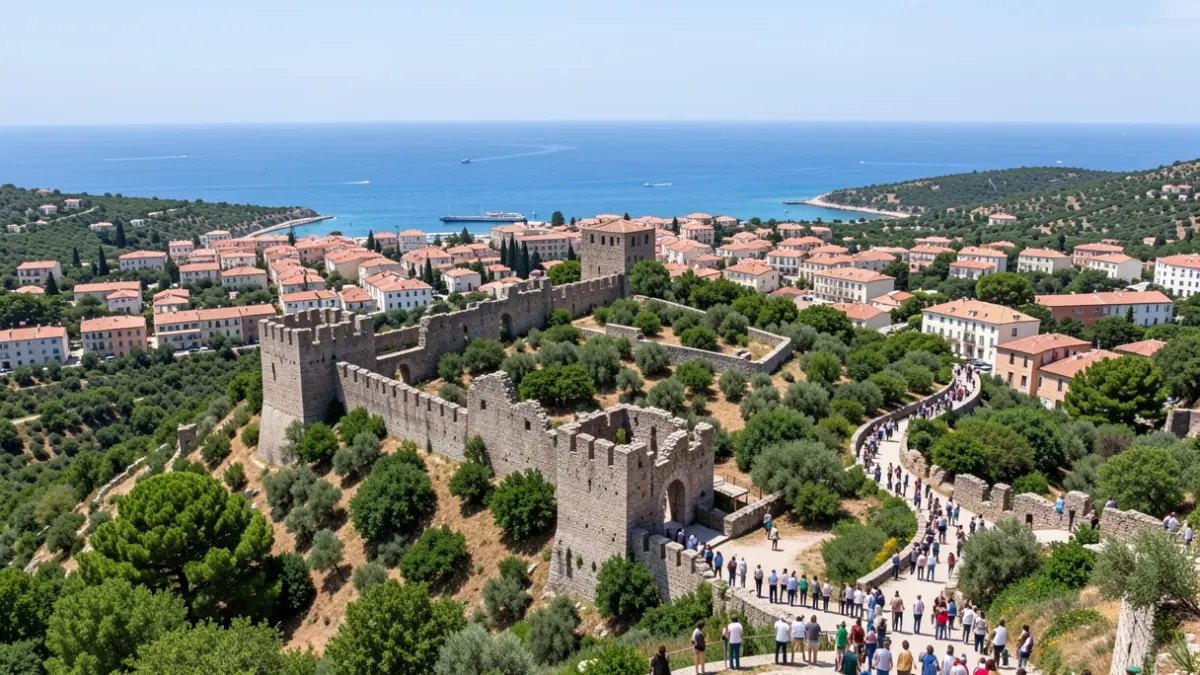
The Castle of Sagunto, declared a national monument in 1931, is a key element of the city's historical and cultural heritage, located on a ridge of the Serra Calderona. Its origin dates back to an Iberian settlement, expanded by various civilizations over the centuries. The Castle Mountain is described as an ecosystem of high environmental, landscape, and historical value, with approximately 42 hectares of citizen access and natural wealth.
Its high biodiversity is highlighted, with over 200 registered species, including birds, reptiles, and a wide variety of insects, in addition to typically Mediterranean vegetation. The space combines natural and historical heritage, with elements such as the Roman Theatre, Iberian walls, remains from the civil war, or the 18th-century Calvary.
The proposal aims to protect the Castle Mountain not only as a municipal natural site but also as a laboratory for experimenting with an interdisciplinary preservation model that fosters environmental conservation, research, responsible tourism, and citizen participation. This agreement aligns with Agenda 2030 and could contribute to Sagunto's future declaration as a World Heritage Site.