
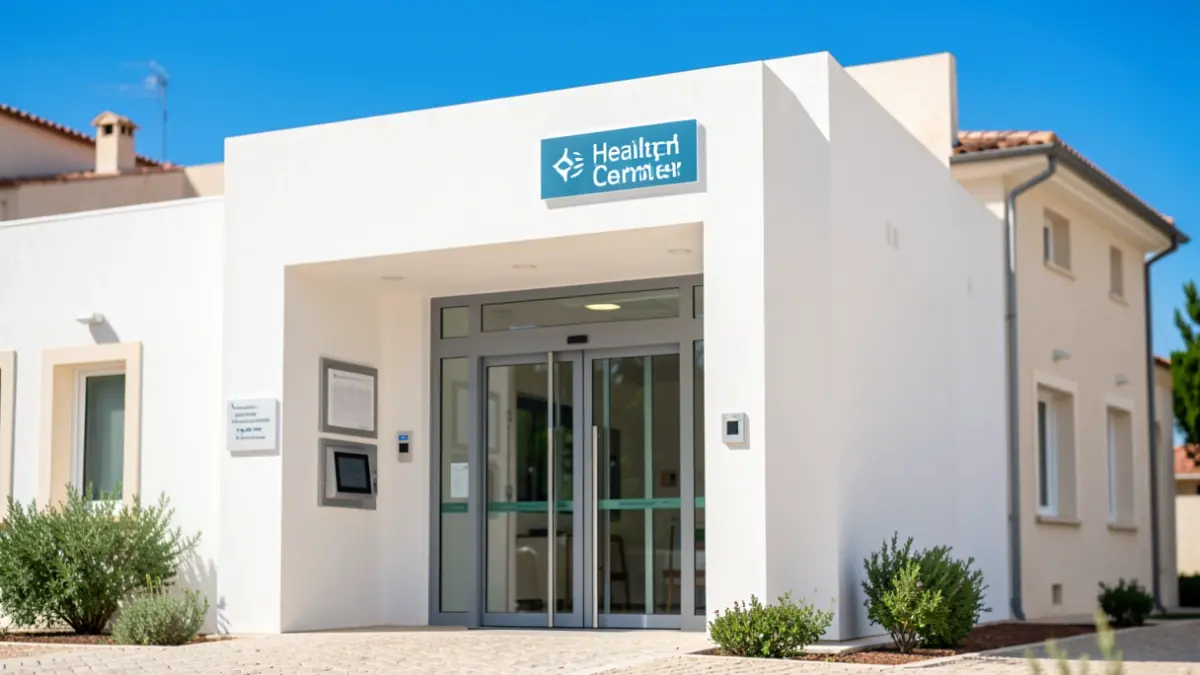
The Orihuela Health Department is finalizing renovation work at the Callosa Health Center, an initiative that has involved an investment exceeding 50,000 euros. These works are part of a broader intervention aimed at updating the center's infrastructure and optimizing its energy efficiency.
The project affects the Continuous Care Point and will expand healthcare capacity with the addition of a new emergency nursing consultation room. Furthermore, access points have been renovated with the installation of an automatic door, an improvement that enhances accessibility, increases security, and contributes to optimizing the building's energy performance.
The renovation also includes the remodeling of the Emergency admission area, where new service counters are planned. This intervention will enable an additional administrative workstation and improve patient care. The works also encompass the refurbishment of the Emergency area restrooms to meet the current needs of the health center.
The manager of the Orihuela Health Department, Mario Medina, accompanied by the medical and nursing directors of Primary Care, María Aránzazu Seguí and Laura Párraga, visited the center to observe the progress of the works. The medical and nursing coordinators of the center, Raquel Gamín and María José Aniorte, also participated in the visit.
The modernization of the Emergency Area complements other recent improvements made at the Callosa Health Center as part of the Orihuela Health Department's infrastructure update plan. Notable developments include the complete renovation of the building's windows, an updated air conditioning system, improved electrical systems with LED lighting, and the renewal of the plumbing network.
Healthcare spaces have also been reorganized to create two new consultation rooms for complementary tests, such as electrocardiograms and spirometries. Additionally, the center's signage has been updated with new posters at entrances and in consultation rooms, adapted for the integration of new professionals.
The improvements are rounded off with the incorporation of new healthcare equipment and furniture. Among the renewed items are electrocardiographs, otoscopes, printers, examination tables, and chairs for consultations, as well as new screens for appointment management kiosks. The center has also seen recent updates such as the renovation of the main admission area, the replacement of the elevator connecting all floors, and the adaptation of the staircase.
Furthermore, meeting rooms and staff break areas have been refurbished to enhance the working environment and well-being of healthcare professionals.