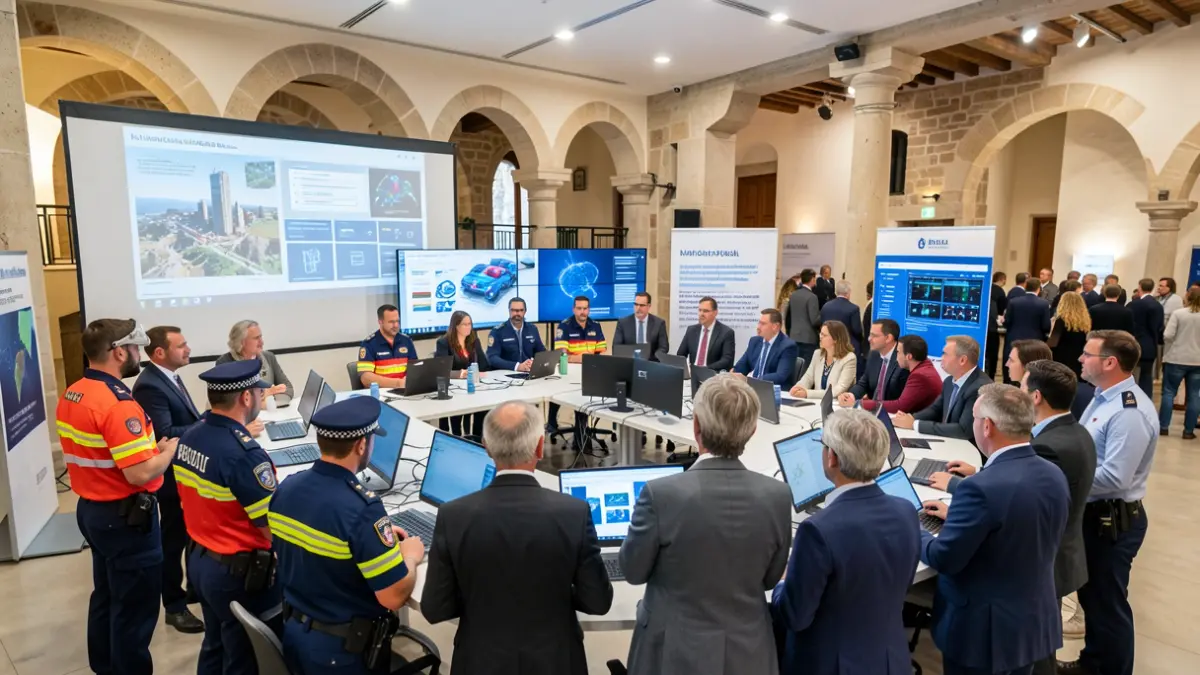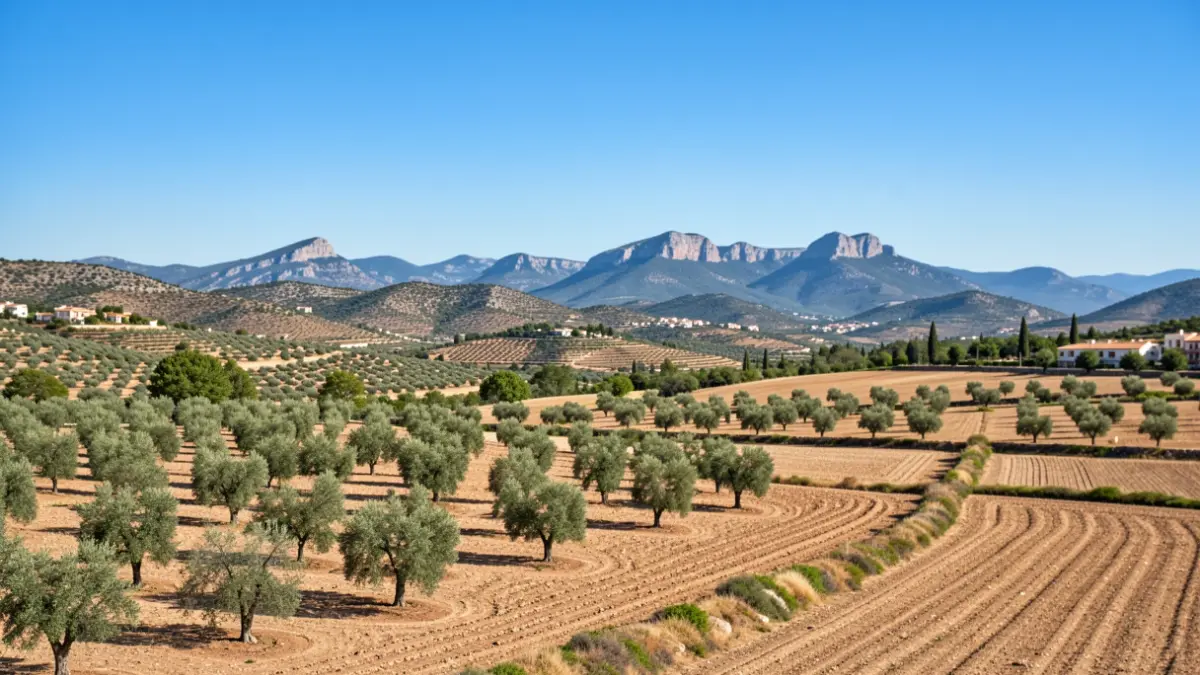
The Orihuela Chamber of Commerce hosted a conference focused on the Natural Resources Management Plan (PORN) for Sierra Escalona and the Dehesa de Campoamor. This instrument, approved by the Generalitat Valenciana, aims to strengthen protection and regulate uses in 19,000 hectares of high environmental value in Vega Baja, affecting municipalities such as Orihuela, San Miguel de Salinas, and Pilar de la Horadada.
The debate, organized by the Chair of Water Efficiency and Sustainable Agriculture of the University of Alicante (UA) and moderated by Pablo Melgarejo, focused on the tension between protecting biodiversity and economic activities. The event was attended by a group of residents from Torremendo who held a protest.
José Vicente Andreu, president of Asaja-Alicante, expressed a highly critical view of the plan's agricultural and social repercussions. Andreu stated that "today the farmer is at greater risk of disappearing than the soil, birds, or landscape," and criticized that the Sierra Escalona PORN is "the most restrictive in terms of uses of all those existing in the Valencian Community".
According to Andreu, the plan is a "copy-paste" from other PORNs, but with nuances such as the prohibition of installing photovoltaic plants for agricultural use or self-consumption. For the agricultural organization, "it is a major burden for the area's agriculture".
The future Sierra Escalona Natural Park, for which a first draft already exists, will increase the protected area by 7,300 hectares, covering 9,004 hectares of Orihuela, Pilar de la Horadada, and San Miguel de Salinas, plus 9,000 hectares of buffer zone, totaling 18,066 hectares.
Andreu pointed out that over the last 35 years, environmentalist pressure has prevailed over the object of protection. He recalled that conservationist groups like Amigos de Sierra Escalona (ASE) have historically advocated for this designation, while the area has faced pressure from real estate development, intensive irrigation, and solar plant projects.
The Asaja president detailed previous protection figures, such as the LIC and ZEPA declarations, highlighting the importance of almond cultivation for birds. He also mentioned the landscape protection by the Botànic Government, which excluded cultivated fields.
Finally, he indicated that there is no record of a socioeconomic assessment of the consequences of the natural park and its buffer zone, which includes over 6,000 hectares of national interest irrigated land.
Andreu added that the PORN "limits itself to prohibiting photovoltaic installations, sealing with mulching, and agricultural transformations," offering no alternative for traditional agriculture far removed from the highly technified irrigation agriculture currently practiced. He criticized that dry farming, such as almond cultivation, is valued "in its terminal phase due to its zero profitability".
To worsen the situation, Andreu denounced that the regional ministry has included 10 new articles in the PORN, allowing the Administration to unilaterally approve "a landfill for urban waste, car scrapyards, or polluting industries" within the buffer zone, "ending the future of a town like Torremendo".
The PORN left the door open for the installation of a regional waste plant in the Orihuela district of Torremendo, permitting its use, despite the Generalitat having rejected solar plant projects due to environmental impact.
At the entrance of the Chamber, residents of Torremendo displayed banners against the PORN, with slogans such as "Same place natural park and regional landfill, something smells fishy".
For his part, Raúl Mérida, the Generalitat's commissioner for Recovery, highlighted the consensus among the three involved municipalities and defended that "having a natural park like Sierra Escalona is not a problem, but an opportunity," as it "stabilizes population and economy".
Mérida emphasized that the natural park "is an ally" and a "quality brand." He pointed out that current studies consider not only natural heritage but also its function in relation to climate change, minimizing the effects of phenomena like torrential rains.