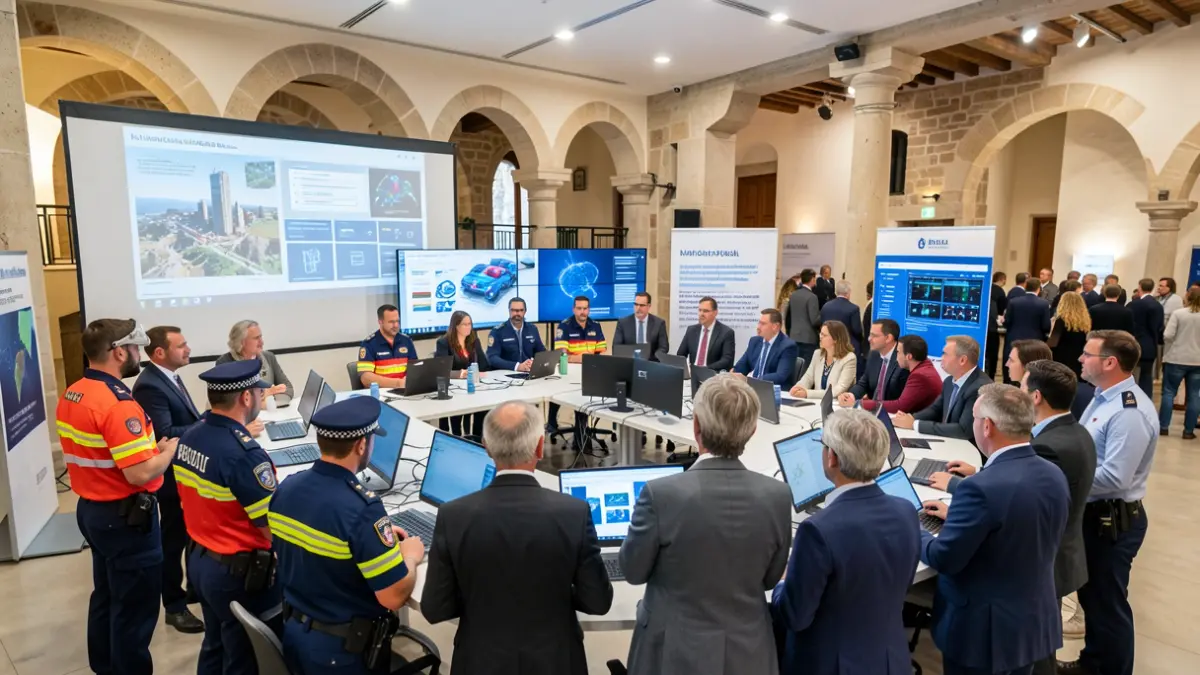
The Central Police Station of Valencia served as the meeting point for representatives from European institutions, emergency services, police forces, politicians, researchers, and technology companies specializing in crisis management and civil protection. The objective is to analyze and improve disaster response and urban resilience.
Councilor for Security, Jesús Carbonell, highlighted the initiative's importance, especially after the dana (heavy rainfall event), for working with various stakeholders and leveraging available technology. Meanwhile, Councilor for Prevention, Firefighting, and Civil Protection, Juan Carlos Caballero, emphasized the need to apply research and innovation to save lives, calling the summit a 'milestone' for the city.
Key challenges such as multi-agency coordination, complex crisis management, emergency communication, citizen resilience, and the use of advanced technologies like artificial intelligence were addressed during the summit. Participants included representatives from the European Commission (DG HOME and DG ECHO) and the United Nations' European Science and Technology Advisory Group (E-STAG) for Disaster Risk Reduction (UNDRR), among others.
The program features institutional presentations, operational panels, and technological demonstrations. On June 19th, an international pilot test will take place in the district of La Torre, one of the areas affected by the October 2024 dana, focusing on flood management and multi-agency coordination.
This exercise will test advanced communication, command and control technologies, artificial intelligence, and decision support systems in a realistic scenario of extreme flooding and evacuation. Aspects such as inter-service coordination, real-time information management, and the evacuation of vulnerable populations will be evaluated.