The head of Heritage, Alícia Izquierdo, explained that the building will provisionally open to the public after the summer. The aim is for residents to be able to explore the space and understand the discoveries made during the works.
“"We are visiting the works of the Chapel of the Assumption because we were eager to show what it is becoming. Therefore, we have decided to make a preliminary opening to the public so they can visit the building."
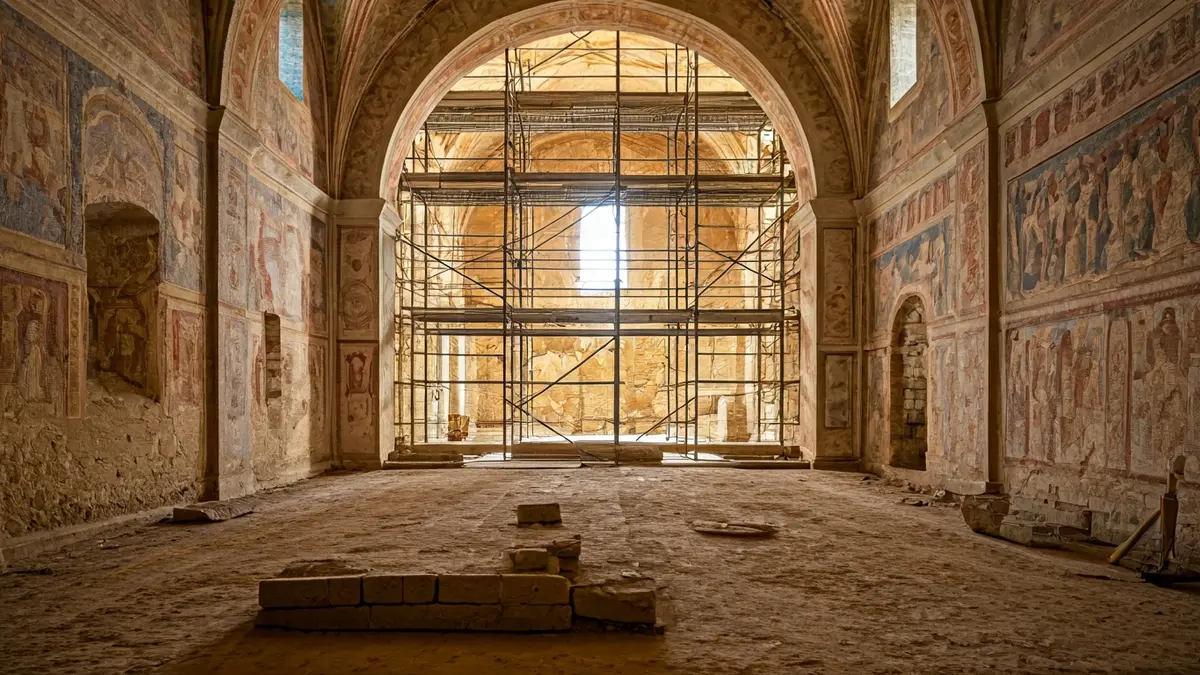
The subsoil and structures of the building have revealed more than expected: new rooms such as a hall and a courtyard not included in the original plans, in addition to a well and other elements that help understand how the property was used centuries ago. Remains of the old cellar and a silo with ceramic material of great archaeological value have also appeared.
One of the most striking discoveries is a series of 17th-century paintings and graffiti found on one of the walls of the annex building. This finding has forced a halt to part of the work to carefully document and restore every detail.
“"They appeared on the walls of the annex building and have forced us to stop, document, investigate, and restore with the utmost rigor and sensitivity."
These discoveries confirm that the Chapel of the Assumption is much more complex than it seemed, accumulating up to six centuries of history since the 14th century. The mayor of Gandia, José Manuel Prieto, highlighted the added value of the project, which has grown with each new finding. The initial investment of 400,000 euros has fallen short, but the result is considered valuable due to the building's heritage importance.
If the schedule is met, the chapel can be visited between September and October of this year in a preliminary opening. Afterwards, work will be done on its musealization to convert it into a center for the interpretation of classics, with a definitive opening planned for late 2026 or early 2027.