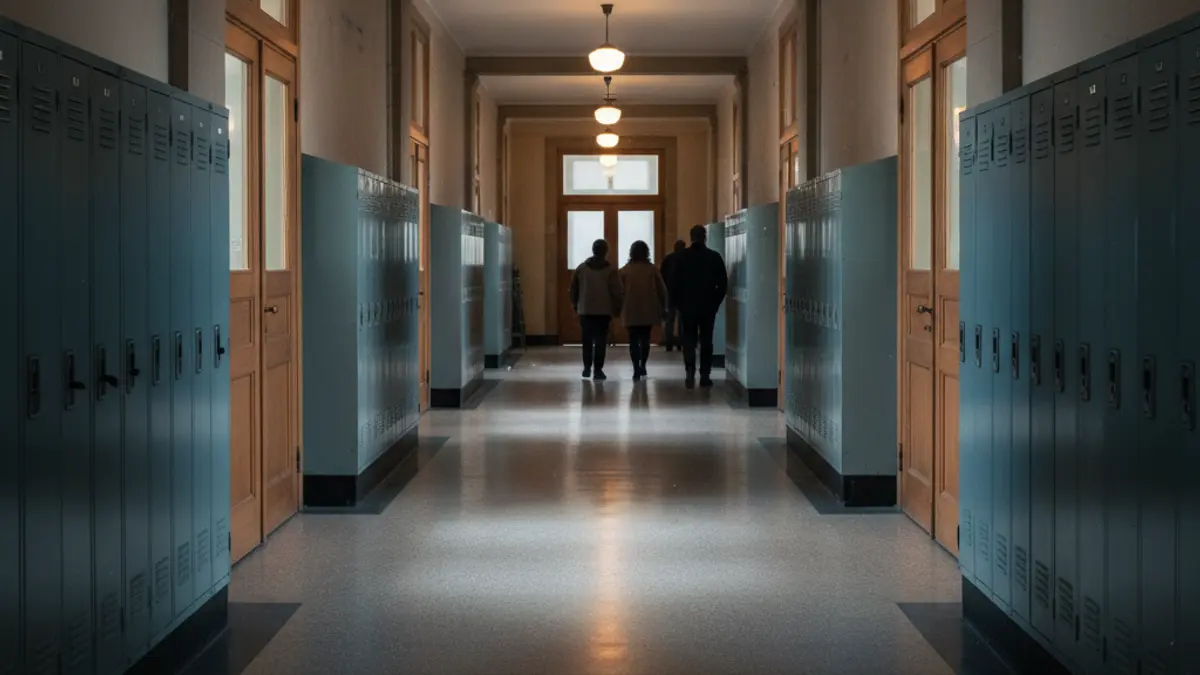
The protest, called to demand improvements in public education, has had a very high turnout in high schools in Cullera and Sueca, and a notable impact also in public primary schools.
In the high schools IES Blasco Ibáñez, IES Llopis Marí, and IES Joan Fuster, student presence was practically anecdotal throughout the morning. Attendance was mainly concentrated among 1st and 2nd year ESO students, courses not directly called to join the strike due to age. However, many parents chose not to send their children to class as a gesture of support for the call.
Among students in higher grades —3rd and 4th year ESO, Bachillerato, and Vocational Training— participation was almost total. In numerous groups, the absence of students prevented the normal development of classes, reducing academic activity to a minimum.
Teacher support has also been significant. In all three high schools, a large part of the teaching staff joined the strike and participated in concentrations called early in the morning at the school gates before moving to Valencia to attend the central demonstration called at 12:00 hours. According to union sources, strike participation in high schools in Cullera and Sueca is estimated at close to 85%, with minimum services respected at all times.
The mobilization was not limited to secondary education. In public primary schools in Cullera and Sueca, teacher participation was also very notable. According to various consulted sources, more than 75% of the teaching staff joined the call on this first day, a figure that reflects the existing discontent throughout the education system.
The image left by this day in Cullera and Sueca is that of a widely mobilized educational community —students, teachers, and families— that has sought to convey a clear message in defense of public education from the classrooms to the streets.