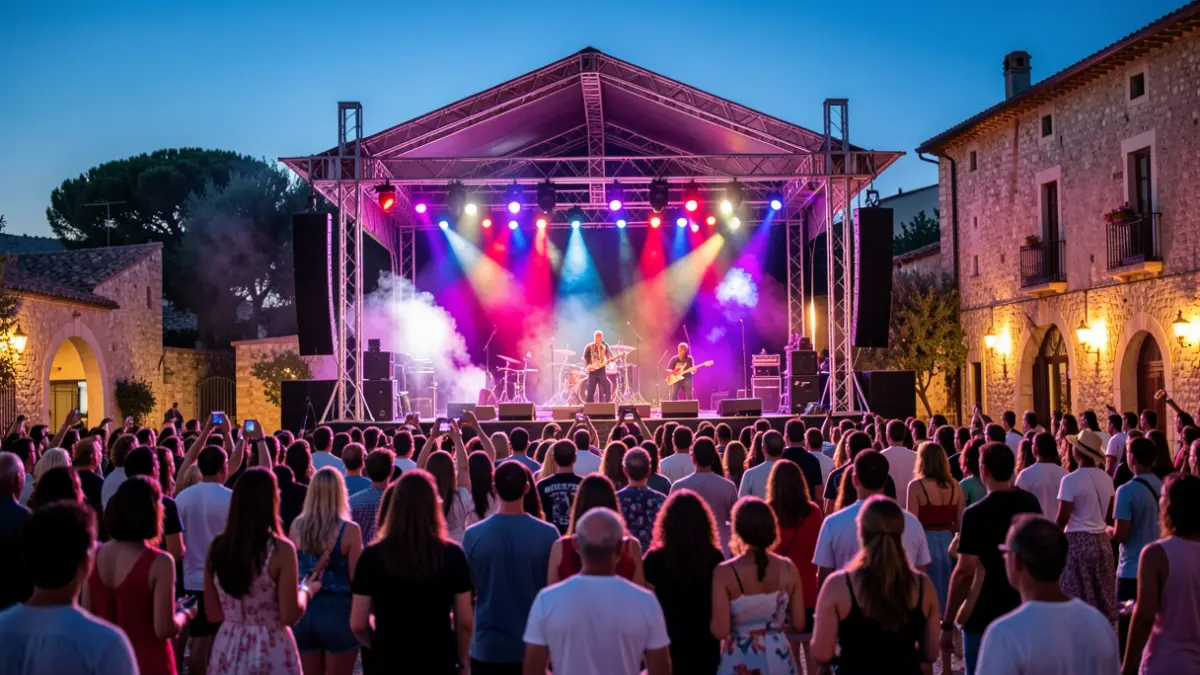
Charangas will have unprecedented prominence on the opening day of the next edition of the Zevra Festival in Cullera, taking place from July 24th to 27th. Ten groups, mainly from the Ribera region but also from neighboring areas, will participate in a band battle in the 'face-to-face' format. In this setup, two charangas take the stage and compete by playing alternately, responding to each other with current and fun repertoires until they culminate by playing together.
The festival, now in its fifth edition, places a special emphasis on Valencian music this year. From village charangas to the indie band Ginestà, the lineup aims to integrate local proposals. For the first time at a large-scale festival of this nature in the Valencian Community, a stage, the Rainbow Stage, has been reserved for charangas from Carlet, Alzira, Carcaixent, Foios, and Pobla de Vallbona. The opening day, Friday, July 24th, will thus become a grand celebration of 'village musicians'.
This transition from informal street performances to main stages signifies a recognition of popular music. 'We couldn't miss a nod to our closest popular music, to the village festivals of our 'terreta' (homeland), which are the cultural predecessors of music festivals,' explains Alejandro Roca, Zevra's head of programming.
The ten participating charangas are: No Ni Què, El Truc, and Manxisa from Carlet; Va de Bo and La Sargantana from Alzira; El Tinglao from Carcaixent; Los Liaos from València; La Jarranga from Pobla de Vallbona; and ABDL and Txarandonga from Foios. These groups represent the best of the charanga scene, a phenomenon booming among young Valencian audiences.
In addition to the charangas, the Valencian band Ginestà will perform on Sunday, July 26th, sharing the lineup with artists such as Anuel AA, Chanel, Álvaro Soler, and DJ Nano. Their presence underscores the festival's commitment to integrating local music into a lineup dominated by international reggaeton and electronic figures.
The Zevra Festival expects to attract over 150,000 young people, primarily from Madrid, Castilla-La Mancha, and Murcia, generating a significant impact on local hospitality, commerce, and accommodation.