The initiative, which began on January 12, focuses on this Asset of Cultural Interest with the goal of expanding knowledge about the site and improving its public presentation. The project is promoted by the Nules City Council and funded by European Next Generation funds through the Ministry of Tourism.
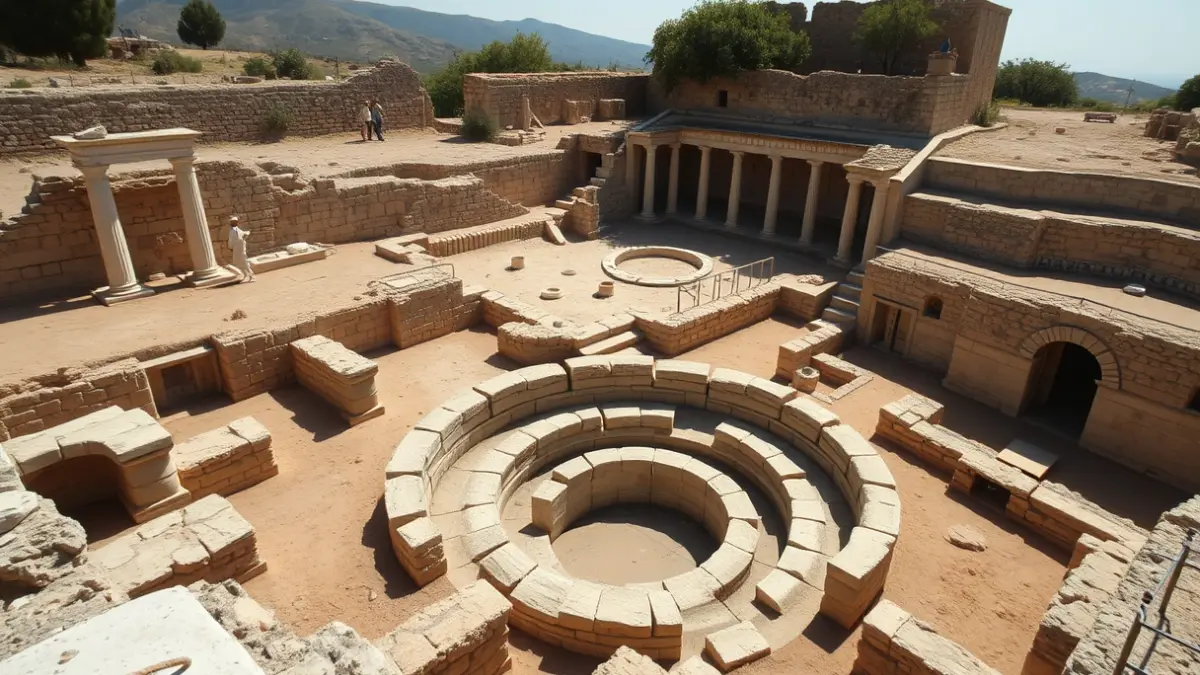
At the start of the works, the visible remains of the site covered approximately 1,600 square meters, but after the first months of work, an additional 2,000 square meters have been added. This expansion is bringing to light new structures and enhancing the overall understanding of the villa.
One of the most recognizable elements of the complex is its courtyard with 20 columns and a central circular pool, around which nearly 40 previously known departments were distributed. Furthermore, in its period of greatest splendor, the villa featured private baths, areas linked to agricultural exploitation and wine production, large stone slabs for pressing or grinding, and at least four large globular amphorae for food storage.
Current works are documenting up to four distinct phases of occupation, as well as new dependencies, water supply channels, production areas, and a previously unknown monumental entrance with a portico. Architectural remains such as thresholds and stone columns have also been found.
The excavations have also unearthed abundant archaeological material from different phases of the site. Alongside ceramic remains, metal pieces, worked bone, and animal remains consumed by the villa's inhabitants have appeared. All extracted material is being consolidated, cleaned, and treated in a laboratory specifically set up for this project in the urban center of Nules. Simultaneously, the restoration team is working on the consolidation and reconstruction of structures to facilitate the understanding of the complex.
The intervention also includes the museumization of the enclave, with the installation of replicas of mosaics found 70 years ago at the site itself, the spreading of gravel to highlight the rooms, a new perimeter fence, internal routes, and new interpretive signage. First excavated in 1956, the Roman villa of Benicató was the first in the province to be brought to light. Upon completion of the works, the City Council aims for it to become a key enclave for understanding the Roman presence on the Castellón coast.