The inclusion of the new Civil Guard barracks in the second phase of the State Security Infrastructure Plan (PLISE) will leave coastal regeneration as the only major project pending execution by the Spanish Government in Almassora. The municipal plenary had already requested both investments from the central Executive two years ago.
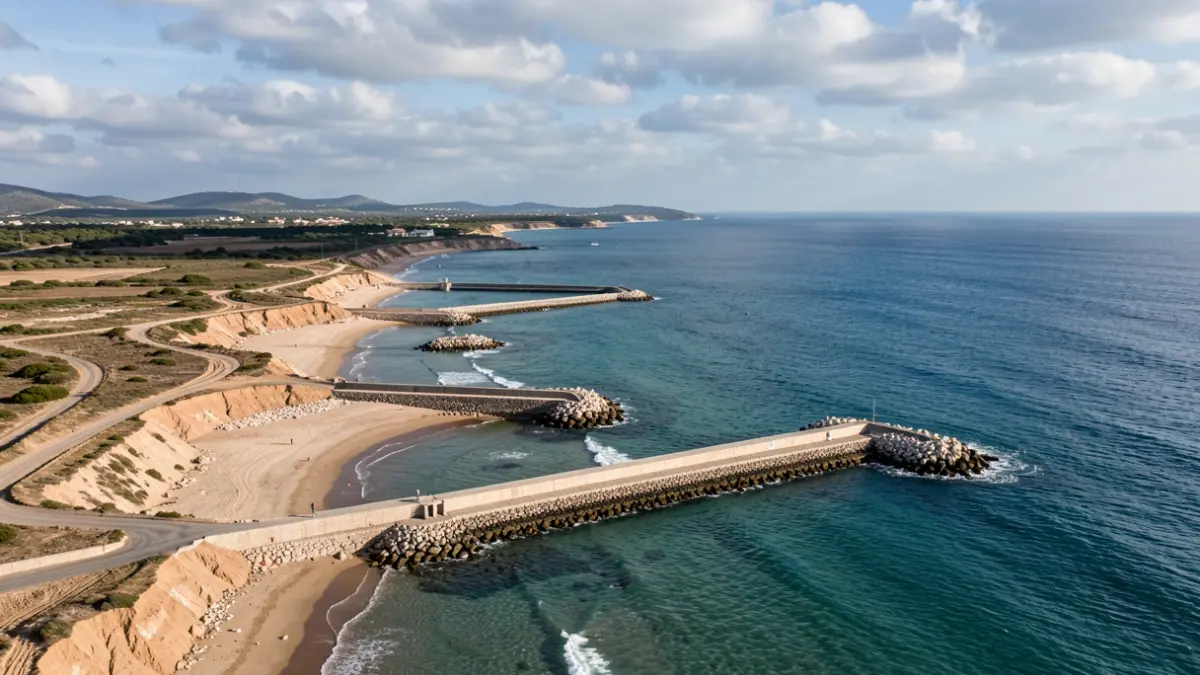
The City Council estimates an investment of approximately 8.8 million euros will be necessary to build two new breakwaters on La Torre beach, extend the two existing ones, and add 190,000 cubic meters of sand. The stabilization project was drafted in 2022 by the company Ingeniería Avanzada de Obras Marítimas, although no progress has been made since then. The government's sub-delegate in Castellón, Antonia García Valls, stated last February that “work is being done on the project,” but warned that “the works cannot all start at once” and avoided setting a specific timeline for their execution.
While coastal regeneration remains stalled, the Government did initiate last November the process for demarcating the 3.4-kilometer stretch of public maritime-terrestrial domain between the border with Castellón and the Vora Riu promenade, on La Gola beach. The Executive's proposal is to maintain the demarcation in force since January 1974 and adapt it to the 1988 Coastal Law, shifting the coastline to coincide with the public maritime-terrestrial domain line.
Both the municipal government and the opposition reject this proposal, considering that coastal regression originates from the expansion of the Port of Castellón. With this argument, among others, the council and the municipal group of Compromís have filed objections against the demarcation proposed by the Government.
From the City Council, they also denounce that the damage caused by storms like Harry, recorded in mid-January and which left damages valued at 1.5 million euros, has been aggravated by the non-execution of the Ben-Afeli beach regeneration project and by the Port's refusal to contribute the 60,000 cubic meters of sand stipulated in the Environmental Impact Declaration (DIA) of the last port expansion.
The municipal executive met in February with neighborhood representatives from the beach to analyze the demarcation proposal and agree on the objections. The council's objective is to request that the coastline be located on the outer part of the so-called 'wall' and not coincide with the public maritime-terrestrial domain line, as it would compromise coastal defense.
While awaiting the Government to make a move on the controversial issue of coastal regeneration, it is now clear that a new Civil Guard barracks will replace the current one, which is 102 years old and has numerous deficiencies after becoming obsolete. The works will cost approximately 11.7 million euros. In recent years, the main investment by the Government linked to Almassora has focused on the Mediterranean Corridor, although within a broader scope, as the works affect the railway section between Castellón and Valencia.