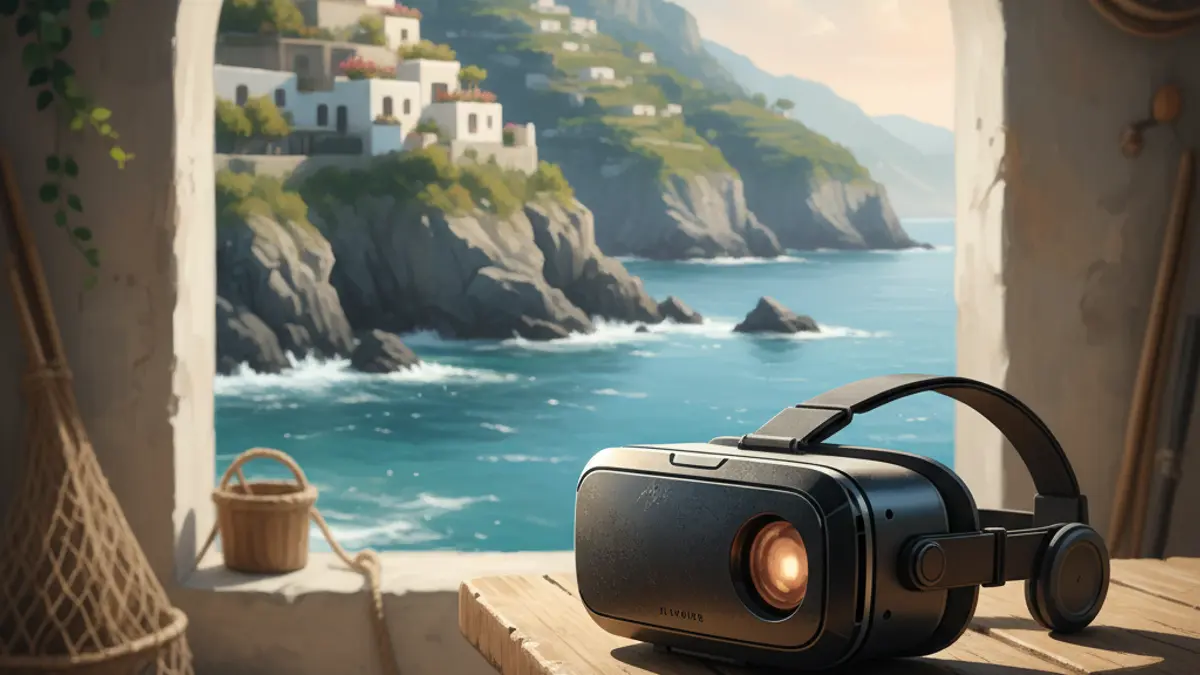
The Heritage department has awarded the design of an immersive experience to the company Innoarea, which will allow residents and visitors to learn about this traditional fishing art up close. Due to difficult access and the passage of time, this technological solution has been chosen for its dissemination.
The recreation will focus on three strategic fishing spots near the Cova dels Arcs: La Branca, la Taula, and la del Moraig. The system will offer three viewing points for each fishing spot, allowing a complete tour from the top of the cliffs to the activity at the fishing spot.
To add realism to the experience, figures of local fishermen will be recreated, and an audio system with realistic sounds and voiceovers in four languages will be used: Valencian, Spanish, English, and French. The experience can be enjoyed through an interactive web-app accessible via QR codes and with autonomous virtual reality glasses available at the Tourism office and other municipal spaces.
“"The Pesqueres de Cingle represent the effort and bravery of our ancestors in an environment as beautiful as it is hostile. Thanks to virtual reality, we ensure that a heritage that is physically inaccessible to most today becomes universal, interactive, and, above all, never falls into oblivion."
This action is funded by the European Union through the Next Generation EU funds, as part of the Sustainable Tourism Plan in Destination (PSTD). The Councillor for Heritage and Tourism has highlighted that this project fulfills the moral duty to safeguard local identity.