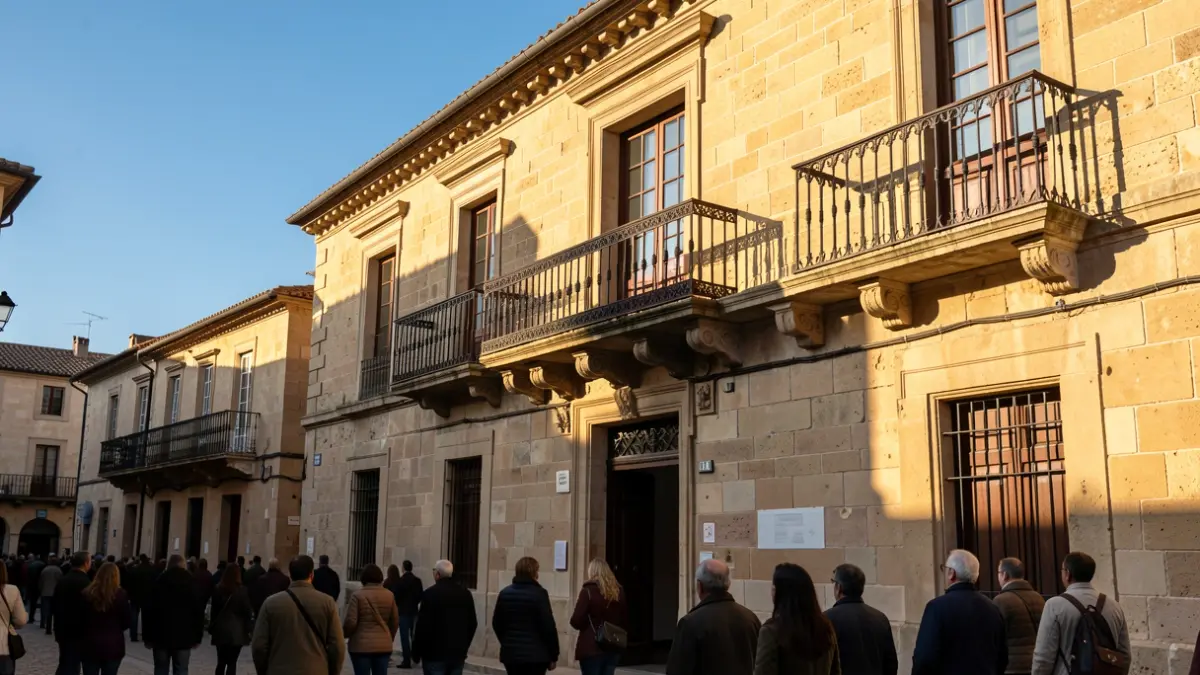
True to its provocative and transgressive style, with biting humor oscillating between sarcasm and the grotesque, the veteran group EseOsE teatre once again made an impact and triumphed with the premiere last weekend at the House of Culture in Orba of "Deseo". The play navigates the slippery and risky terrain of sexual relationships.
There was a complete sell-out for both performances, Saturday and Sunday, with an audience from across the region who, on their feet, proclaimed their admiration for this new work directed and written by Sonia González, who also stars alongside Santi Inocencio, Juano Marcos, and Trini Fernández. A technical and production team of about ten people supported the performance.
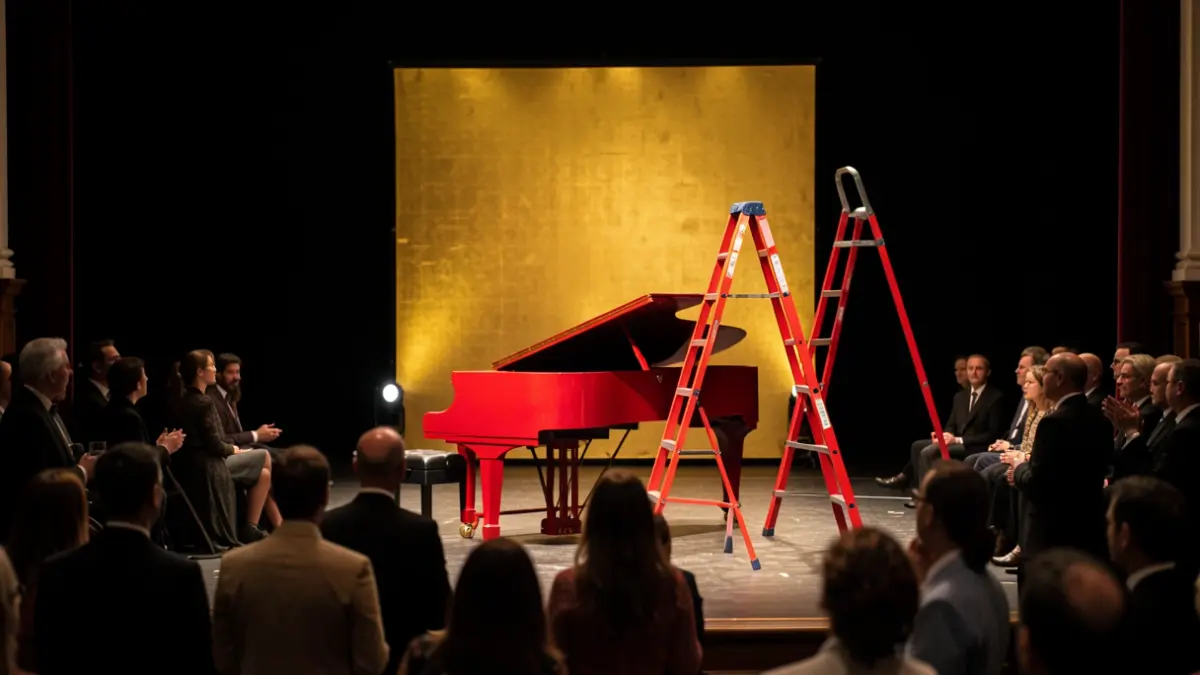
The innovative and somewhat experimental bent that also characterizes the Orba group was already evident upon entry, with a program printed on a paper napkin, aiming for economic and ecological maximization. The set design, unpretentious but more than sufficient, simulated a red piano and a folding wooden ladder, a wardrobe, a golden screen, a suitcase, a couple of chairs, and little else, evoking a cabaret atmosphere at times. The costumes, equally simple and effective, were very much in keeping with the theme, mostly black tights, almost identical for actors and actresses.
The play offers a mixture of diverse genres, including mime, dance, songs, puppet theater, and brief monologues. The four performers on stage, clearly not novices, acted with professionalism, though Sonia González perhaps stood a step above. Experience, in addition to acting talent, is also a degree in theater. In any case, it is a complex performance, with an infinity of situations, all of them, even the small gestures and positions on stage, carrying intention. Something that requires great effort, many hours of rehearsal, and maximum synergy, without misunderstandings.
And the theme and plot? Difficult to summarize even in a chronicle. It could be said to be the follow-up, in six chapters, of a typical relationship, the phases that unfold after a first sexual encounter. And in each phase, it questions conventions, the how, when, where, at what time, with whom, and how often, the commodification of sex, the influence and at times alienation from the media and advertising, lack of communication, and of course prejudices, what we truly desire versus what we should desire, and religious morality, which sometimes seems immoral. Regarding marriage or couple life: how many diverse relationships are we willing to give up?
In the final act, the sixth chapter, there is a radical shift, without makeup, without theatrical costumes, in everyday clothing, with hardly any acting, each actor and actress as they are, with their own reflection. It must be seen, when the opportunity arises, and each person should draw their own conclusions.