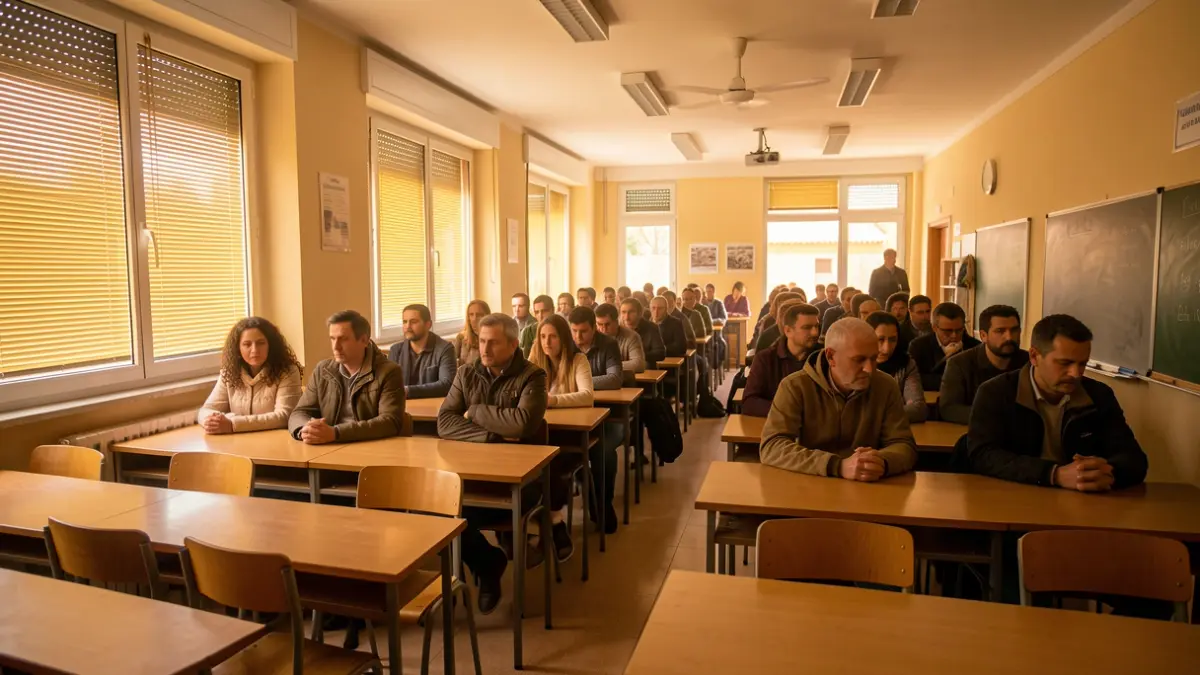
After weeks of demands, the Ministry of Education has established guidelines for managing high temperatures in classrooms, a request from teachers, families, and students, especially after last spring, which caused an unbearable environment in many centers in regions like la Marina Alta.
The new measures, which could be applied transitionally during the 2025-2026 academic year, are divided into five sections. They include preventive measures in schools, such as temperature monitoring, identification of cooler areas, closing blinds, strategic ventilation, limiting intense physical activities, and facilitating hydration.
One of the main novelties is the possibility of a reduced school day (from 8:00 AM to 1:00 PM) during June and September for Secondary Education, Baccalaureate, and Vocational Training, as well as delaying the start of afternoon classes by one hour. This timetable flexibility must be approved by the School Council and communicated to the Territorial Directorate, without affecting dining or transport services or generating additional costs.
In extreme cases, when temperatures are excessive and there are no alternative spaces, the school's management can inform municipal Civil Protection, which has the authority to suspend academic activity.
The STEPV union views the recognition of the need for specific measures and timetable flexibility positively but considers them insufficient. They are calling for a clear action protocol for thermal stress, structural measures to air-condition centers, and a Comprehensive Climate Adaptation Plan to ensure dignified and safe conditions.