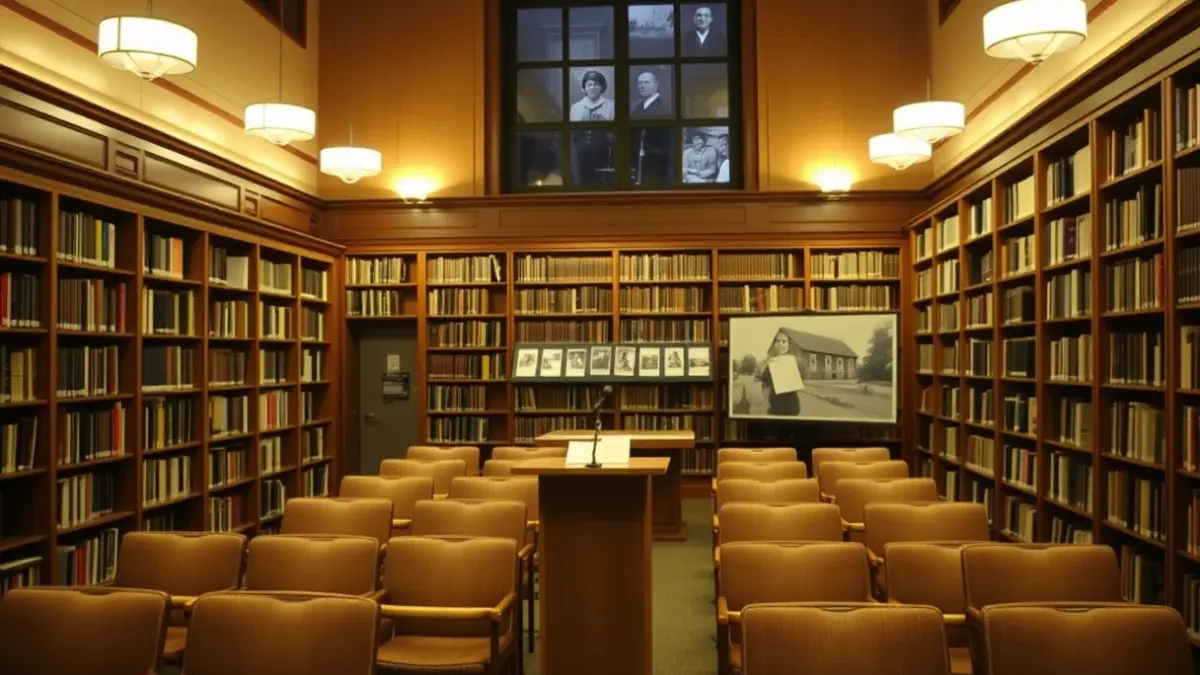
The exhibition, which can be visited at the Juan Chabás Public Library until May 26, is part of the democratic memory conferences coordinated by the Archive and Libraries area of the City Council. The exhibition delves into one of the harshest and least publicized aspects of the end of the Civil War: that of those who, forced to leave Spain, continued fighting fascism in France and other scenarios of World War II.
The inauguration brought together the public and representatives linked to the organization, with an initial presentation and a subsequent tour of the panels. The exhibition displays a set of large graphic and documentary supports that allow following the itinerary of the republican exile: from the escape across the border and internment in camps, to incorporation into labor companies, participation in the French Resistance, the maquis, and the presence of Spaniards in Free France.
The exhibition boasts great visual power, based on historical black and white images, explanatory texts, and graphic documentation that help contextualize that collective experience.
The exhibition has arrived in Dénia thanks to the Association for the Recovery of Historical Memory of Aragon (ARMHA) and addresses the enormous migratory movement caused by the war. More than half a million people arrived in France between 1936 and 1939. Many returned shortly after, but thousands of exiles were trapped in a critical situation, interned in camps or forced to enlist in combat units or the Foreign Legion.
One of the aspects highlighted by the tour is the presence of women, with a panel expressly dedicated to 'They also fight', underscoring a role that for years was relegated in many accounts of exile and resistance. The exhibition thus presents a broad vision of the phenomenon, not only military or political, but also social, personal, and human.
The proposal fully fits into the approach of the 'Memory and Future' conferences, which this year focus on the republican exile and the diversity of situations faced by those forced to leave their country. The theme also links with the figure of the writer from Dénia, Juan Chabás, to whom the City Council has dedicated several initiatives in recent months to mark the 125th anniversary of his birth. A member of the Generation of '27, Chabás ended his days in exile, in Cuba, where he died in 1954.