Arnadí and monjàvena are desserts with deep Arab roots and a long history in the town of Xàtiva. Arnadí, often made with pumpkin or sweet potato, is a classic of Holy Week, although it can be found in pastry shops throughout the year. Monjàvena, also known as almoixàvena or moixàvena, is a baked cake with humble ingredients such as oil, water, flour, and eggs, traditionally associated with Carnival or Lent, but available in Xàtiva's bakeries at any time.
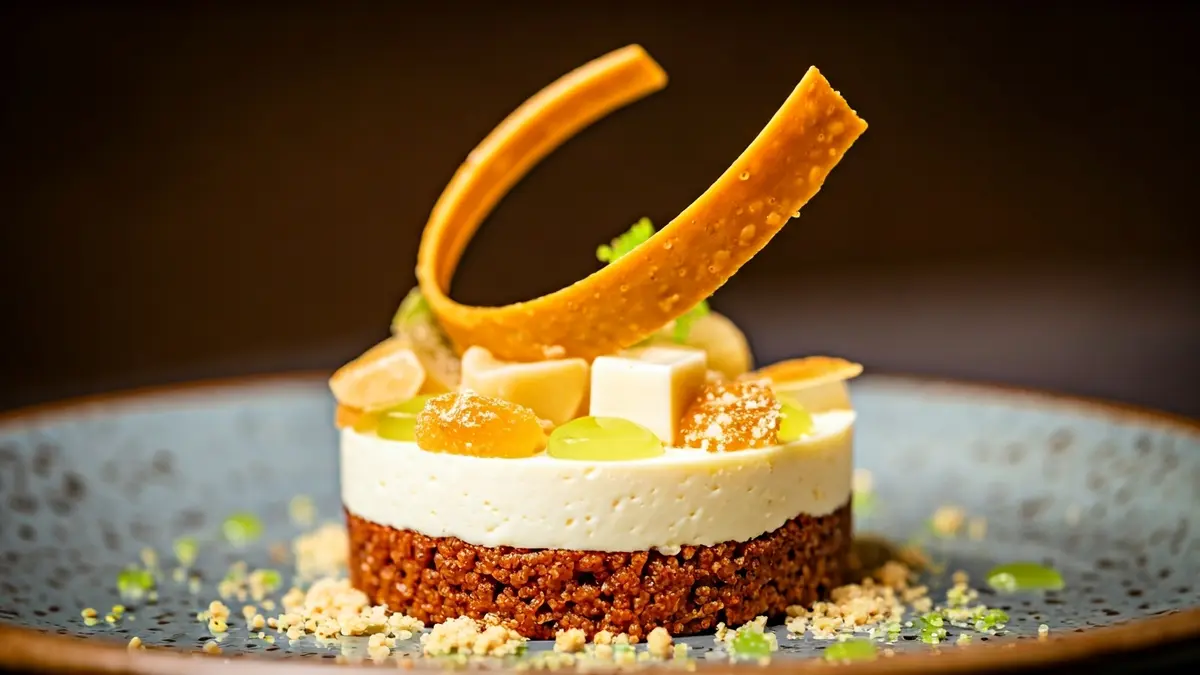
Saray Estarlich's proposal transforms these classics into an arnadí mousse with monjàvena pudding, accompanied by almond earth, lime gel, and an almond tile. The recipe begins with the preparation of the monjàvena pudding, which includes day-old monjàvena, eggs, milk, cream, sugar, lime, and cinnamon, cooked in a bain-marie until a firm texture is achieved.
Concurrently, the arnadí mousse is made by crushing traditional arnadí and mixing it with cream, to which a whipped egg white is incorporated for lightness. The 'almond earth' is created with a mixture of flour, butter, icing sugar, and almond flour, baked until crispy. The lime gel, with lime juice, zest, agar-agar, and sugar, adds a refreshing touch, while the almond tile, with egg whites, butter, icing sugar, flour, and almonds, is baked and shaped to give it a curved form.
The final plating consists of a mousse base, pudding cubes, almond earth, dots of lime gel, and the almond tile crowning the dish, offering a sophisticated presentation and a balance of textures and flavors that honors tradition with a contemporary twist.