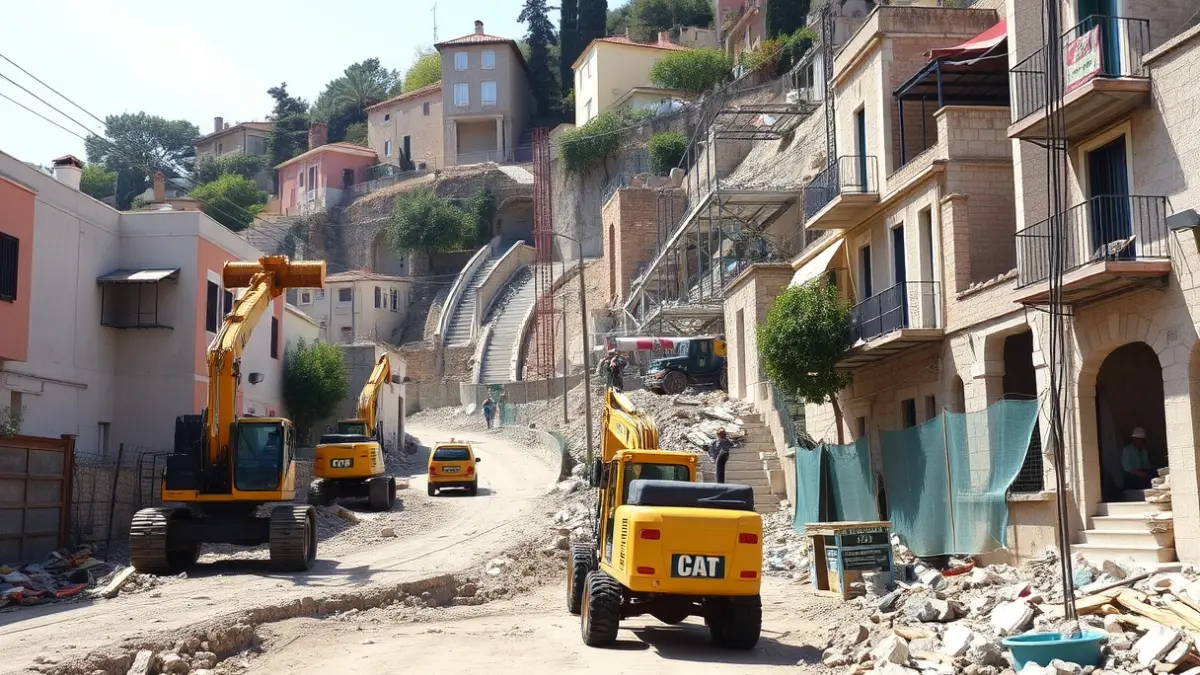
Street 7 in l'Omet suffered the most severe consequences of the overflow, leaving a dozen homes uninhabitable and access routes destroyed. The City Council has presented the execution project, which has already received approval from the Urban Planning department, to restore safety to the area.
The investment, funded by the Government of Spain, exceeds 10 million euros. Meanwhile, affected families continue to be rehoused free of charge in SAREB properties, a measure that will remain in place until it is safe for them to return to their own homes.
The City Council's goal is to tender the project as quickly as possible to begin works around September. The intervention will not only focus on repairing the street but also on consolidating the ravine's hillside to prevent future landslides.
In addition to reconstruction, the City Council has proposed an innovative measure: the purchase of affected homes. This option, stemming from recent legislative changes by the central Executive, would allow the City Councils to acquire properties at certified appraisal value to demolish them and transform the area into a green space.
“"It will be the owners who freely choose whether or not to sell in order to carry out the green areas project."
For this re-naturalization plan to proceed, all affected parties in the same area would need to agree to the sale. Otherwise, the planned residential reconstruction will proceed. This dual approach seeks to repair damages and offer an alternative to families who prefer not to re-inhabit an area prone to flooding, promoting more resilient urban planning adapted to the natural environment.