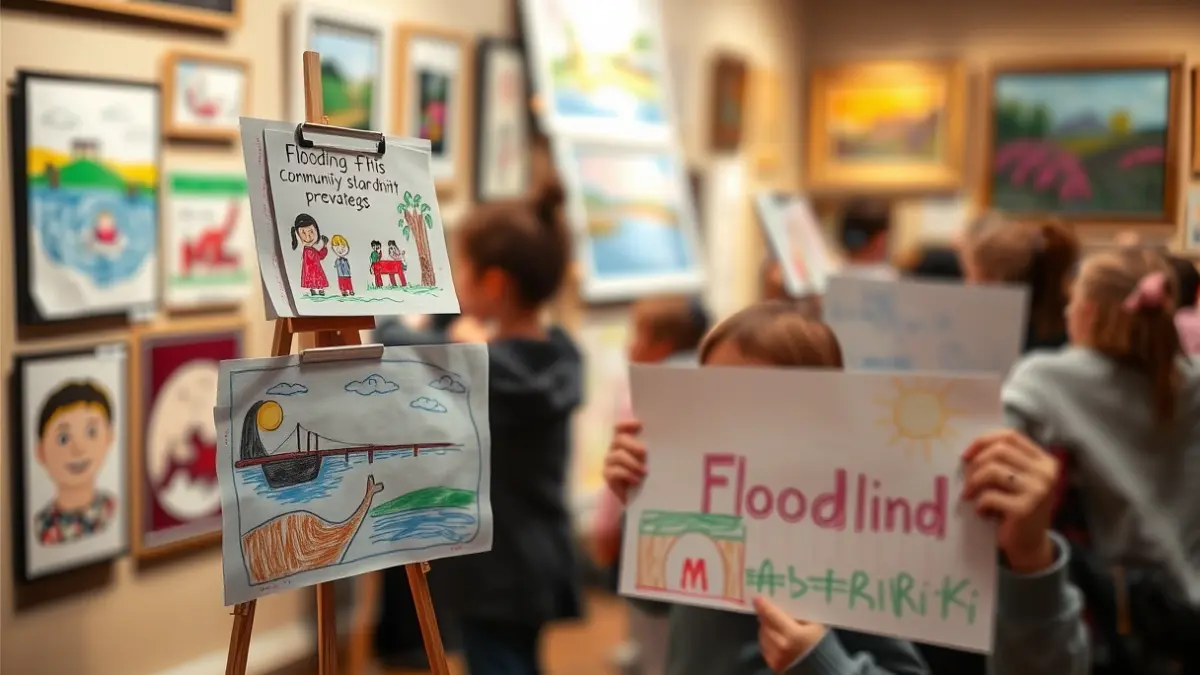
The Museu de la Rajoleria in Paiporta is hosting the exhibition 'Saber mirar Paiporta' until April 22, showcasing 700 drawings created by students from CEIP Ausiàs March. These children's creations are complemented by 22 pieces from Valencian artists, aiming to reconstruct the impact of the DANA on the municipality through the sensitivity of the youngest.
The exhibition's journey through the hall offers an emotional chronicle of the events, depicting familiar streets covered in mud and houses surrounded by water. However, the drawings also reflect scenes of solidarity, hugs, and neighbors helping each other. The intense colors and spontaneous strokes of the children not only illustrate but also explain what happened.
This project, driven by the Carmen Santisteban Foundation in collaboration with the educational center, has a dual artistic and therapeutic purpose. The work with the schoolchildren was conceived as a tool to process emotions after the catastrophe. The result demonstrates how art can serve as a language when words fail, offering a personal interpretation of what occurred on October 29, 2024, and a way to share it with the rest of the community.
The exhibition not only addresses the past but also the recovery process. Teachers, families, and the educational community are reflected in many scenes, highlighting their crucial role in providing support. Thus, the narrative incorporates the collective response and emotional reconstruction, extending beyond the initial disaster.
The Paiporta City Council emphasizes that the exhibition functions as a space for consensus and remembrance, where childhood is an active protagonist in the municipality's recent memory. The initiative is complemented by workshops, round tables, and activities that analyze the social role of art in crisis situations, with the participation of university experts and cultural sector professionals.