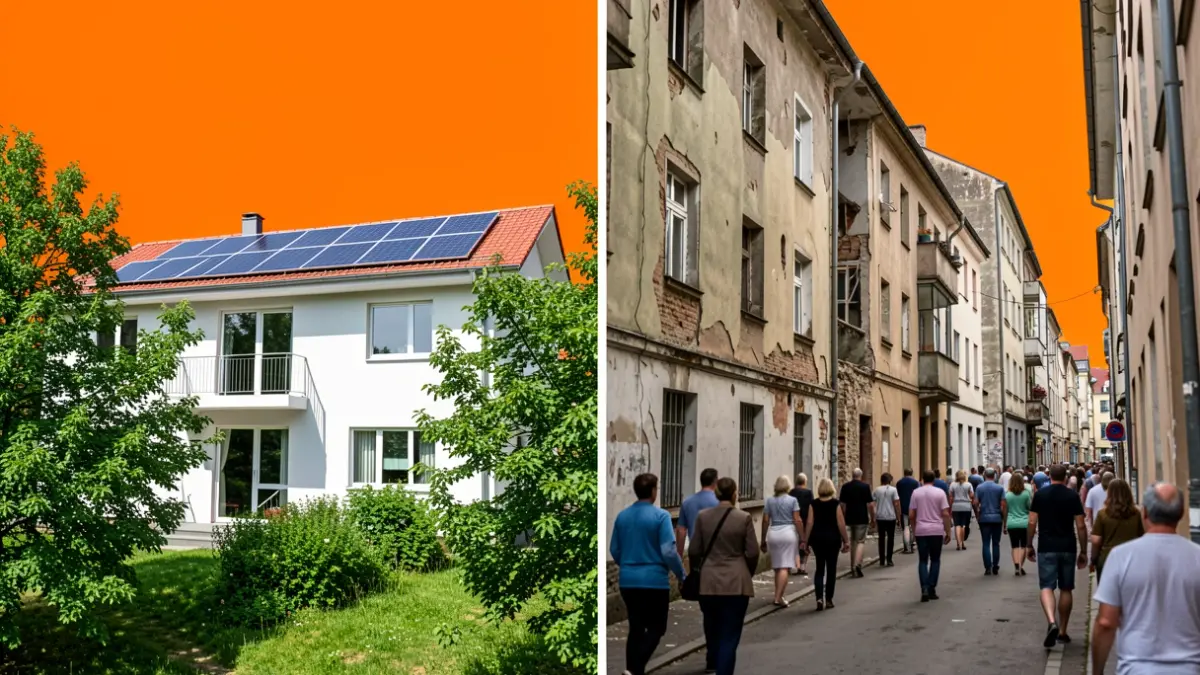
The recent heatwave that affected the Valencian Community between June 22nd and 28th served as an immediate warning: the climate emergency is not distributed homogeneously. Extreme heat underscores how income, housing quality, neighborhood, employment, and families' economic capacity directly influence their ability to protect themselves from meteorological inclemencies.
In the Valencian Community, a Mediterranean region with a strong coastal urban concentration, the physical geography of climate change (water pressure, storms, fires) intersects with a social geography. Facing a heatwave is not the same from a well-insulated home with air conditioning and the capacity to afford the electricity bill, as it is from an old, poorly ventilated apartment on a shadeless street with a tight household economy.
This 'Valencian climate divide' is evident in lower-income neighborhoods, which tend to have higher urban density, fewer green spaces, poorer residential quality, lower energy efficiency, and less economic margin for adaptation. The urban heat island effect, a phenomenon expressing inequality, is apparent in the metropolitan area of València, affecting neighborhoods such as Burjassot, Alfafar, Torrent, Manises, Xirivella, Quart de Poblet, Aldaia, or Alaquàs. The accumulation of asphalt, traffic, aging housing, and lack of trees makes summer harsher, with consequences like poorer sleep, increased illness, or limiting cooling use due to fear of the bill.
In the Valencian Community, one in four citizens lives at risk of poverty or social exclusion. The Arope rate stands at 25.8%, with marked comarcal differences. La Vega Baja, La Marina Alta, and La Marina Baixa lead in economic vulnerability, while regions like Els Ports, l'Alt Millars, and La Vall d’Albaida show lower rates. This territorial gap is significant, as the southern Valencian region and coastal areas concentrate social risk in territories already subjected to urban, tourist, water, and climate pressure. The climate emergency acts as a multiplier of inequalities: energy poverty makes heat weigh heavier, precarious employment affects occupational health, deficient housing offers no protection, and the lack of public transport increases car dependency.
The Valencian climate debate must descend to the neighborhood and comarcal level. Adaptation involves rehabilitating homes, creating climate shelters, expanding green spaces, redesigning schoolyards, protecting the elderly, ensuring shade on daily routes, improving metropolitan public transport, and reducing energy poverty. It is not enough to plant trees on visible avenues or approve declarative plans; public investment must prioritize places where climate exposure and social vulnerability coincide to be a useful and redistributive policy.
The Valencian Community knows the risks of a warmer and more extreme Mediterranean, as well as the consequences of building too close to risk and far from prudence. The question is no longer whether climate change will affect the region, but whom it affects first, with what intensity, and with what resources to resist. The answer requires looking at the map differently, because climate also has a postal code.