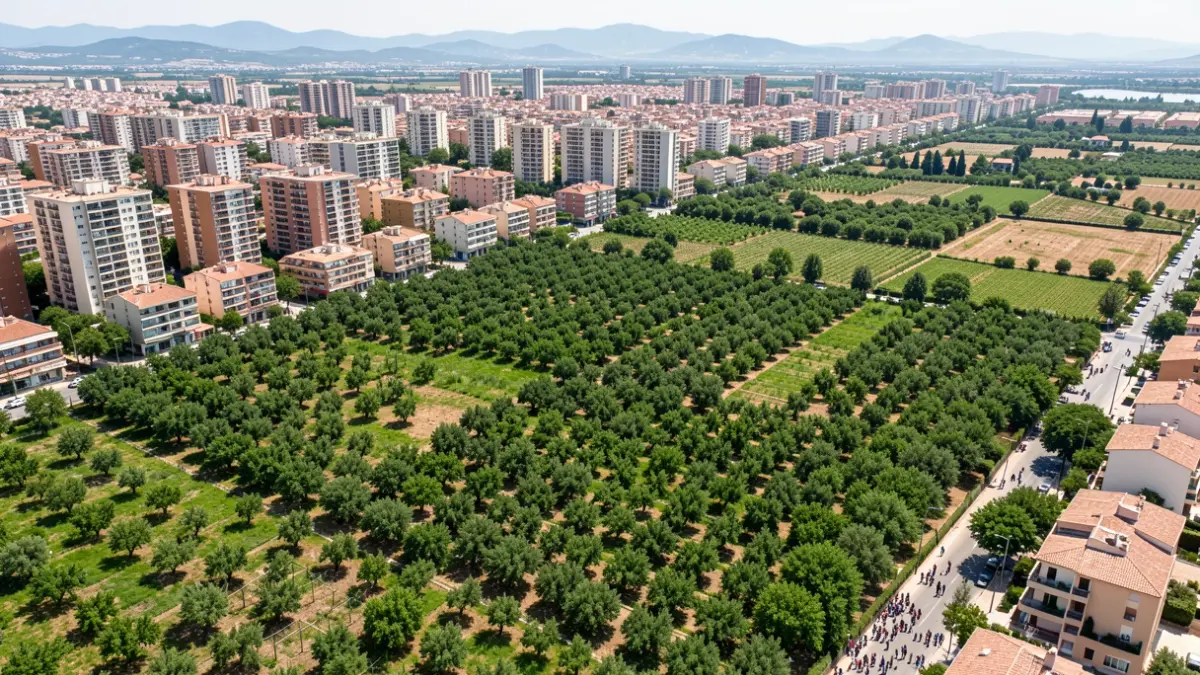
The environmental organization maintains that this orchard area helped protect parts of Alfafar, particularly the La Fila neighborhood, as well as areas in Sedaví and Llocnou de la Corona. Agró also points out that the municipal building Tauleta, which served as an aid center during the catastrophe, remained operational because water did not reach its facilities.
Before the DANA, the collective recalls, the Alfafar City Council planned for this area the construction of 36 towers, eight to ten stories high, with over 1,200 homes on land classified as developable in the municipal PGOU for 34 years and not protected by the Horta Law.
Agró has reiterated its opposition to this PAI (Urban Action Program) and advocates for reclassifying the land as non-developable. The entity believes that reviving old urban projects in flood-prone areas is one of the persistent errors in the territory, especially after the effects of the DANA.
The collective denounces that, following the floods and warnings from residents and technicians about the need to avoid further construction in flood-prone areas, the City Council has updated the project's promotional image in the new urban agenda approved at the municipal plenary. According to Agró, the new presentation is "greener" and hides some of the towers to make the project more acceptable to the public.
The environmental entity labels this strategy as a case of greenwashing and criticizes its dissemination through institutional advertising. Agró directly implicates the Alfafar City Council and the development company as parties interested in the construction.
Furthermore, the organization accuses the council of gradually favoring the degradation of the space to create the perception that action is necessary in the area. In this regard, it points to the conversion of part of the land into a provisional parking lot and the deposit of machinery and waste.
Acció Ecologista-Agró has emphasized that "we do not defend abandoned vacant lots or unmaintained spaces, but a living, cared-for, and functional orchard." The collective advocates for the traditional network of irrigation canals as infrastructure capable of channeling water during flood episodes and defends Font Baixa as a climate refuge for the residents of Alfafar, Sedaví, and Llocnou de la Corona during heatwaves.
The organization believes that protecting this space should prioritize resident safety and orchard conservation over urban development interests. Agró insists that Font Baixa represents one of the last remaining orchard spaces in resistance within a highly urbanized environment of l’Horta Sud.