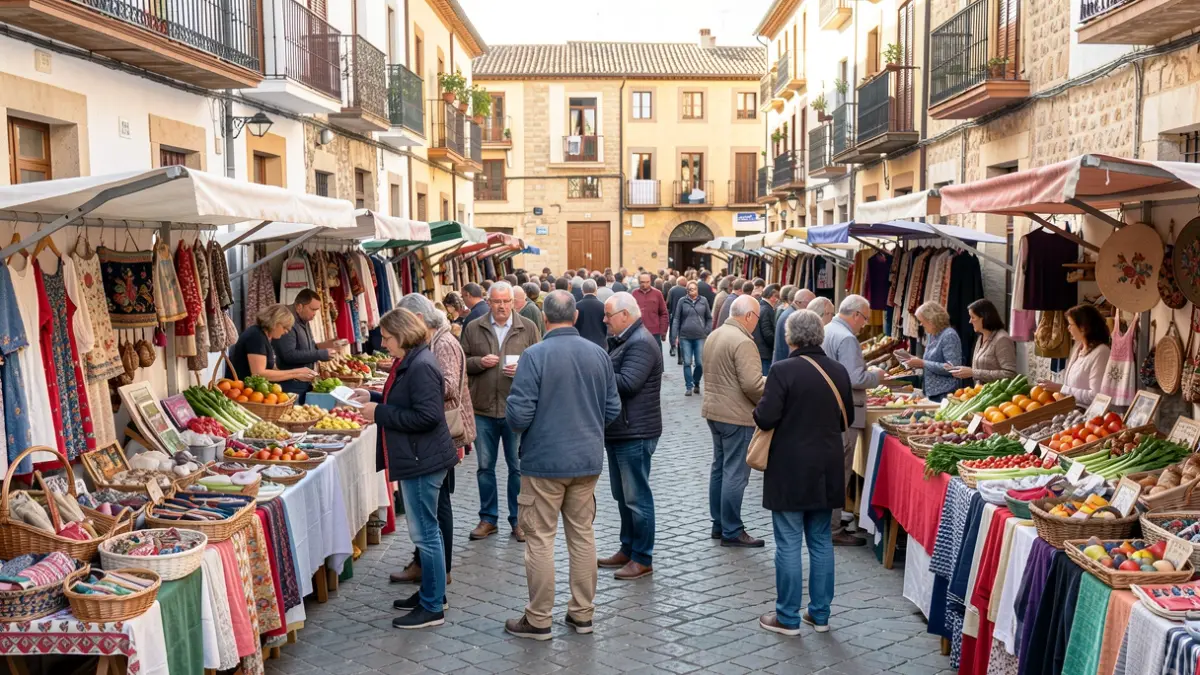
The initiative, organized by the G1 Horta Nord collective, managed to gather 23 different stalls and attracted participants from various points in the region, the rest of the Valencian Community, and even from Madrid. Attendees could access a wide variety of products and services ranging from own-produced fruits and vegetables and artisanal elaborations to crafts, second-hand clothing, sewing, and massages. Additionally, a seed cooperative from Castellón actively participated to promote the exchange and preservation of native species.
The event was coordinated in the region by Pedro García, a local resident and former councilor of the town for eight years, starting in 2015. García explained that this event represents «a claim for an economy based on the creation of a collaborative assistance community that shuns speculation». For his part, the Councilor for Commerce, Ferran Ortolà, positively assessed the meeting and highlighted the local administration's commitment to such activities. “We will always support initiatives based on relationships that build community, that generate a social network and a sense of town, as opposed to platforms that destabilize and weaken local trade,” stated the municipal official.
The event served as a showcase to promote an alternative economic model focused on bartering and the use of the “juna” (G1), a social currency managed by users through a digital application and a virtual wallet. This system is designed to facilitate exchanges when there isn't a direct match of goods or services between two people, adding flexibility to the network. In practice, if a user wants to acquire something but doesn't have a product to offer in return at that moment, they use their junas to close the transaction and balance the system. Unlike conventional money, this currency does not allow for saving or accumulation, as it has a lifespan of about two years. If the currency is not used within this period, it disappears, which encourages constant movement and prevents speculation.
Entry into this exchange network is strictly based on trust, meaning any new member requires the endorsement of other participants to join the community. Although the meeting in La Pobla de Farnals was in person, the collective maintains its usual dynamism through digital tools such as local Telegram channels and the website https://girala.net/es. This free currency model is part of an expanding international movement with strong roots in Catalonia and the Basque Country, and is particularly developed in the south of France, especially around Toulouse. In these regions, the social currency has already been integrated into physical stores and large-scale transactions, where members have exchanged vehicles and real estate.