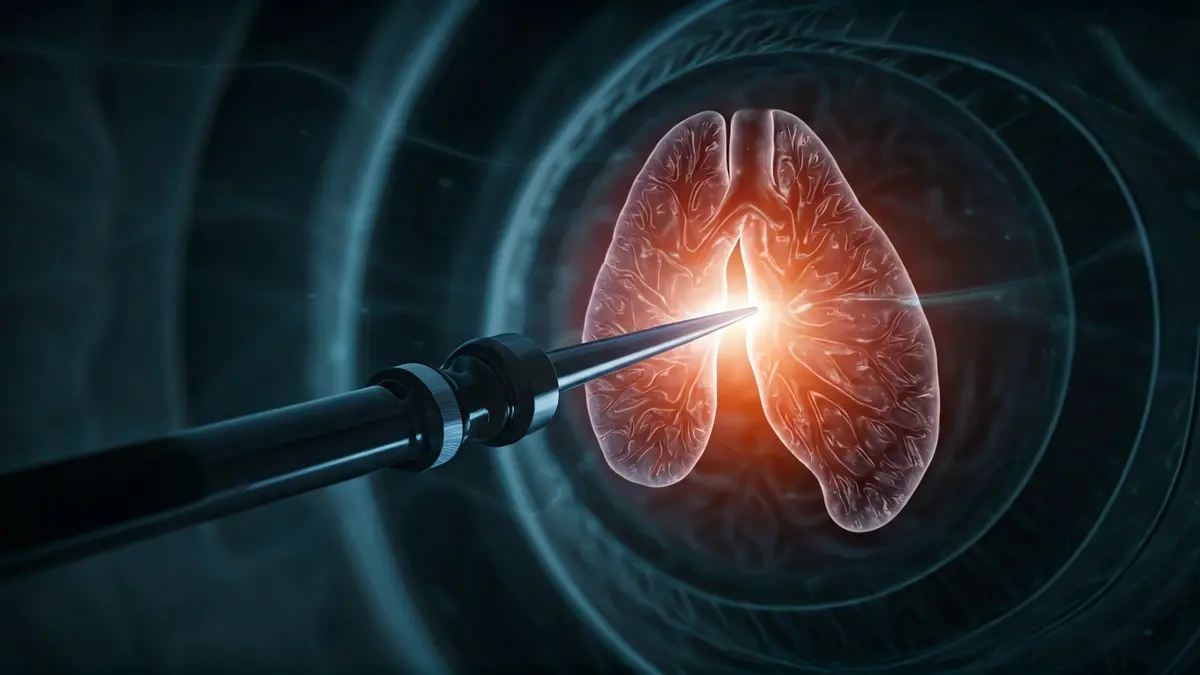
The new Interventional Pulmonology unit at the Hospital Clínico Universitario de València has recently incorporated this innovative technique. It is a minimally invasive procedure that allows access to small or difficult-to-reach pulmonary nodules, using a navigation system similar to a GPS.
For the implementation of this technology, the Hospital has invested 205,700 euros in acquiring a state-of-the-art electromagnetic navigation system. This equipment integrates advanced electromagnetic localization technology with image-based planning, as reported by the Generalitat.
“"Based on a virtual reconstruction of the bronchial tree, obtained through computed tomography, the system guides the specialist in real-time to the target lesion, facilitating biopsies with greater accuracy and safety."
The procedure is performed on an outpatient basis, under general anesthesia. After its completion, the patient remains under observation until full anesthetic recovery. Subsequently, a control X-ray is performed to rule out possible complications, such as pneumothorax. If the evolution is favorable, the patient can return home.
“"Electromagnetic navigation-guided bronchoscopy represents an advance in the early diagnosis of lung cancer and in the management of peripheral lung lesions, especially those not accessible by conventional bronchoscopy, allowing for more precise, safe, and personalized procedures."
Among the benefits of this new technique are greater efficacy in diagnostic performance, a reduction in the need for more invasive procedures such as transthoracic biopsy or diagnostic surgery, and a decrease in the risk of complications.