
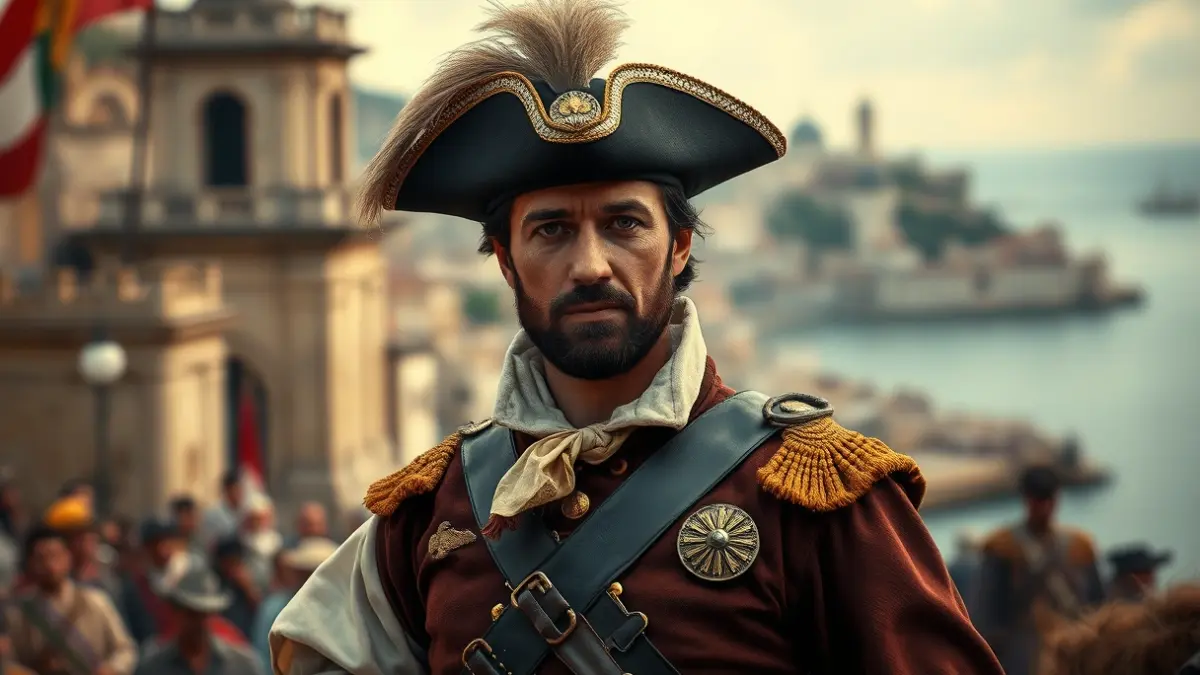
A historian specializing in the Crown of Aragon and the historical construction of Valencian identity has dedicated part of his research to reviewing key historical figures. Among these, Joan Baptista Basset stands out as the protagonist of one of the most decisive episodes in Valencian history.
According to the historian, Basset can be considered «the greatest popular and social leader in Valencian history». His ability to lead a revolt and articulate a political movement places him as an exceptional figure in the context of the 18th century. His leadership was based on three fundamental pillars: support for Archduke Charles of Austria in the War of the Spanish Succession, the defense of Valencian charters, and the desire to improve the living conditions of peasants and artisans against the privileges of the elites.
“"Far from being a simple, exclusively popular uprising, Basset's movement was interclass."
His cause was joined by the humblest classes and important sectors of Valencian society, such as knights, jurists, members of the clergy, and the archbishop of València, as well as merchants and municipal governors. Basset's entry into València, with open gates, would hardly have been possible without the complicity of a significant part of the upper classes, even if the great aristocracy remained loyal to Philip V.
The reasons for the revolt were not the result of improvisation or opportunism. The conflict is contextualized within an international war and responds to deep political, economic, and cultural motivations. One of the most striking aspects of Basset's leadership was his charisma. The historian highlights the popular fervor he aroused, with episodes bordering on the symbolic or legendary, from the veneration of his family to accounts of alleged miracles documented by notaries of the time.
The defeat of the Austrian faction brought devastating consequences, and Basset's figure has been reinterpreted over time. Later Valencian nationalism vindicated him as a defender of the charters and a plural Spain. Today, historiography recognizes his political capacity and his military and technical experience. His figure must be understood in his time: as that of an exceptional leader who, in a moment of crisis, managed to articulate a collective aspiration for political and social change.