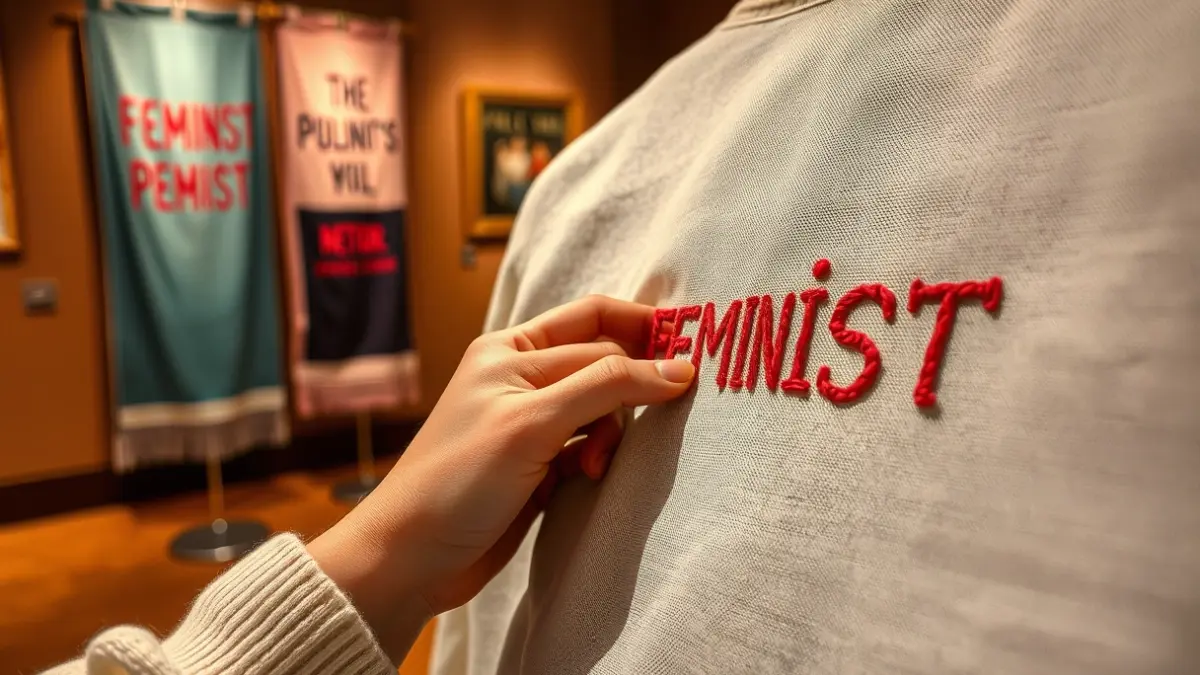
The exhibition, which can be visited from tomorrow until June 28, uses embroidery and textile art as a connecting thread. Through a dozen banners, the Murcian artist links the importance of the British suffragists' fight in the early 20th century with current feminist movements, from #MeToo to collectives like LasTesis or Pussy Riot.
“"Embroidery, a language associated with the domestic and feminine sphere, emerges for the first time into the public space to demand the right to vote."
Modern banners include messages such as It is a dress, not a yes or Virgin Mary, please become a feminist, illustrating the continuity of these demands. This proposal emphasizes that social movements are not static and that it is fundamental to review the past to learn and progress.
Beyond the banners, the exhibition includes a large tapestry serving as a genealogy of women, divided into five sections. Two of these refer to the British suffragist movement, two more link Bauhaus artists like Anni Albers or Gunta Stölzl, who subverted textile art, and the fifth segment is dedicated to Matilde Calvo Rodero for dignifying decorative arts. This piece holds personal significance for the artist, as she embroidered it alongside her mother.
The exhibition is complemented by pieces that continue to explore textiles through painting, with references to figures like Artemisia Gentileschi, and the body, which also plays an important role as a tool for political and social demands, just as suffragists used it in their marches.
“"The exhibition is magnificent for its meticulous work with textiles, especially in Alicante, creating a composition that is a marvel."