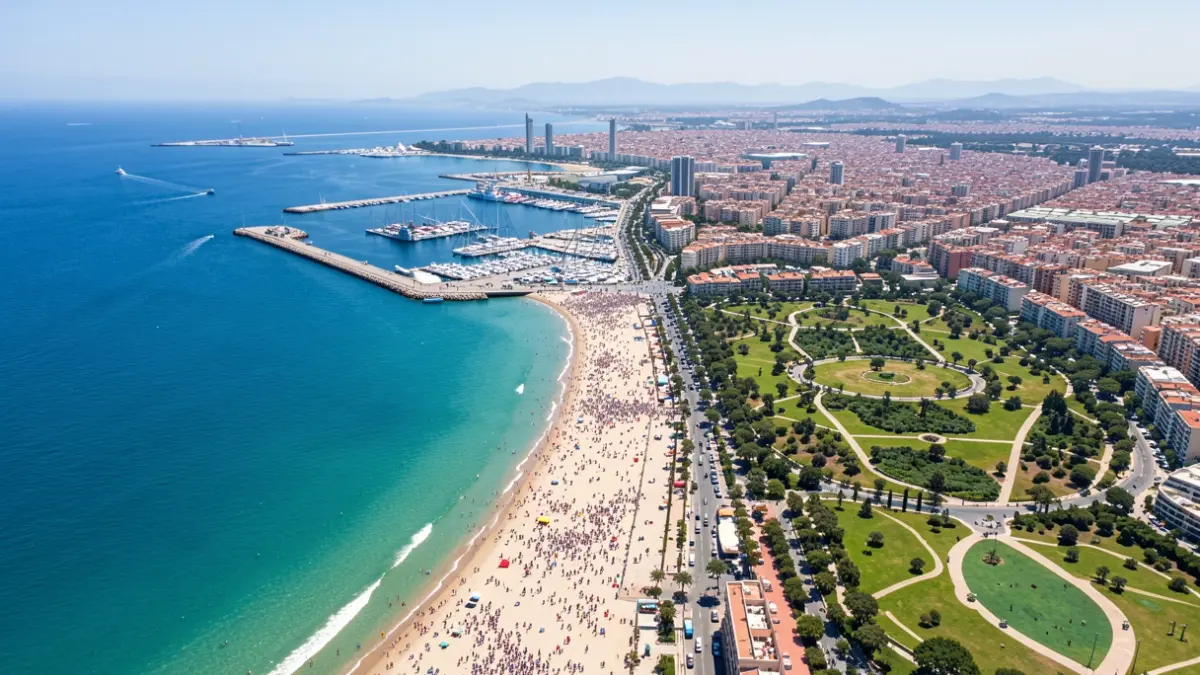
This astronomical phenomenon, one of the most anticipated in recent decades, will position the Valencian Community among the best observation points in Europe. The magnitude of the event has led to the creation of a Total Solar Eclipse Management Plan, a strategy encompassing safety, mobility, health, environmental protection, and scientific outreach. The goal is for the phenomenon to be experienced with maximum normality, despite its extraordinary nature. All official information can be found on the portal eclipses.gva.es.
A solar eclipse occurs when the Moon passes between the Earth and the Sun, blocking the sunlight. This seemingly simple mechanism is infrequent due to celestial geometry. The inclination of the lunar orbit relative to Earth's means a perfect alignment doesn't happen every new moon, making eclipses exceptional events. In this case, the eclipse on August 12 will be total, completely covering the solar disk for a few moments.
The Generalitat has defined eight provisional official observation points across the region to prevent crowds and ensure a safe experience. These points include locations such as Aras de los Olmos, Benassal, Castellón de la Plana, Macastre, Peñíscola, Puçol, Utiel, and València. The selection combines coast and inland areas, and all will have safety devices, municipal coordination, and crowd management measures.
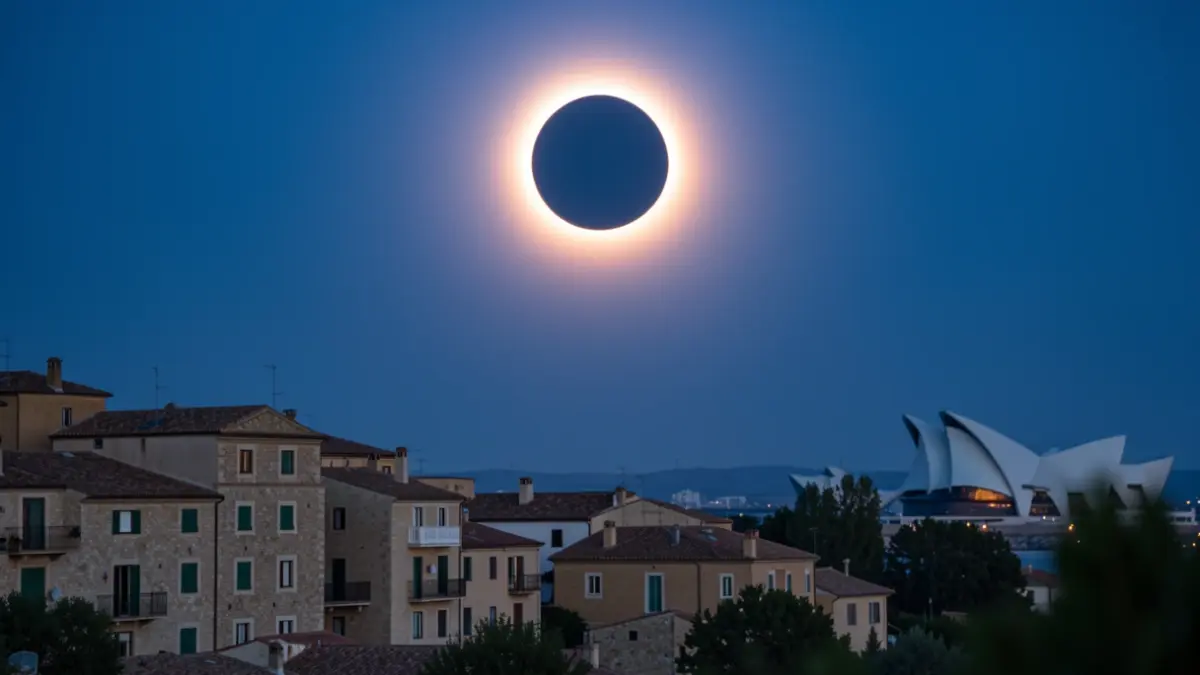
During the totality phase, day will suddenly darken, the sky will take on a strange hue, and the solar corona will become visible. Before and after this moment, brief flashes known as Baily's beads and the characteristic diamond ring will occur. The temperature will drop slightly, and some animals might react as if night were falling. The coincidence with the Perseids could allow for viewing a shooting star.
According to the National Geographic Institute, the eclipse will begin to be visible partially around 19:30 and reach totality near 20:30 (peninsular time), concluding shortly before sunset. The duration of totality will vary depending on the observation point.
Total solar eclipses are extremely rare in the same location. In the Valencian Community, the last one occurred in 1905, and the next will not arrive until 2180, making this a unique event for current generations.
It is crucial to follow precautions for safe viewing: use eclipse glasses with ISO 12312-2:2015 certification or approved solar filters. Only during the complete totality phase can one look at the Sun without protection.
Authorities recommend avoiding last-minute travel and planning journeys in advance. It's important to consider the mid-summer conditions: sun protection, water, and a hat. Respect for the natural environment is also emphasized, avoiding fires and leaving no waste, especially in rural areas.
The Generalitat has prepared an extensive program of activities and educational resources to bring the phenomenon closer to all audiences, turning the eclipse into an opportunity for collective learning. The full program can be consulted at eclipses.gva.es/agenda/.