Nearly 640,000 people in Valencia lack access to a large green space in their immediate surroundings, according to a report by Amigas de la Tierra titled “¿Cómo garantizar el derecho a la naturaleza?” (How to guarantee the right to nature?). The study, conducted by researchers from the Polytechnic University of Madrid, analyzes ten Spanish cities and places Valencia among those with the least effective coverage of large green spaces near homes.
The publication, released after the year's first heatwave, focuses on the relationship between urban nature, income, population density, and the capacity to adapt to high temperatures. The report compares ten cities, concluding that 60% of the analyzed population lacks sufficient access to green areas. In Valencia, this figure approaches 80%, which the organization links to the scarcity of large-scale parks.
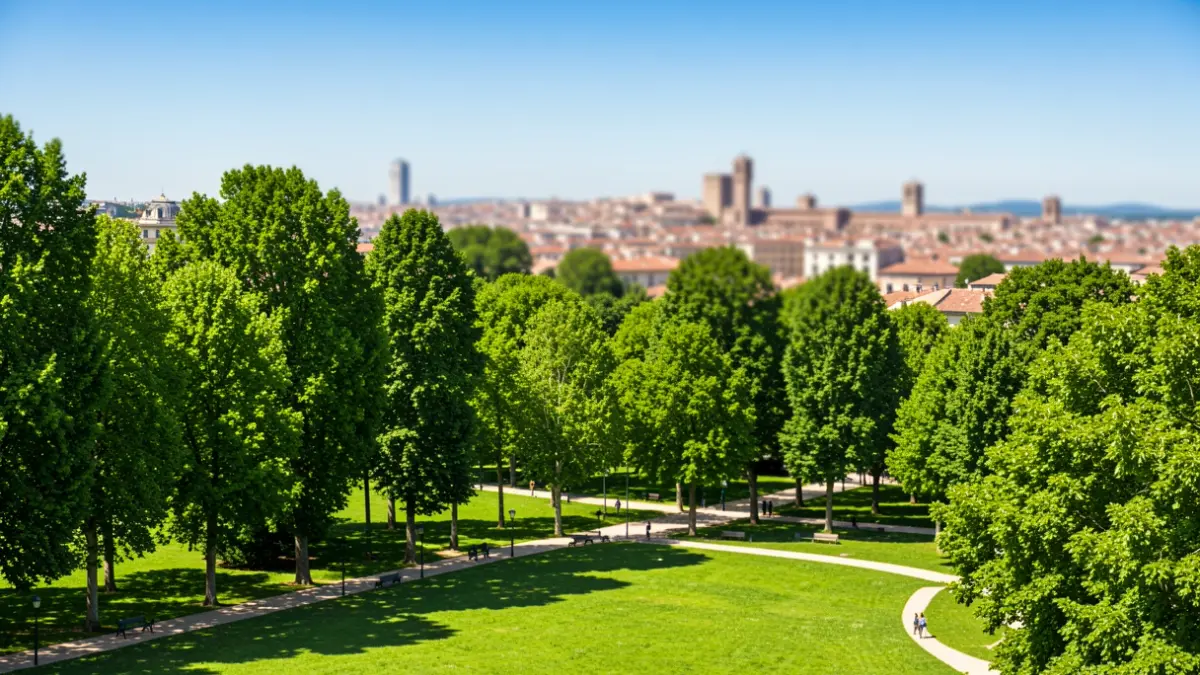
The study uses the 3-30-300 rule recommended by the World Health Organization as a benchmark, which suggests seeing three trees from a window, having 30% tree canopy cover in a neighborhood, and a park of at least one hectare within 300 meters of a home. In Valencia, the configuration of green spaces is heavily influenced by the central Turia river park, but the provision of large parks is insufficient to cover most of the population.
The organization points to unequal territorial distribution, with less access in areas of the southwest (Patraix, L’Olivereta, Jesús), the northern periphery (Rascanya, Benicalap), and areas like Poblats Marítims, Camins al Grau, Quatre Carreres, or Pobles del Sud. Furthermore, the report highlights a correlation between income, population density, and available green space per inhabitant, indicating that lower-income neighborhoods have less urban nature, exacerbating heat exposure.
“"We demand fair housing policies that prevent greening cities from leading to the displacement of people from their homes due to speculation. We also call for the construction of community climate shelters so residents can decide on their neighborhoods and for green spaces to be places where dignified and full lives can be built."
The report proposes advancing towards comprehensive planning, including the creation of green corridors and tree-lined avenues to connect green areas and improve neighborhoods' resilience to high temperatures. Amigas de la Tierra urges institutions to urgently advance urban renaturalization, paying special attention to neighborhoods with the poorest access to green spaces, and accompanying these policies with fair housing measures to prevent resident displacement.