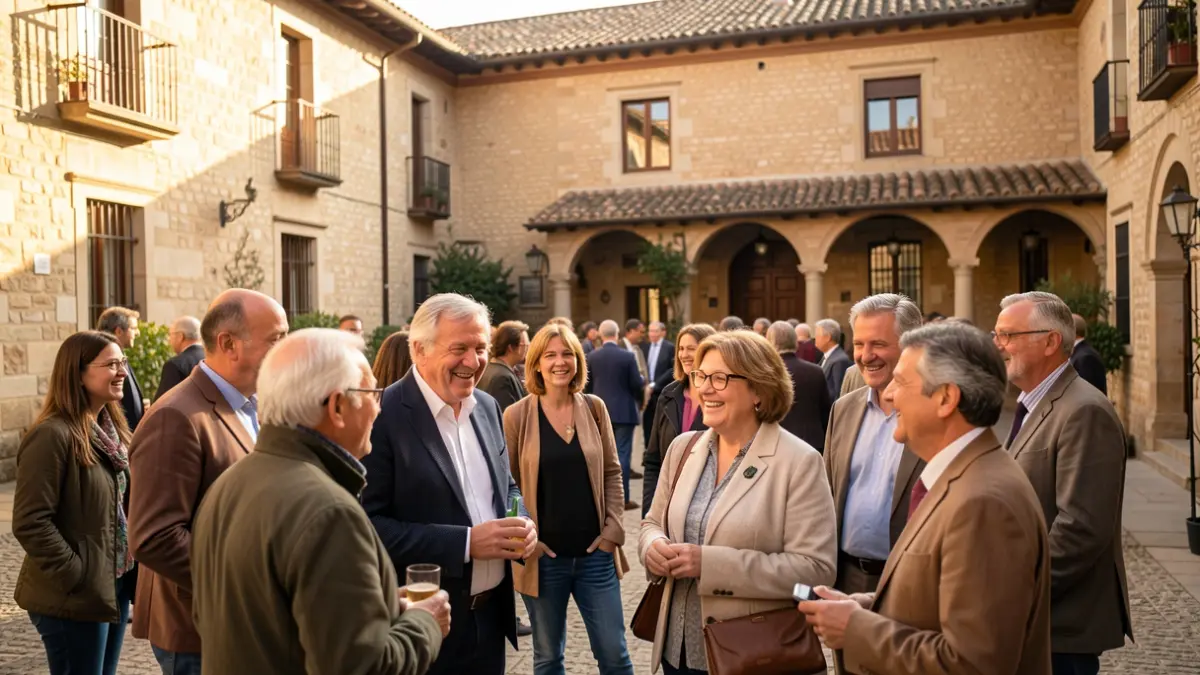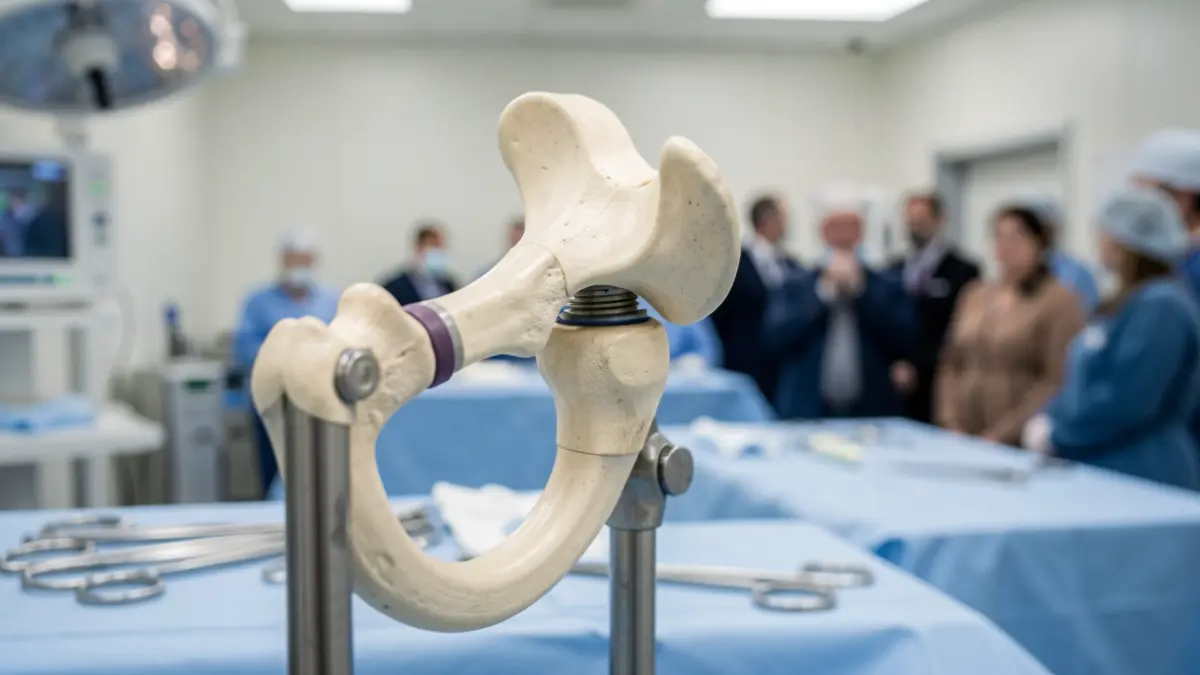
From April 18 to 19, the Casa del Alumno at UPV transformed into a high-performance environment where science, technology, and the market converged in an intensive format. This initiative, driven by the BioLynx Community and the Damián Rodríguez Olivares Foundation, with support from ATG SynBio Spain and the European Commission, gathered 60 participants, organized into 15 multidisciplinary teams.
Participants were selected from over 200 applications nationwide after a competitive process. The event kicked off with an institutional welcome that highlighted the alignment between the university and public administration in promoting scientific talent. A representative from IDEAS UPV, the entrepreneurship area of the Polytechnic University of Valencia, emphasized the importance of bringing knowledge to the market and transforming it into solutions with social impact.
“"The challenge is no longer just to generate knowledge, but to be able to bring it to market and turn it into solutions that impact society. Experiences like these are an increasingly important complement to training."
A representative from the General Directorate of Research and Innovation of the Ministry of Health (GVA) stressed the need to consolidate ecosystems capable of attracting and activating scientific talent in the Valencian Community. Over the two days, teams worked intensely on technical development, business model validation, and pitch preparation, with mentorship from industry leaders.
The competition also received institutional backing from a representative of the Vice-Rectorate for Students and Entrepreneurship at UPV, who highlighted university entrepreneurship as an essential part of education. They noted that excellent training involves creating environments where students integrate their knowledge under demanding conditions, learning to manage uncertainty and work interdisciplinarily.
“"At UPV, we understand that excellence in training is not limited to the transmission of knowledge, but to the creation of environments where students must integrate that knowledge under conditions of maximum demand. A hackathon is not just a place to demonstrate what is possible; it is a high-level training experience where, under the philosophy of Spontaneous Generation, one learns to manage uncertainty, to work interdisciplinarily, and to give real purpose to science."
A notable aspect of this edition was the strong presence of UPV-affiliated talent among the awarded teams, reflecting the maturity of the university ecosystem in areas such as biotechnology, biomedical engineering, and artificial intelligence. Among the winners, the Star Award went to Kyobac, for an innovative mental health project. The First Sustainability Award was given to MasRum, for a sustainable leather alternative, and the First Health Award went to B.R.A.I.N., combining AI and biotechnology. The Penguin Award (Entrepreneurial Courage) was granted to PhagESKAPE, and BiosensOre received an honorable mention in Sustainability.
The ETSIAMN (Higher Technical School of Agronomic and Natural Environment Engineering) played a key role in disseminating the event, facilitating the participation of many Biotechnology students. The Open Innovation Competition 2026 has shown that young scientific talent seeks to transform knowledge into impactful solutions, solidifying UPV as an environment capable of articulating this transition.