Since the visit of John Paul II to Valencia in 1982, when 90.2% of the population declared themselves Catholic, Valencian society has undergone a constant process of secularization. Currently, only 58.6% identify as Catholic, and of these, only 18.6% regularly practice the faith. This demographic and spiritual shift is reflected in a landscape where the Church faces new challenges.
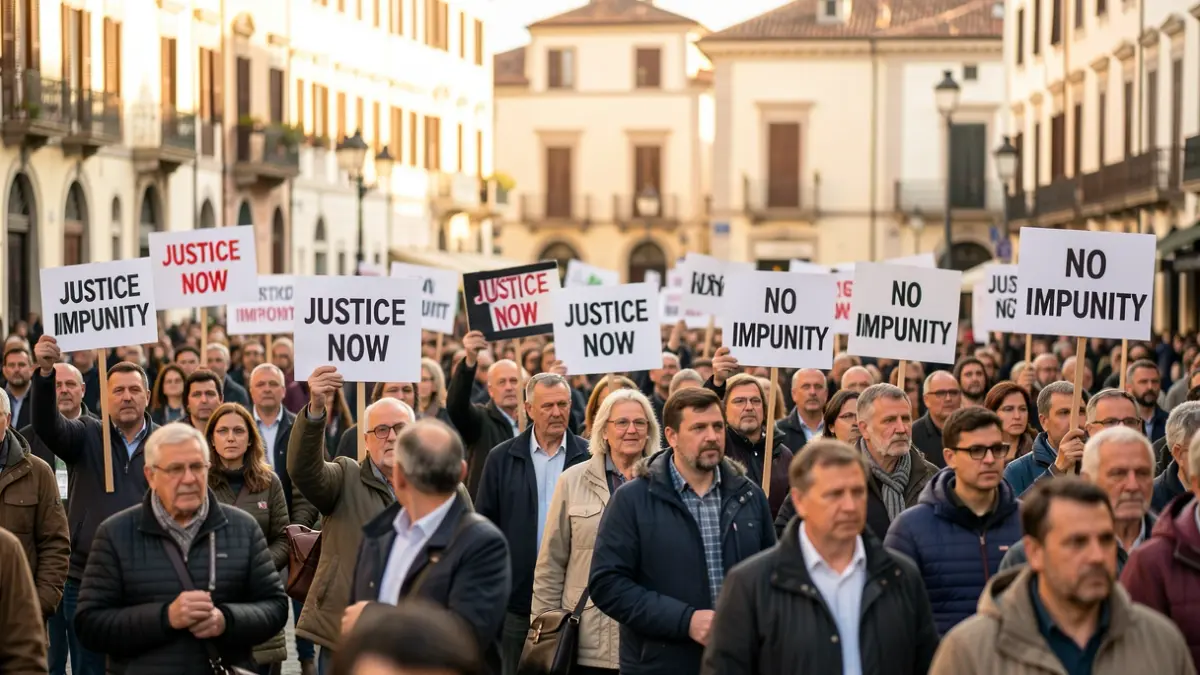
Among the most prominent challenges for the archdiocese are the management of the painful scandal of child abuse, the relationship with a polarized political ecosystem marked by the rise of the far-right, and the issue of the use of Valencian in liturgy. Meanwhile, the ecclesiastical leadership is working on a new pastoral plan, while an increase in evangelizing community groups and a growing secular spirituality are being detected.
Paradoxically, the economic health of the Valencian Church appears stronger than its pastoral vitality. Valencians mark the 'X' box on their income tax returns to allocate funds to the Church above the national average. In 2024, 782,000 declarations were registered, a 4.2% increase from the previous year, indicating financial sustainability that contrasts with the decline in faithful.
Spanish and Valencian society have changed drastically since 1982. If back then 98.3% of marriages were performed by the Church and 58% had a crucifix at the head of the bed, today the reality is very different. Pope Leo XIV, on his recent visit to Spain, encountered a much more secularized society, where the Church competes with agnosticism, atheism, and a growing religious pluralism, including Islam, Orthodox Christianity, Adventists, Jehovah's Witnesses, Evangelicals, and Buddhists.
The Barometer on Religion and Beliefs in Spain (BREC) reveals that only 18.6% of Valencians are practicing Catholics, while 40% declare themselves non-practicing Catholics. 11.1% are agnostic and 13.3% are atheist. 3.6% believe in other confessions. In total, 49% consider themselves religious believers, predominantly Catholic.
Religious plurality is evident in the census of non-Catholic places of worship in the Valencian Community, which in September 2023 totaled 895 locations, 151 more than ten years prior. Of these, 4,359 are Evangelical, 1,749 Muslim, and 633 are from Jehovah's Witnesses, among others.
Despite secularization, signs of a resurgence of faith and secular spirituality are emerging. Experiences like the Emaús retreats, Effetá, and Alpha groups seek 'evangelization' by touching hearts, not seeking converts. The dean of the Faculty of Theology of Valencia, Santiago Pons, points out that young people are seeking answers to the big questions, and Archbishop Enrique Benavent speaks of a 'rebirth of spiritual concern'.
Movements such as Opus Dei, the Neocatechumenal Way, or the Legionaries of Christ, which grew with the 'new evangelization,' have lost momentum. Opus Dei has about 95,000 adherents, of whom 2,300 are priests, with a strong delegation in Valencia. The 'kikos' register 20,300 global communities, and the Legionaries of Christ, 1,327 members.
Archbishop Benavent is promoting a new participatory pastoral plan, seeking to adapt to a 'pastoral culture' that recognizes social change. The danger of ideologizing faith and aligning with political parties is criticized, defending the principles of human dignity, peace, and freedom, without endorsing anti-migrant discourse.
The scandal of child abuse remains an 'unresolved issue.' The Valencian Church has implemented preventive protocols, and the Office for the Protection of Minors (OPM) has handled few 'protocolized' cases, although the Ombudsman estimates more real cases. The scandal of 'conversion therapies' has also been addressed, leading to the suspension of activity of the COF Mater Misericorde.
The issue of the missal in Valencian remains pending, despite historical efforts and the will of Archbishop Benavent. Political controversy surrounding the language hinders the creation of an official liturgical text. Meanwhile, the publication of pastoral and evangelical writings in Valencian has drawn criticism from sectors such as the RACV and Vox.
Economically, the Valencian Church shows good health. In 2024, it declared almost 64 million euros in income, a 30.5% increase in five years. The main sources are contributions from the faithful (32.36 million) and the IRPF allocation (16.68 million). Valencians allocate funds to the Church through the IRPF above the average, with 782,000 declarations in 2024.